A quiz question for you: which 2 capital cities are the closest in proximity? (You should disregard Rome and the Vatican City as the latter is not in a country)
Answer: Vienna and Bratislava.

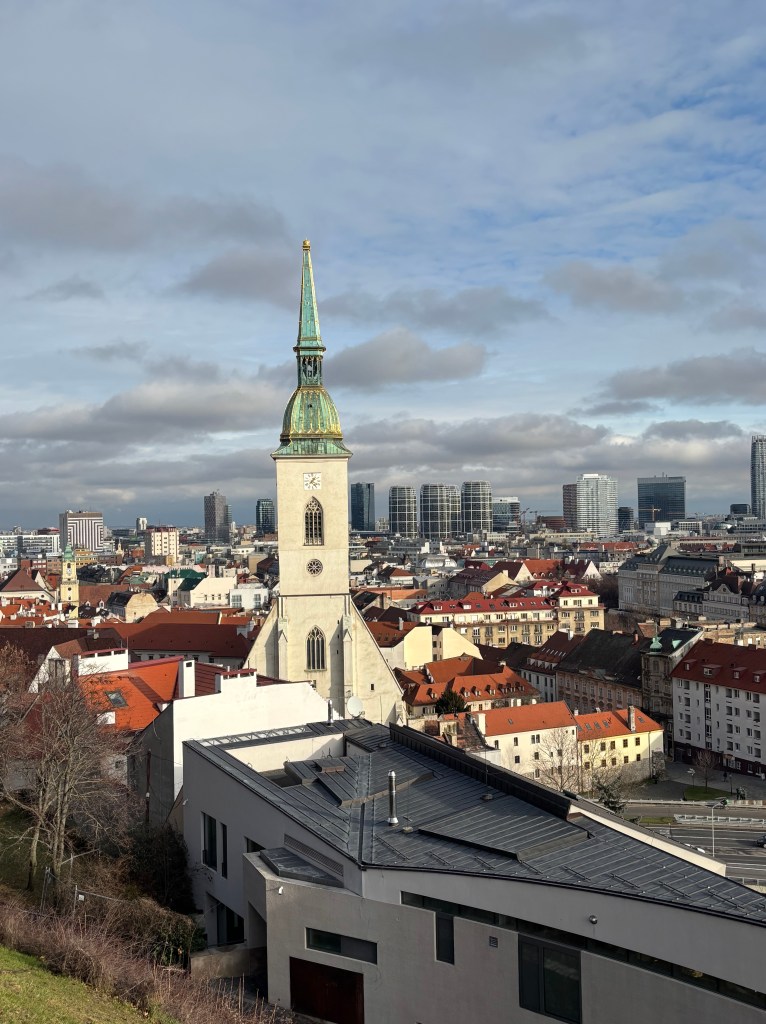
It was purely on the basis of that quiz question and the fact that it features prominently on Ryanair’s winter destinations list, that made us choose a 5 day city break to Bratislava at the start of January 2025.
Within a day of arriving we realised that we were not to going to be disappointed.
On a cold December day in North Yorkshire some 2 weeks before our departure I had taken the decision to scroll through the possible destinations offered by UK budget airline Ryanair.
The influence behind this decision was some ‘previous’ with ‘Blue Monday’ and a desire to discover a distraction to the challenges of a cold and wet January in the UK.
Blue Monday refers to the first Monday in January, widely perceived to be the hardest day of the year. This is the day when many face the reality of a return to work, realise they are skint after funding their Christmas excess and when the test of a cold and wet UK winter really starts to bite.
Once I had discovered Bratislava to be an option for a 5 night winter’s city break it took me all of five minutes to persuade my wife to join me and at the click of a few buttons we were booked!
With flights costing £14.99 per person each way, the decision to go to Bratislava from Leeds Bradford airport on ‘Blue Monday’, 6th January 2025, was not a difficult one.
It turned out to be my best decision of the year so far and it was quickly followed by more.
As our departure day approached so the reality of the worst winter snow for several years hit our preparations.
Living in an elevated rural position in North Yorkshire, any regional snow is far more severe. It became clear that we needed to get within easy reach of the airport before our getaway was thwarted by 22 hours of continuous heavy snow.
Fortunately our youngest son and his wife live just 2 miles from Leeds Bradford airport, so in return for a weekend of DIY we crashed on their lounge floor and took advantage of his New Year ‘bonhomie’ to get dropped off as near to the terminal as he could safely drive.
A 600 metre trudge through deep snow and freezing temperatures saw us still managing to arrive in good time for our scheduled 0600 flight. However we soon discovered that we had a 4 hour delay as the airport authorities struggled to deal with the harsh reality of that wintry weather.
We were lucky! Scores of passengers had slept at the airport the night before, as the extreme weather had grounded all flights for the previous 24 hours.
So it was that we arrived in Bratislava later than planned, mid afternoon, but just very grateful to have made it.
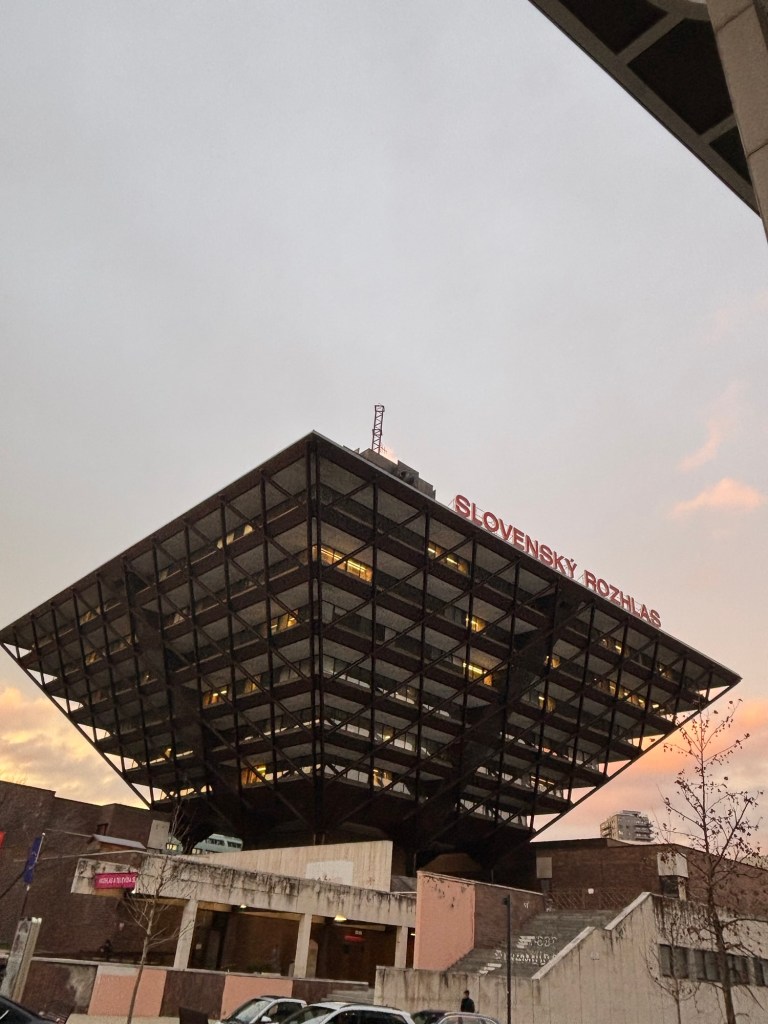
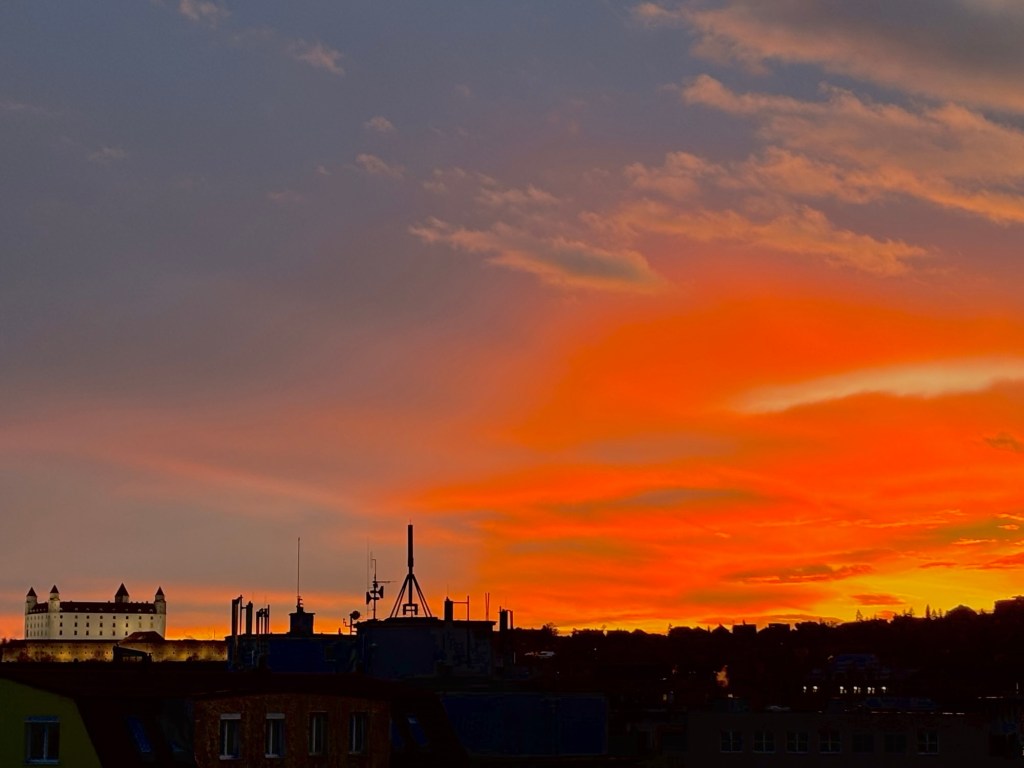
We took an instant like to the city and especially the inverted pyramid building some 200 metres from our lodgings just 1km north east of the Old Town. This is despite its frequent appearance as one of the 10 ugliest buildings in the world, according to The Daily Telegraph.
This UNESCO world heritage site is a relic of the old communist state that ruled Slovakia for nearly 50 years after the end of World War Two.
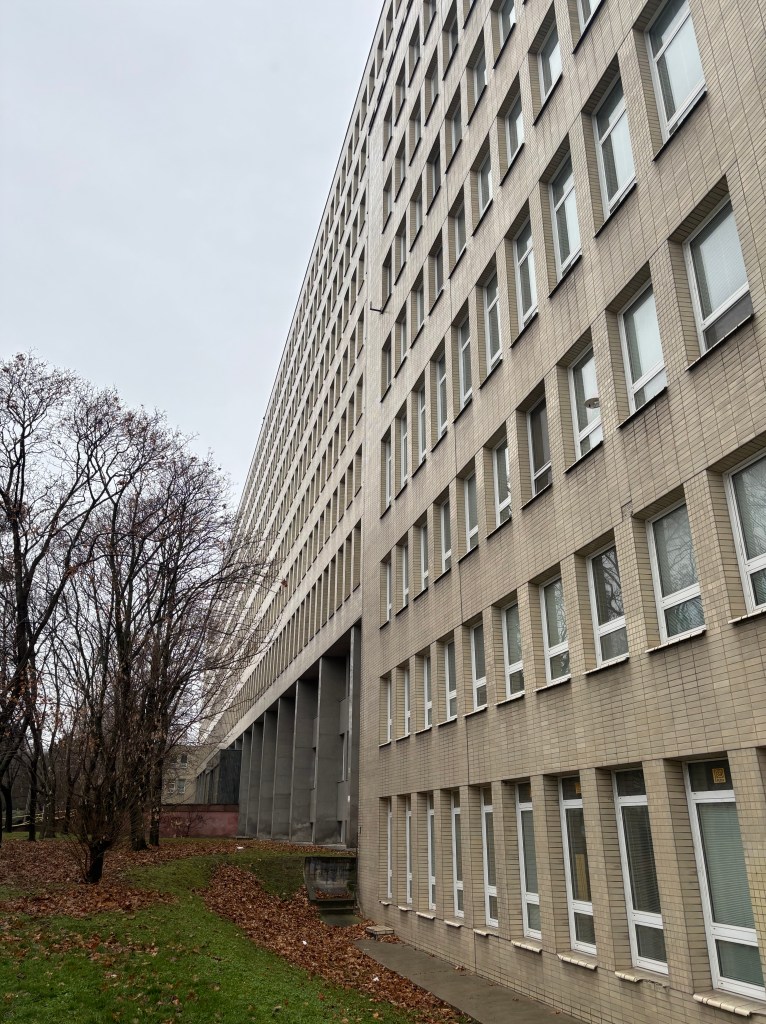
This eccentric building is a TV and radio station and sits in a residential neighbourhood surrounded by huge ‘Soviet Style’ block housing that borders the vast concrete expanse that forms ‘Freedom Square’.


Freedom Square is a surreal plaza which was developed to commemorate the ‘Velvet Revolution’ of 1989, when millions of Slovaks peacefully revolted against their communist government and ensured their independence as Bratislava became part of Czechoslovakia. This was all in the immediate aftermath of the fall of the Berlin Wall and the demise of the ‘Iron Curtain’ in 1989.
Just 4 years later in 1993 the ‘Velvet Divorce’ was brokered as the Czechs and Slovaks agreed to separate: once again this disincentive political exercise was achieved, quite remarkably, without any bloodshed.

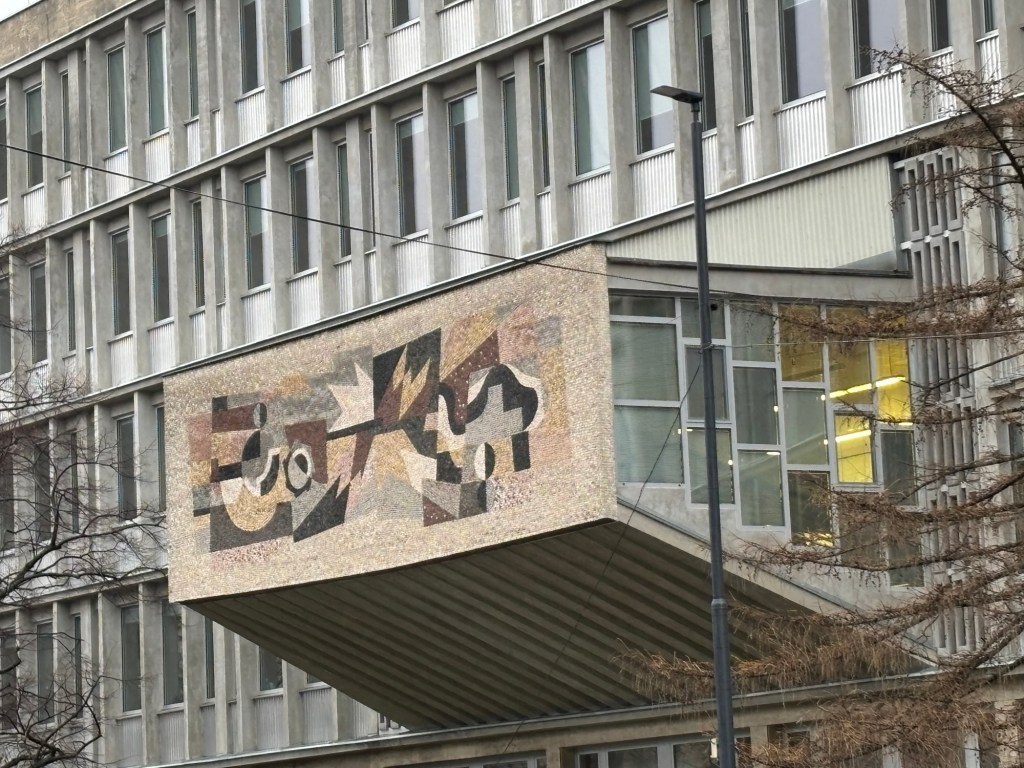
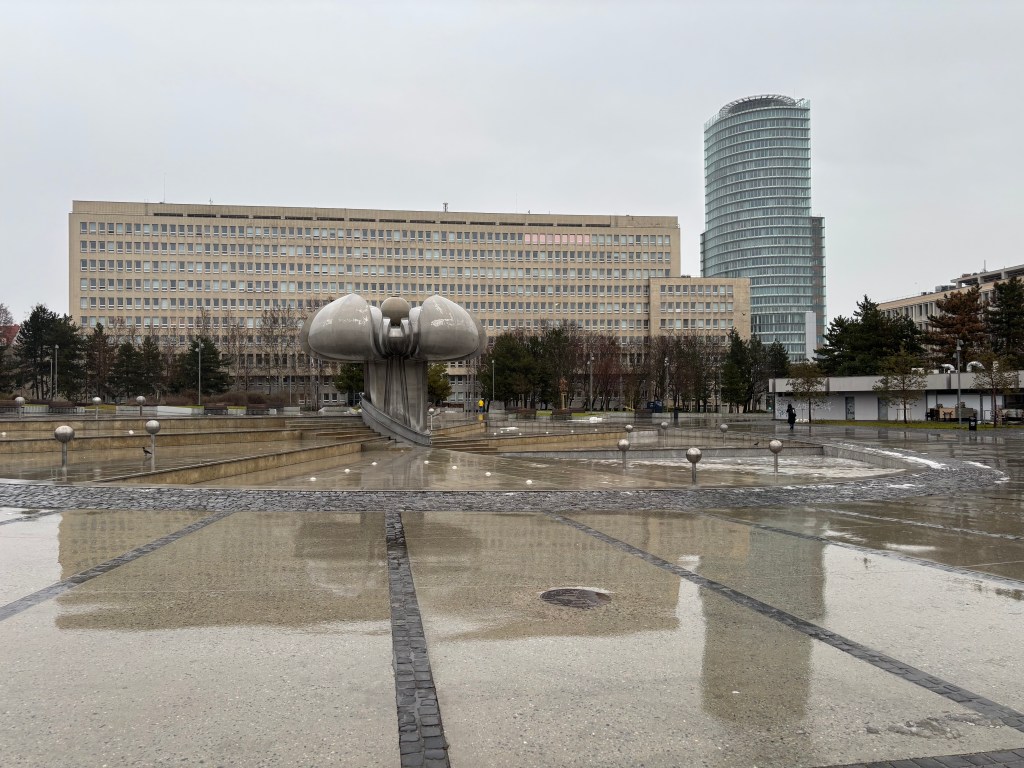
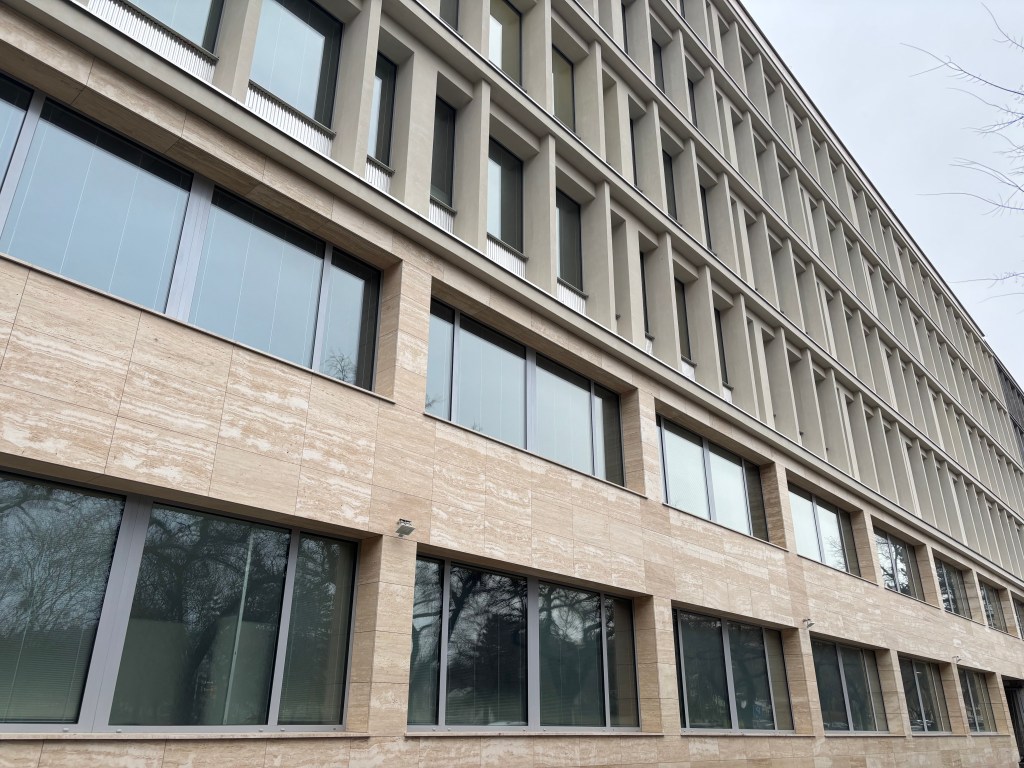
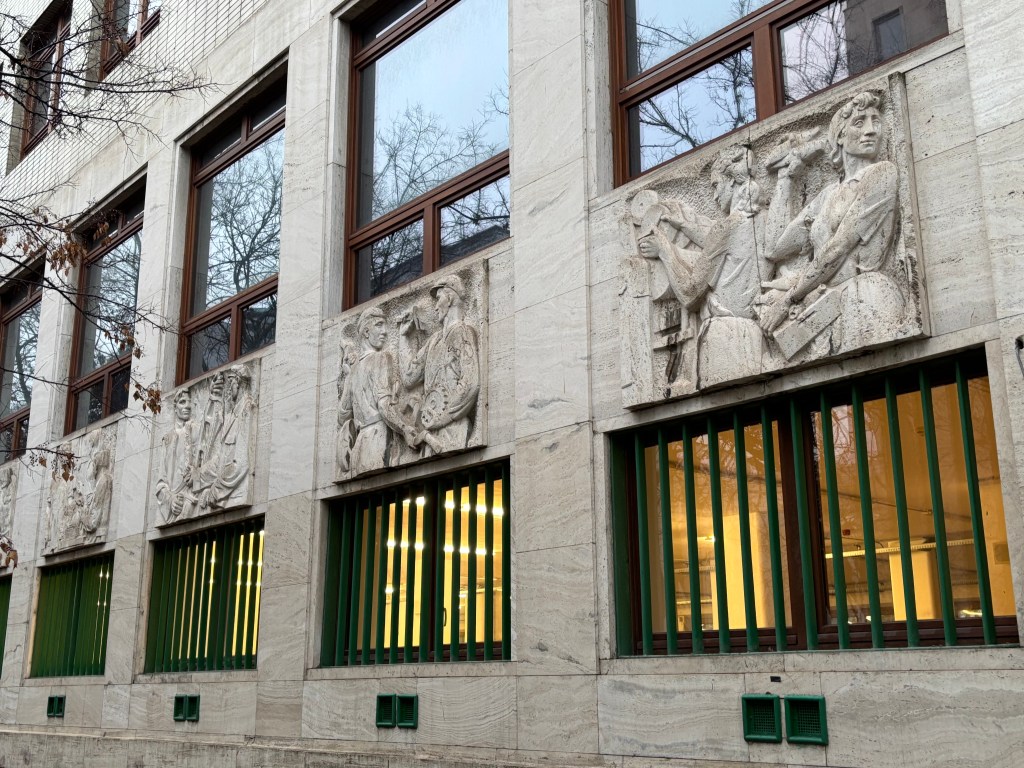
On our first full day in the city we signed up for a free ‘20th Century’ walking tour.
These tours are a brilliant way to find out much more about your host city. They usually last for 2 hours and attendees ‘tip’ their guide based on the value for money of their experience.
It was a fascinating tour: full of quirky information which an ordinary tourist, following their own itinerary, would struggle to discover.
This small capital city of 500,000 (in a country of just 5 million), certainly punches!
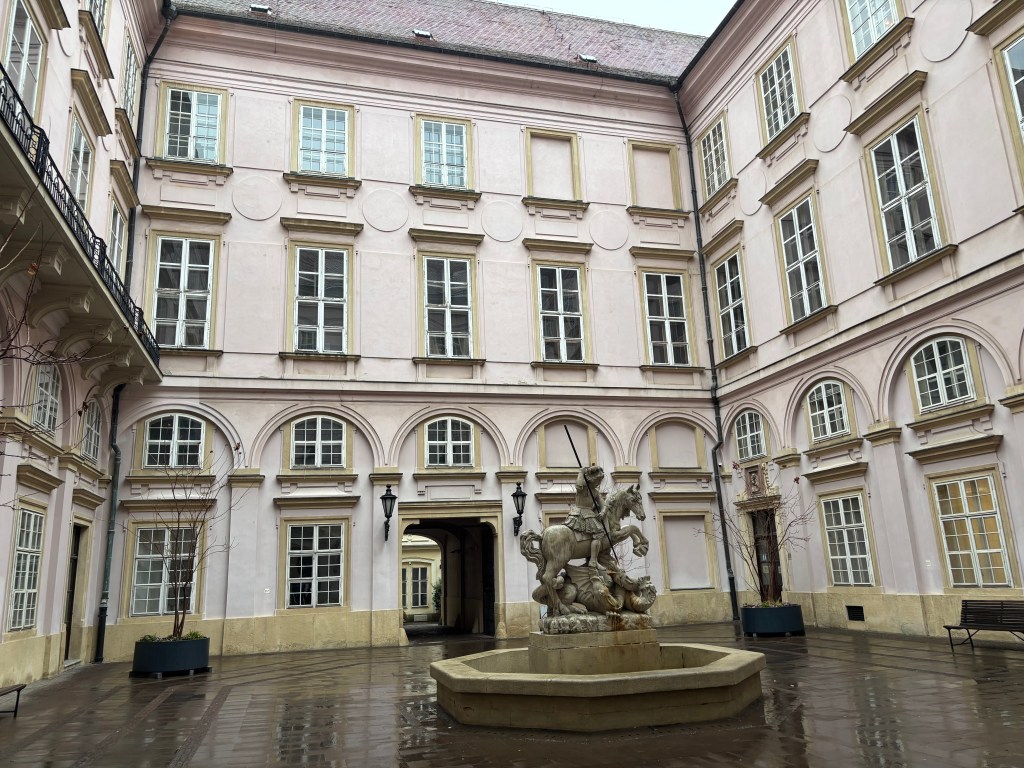
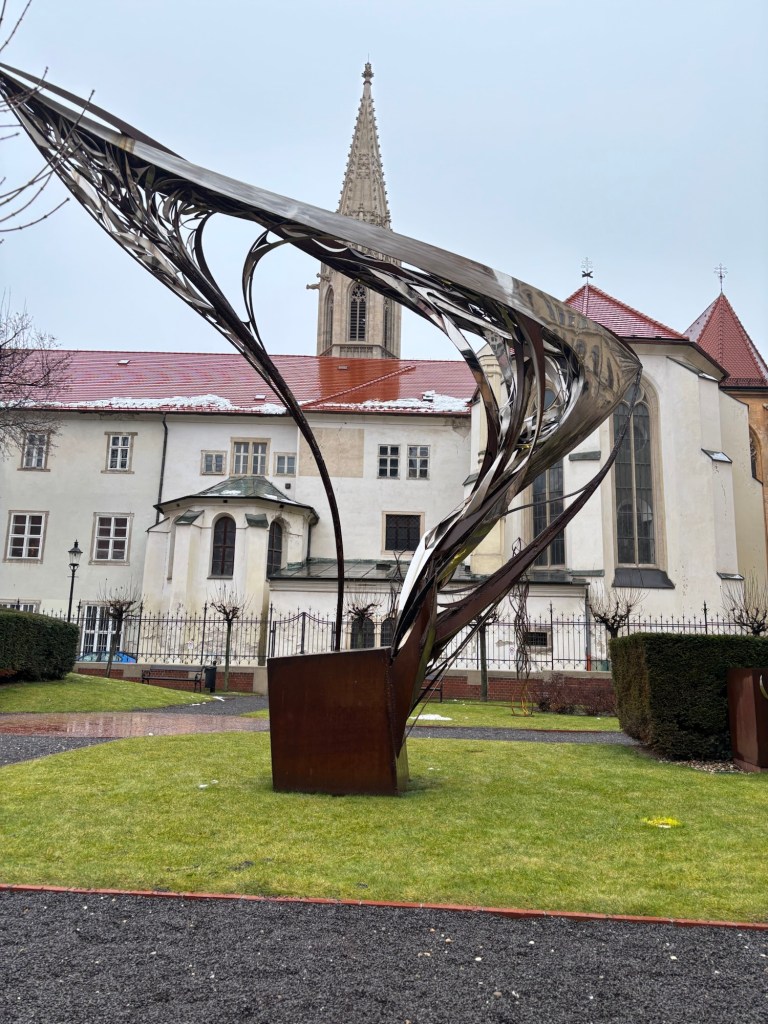
We took in fountains galore across the city, all dry: probably precautionary and to avoid ice expansion damage from the freezing winter weather.
Apparently Bratislava took in 500,000 Ukrainians back in 2021 at the start of the war with Russia: these make up a tenth of the current population of the whole country .
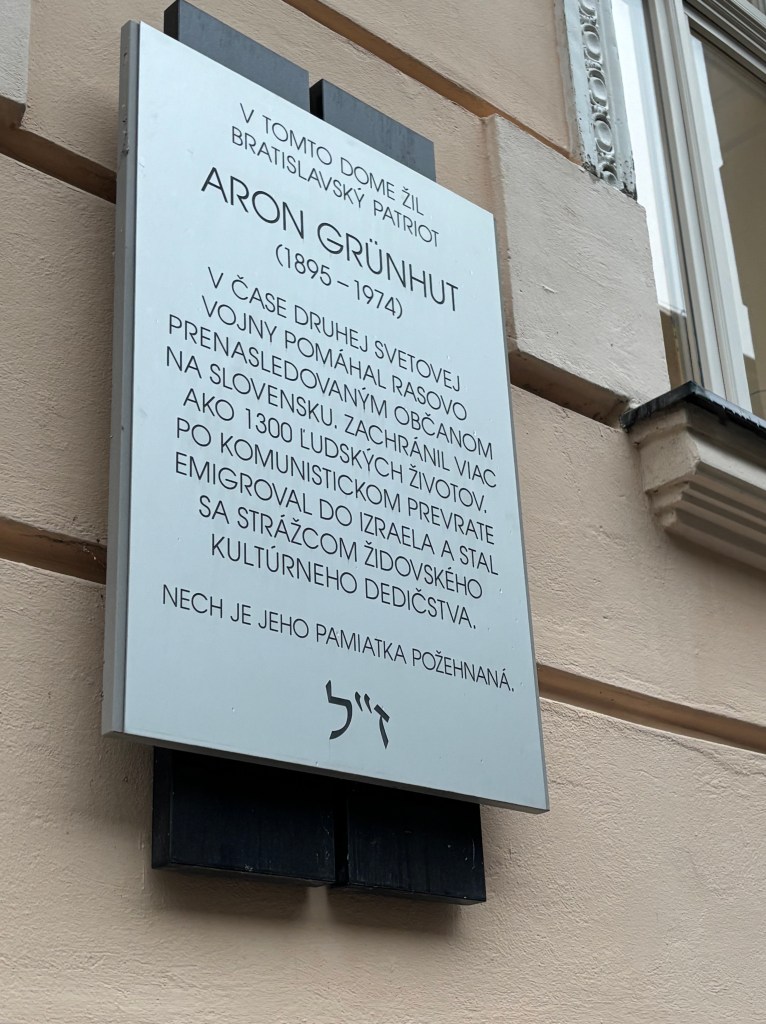
It transpires that ‘Bratislavans’ have their own far less celebrated version of Oskar Schindler: Aron Grunhut, who teamed up with British diplomat Nicholas Winton in WW2, to save hundreds of Jewish children from the Nazi’s. The remarkable story about Winton is told in the 2024 film ‘One Life’ starring Anthony Hopkins.
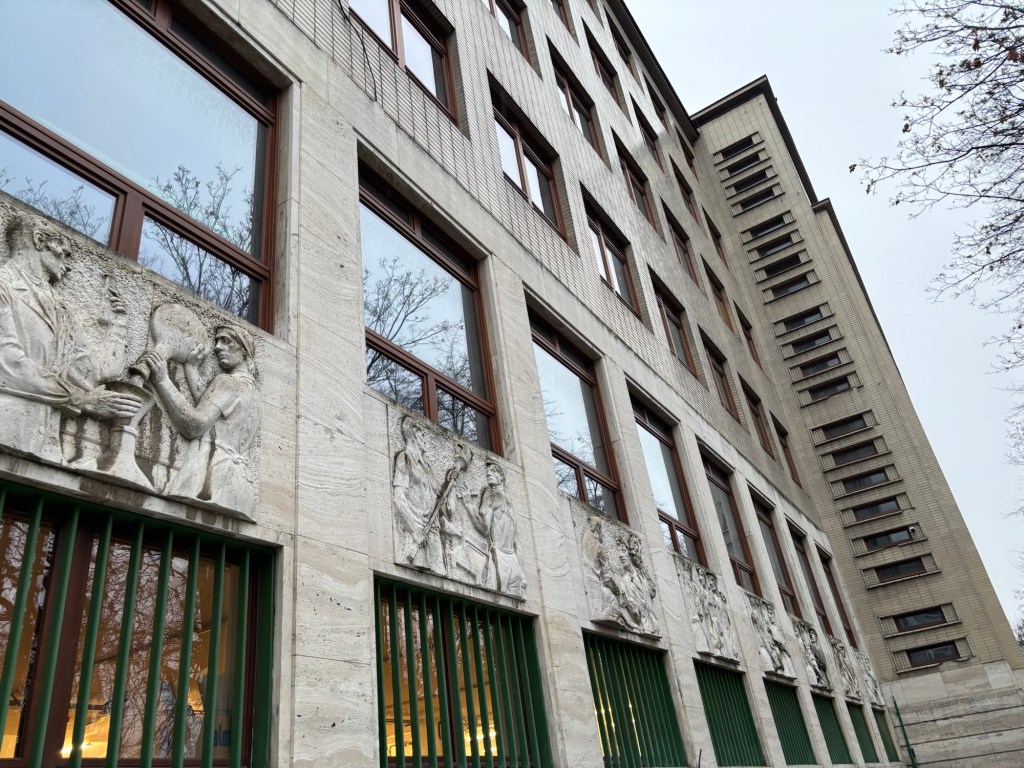
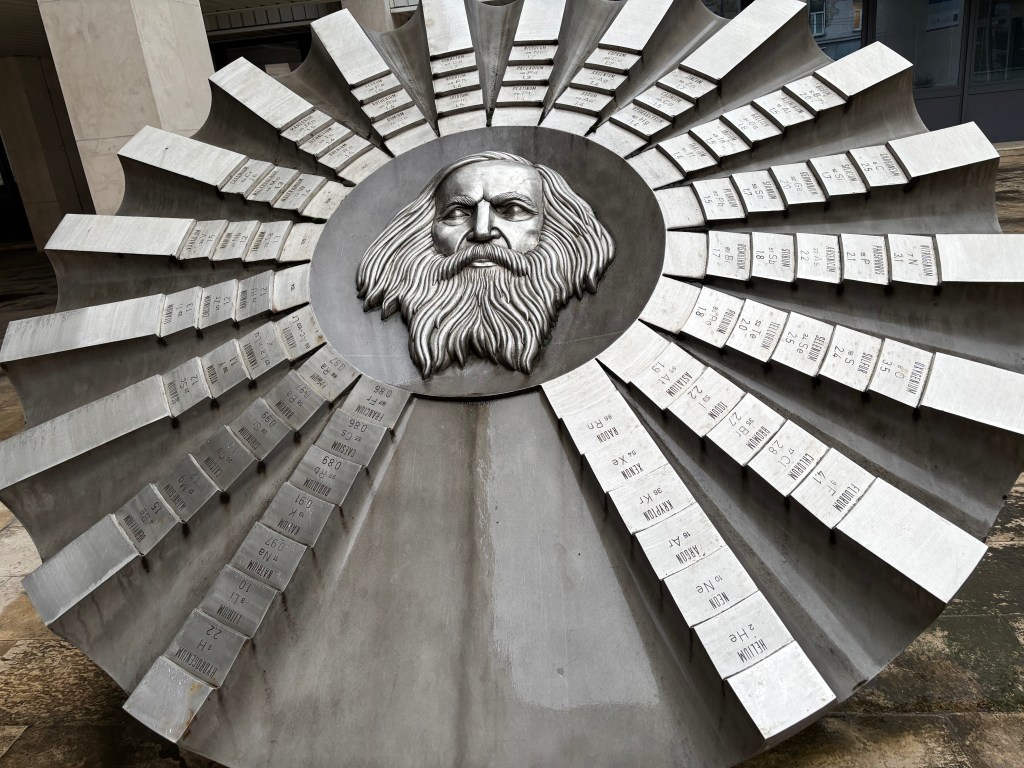
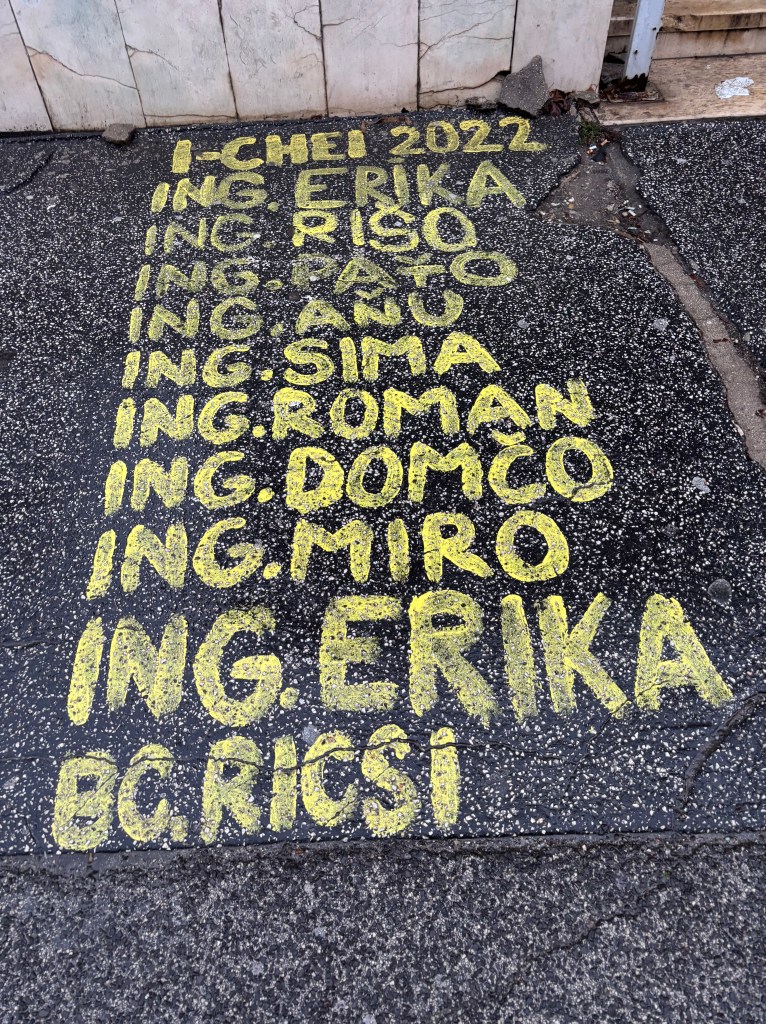
Back on the tour we saw the university building: another typically ‘soviet’ style building with a periodic table sculpture in its entrance forecourt. Outside the university it is a tradition for graduates to paint their names and qualifications on the pavement each summer.
We discovered the sad story of Franz Ferdinand and his wife Sophia. This love story resonated with that of Charles and Diana in the 1980’s. Both women married into the aristocracy and each suffered a tragic ending.
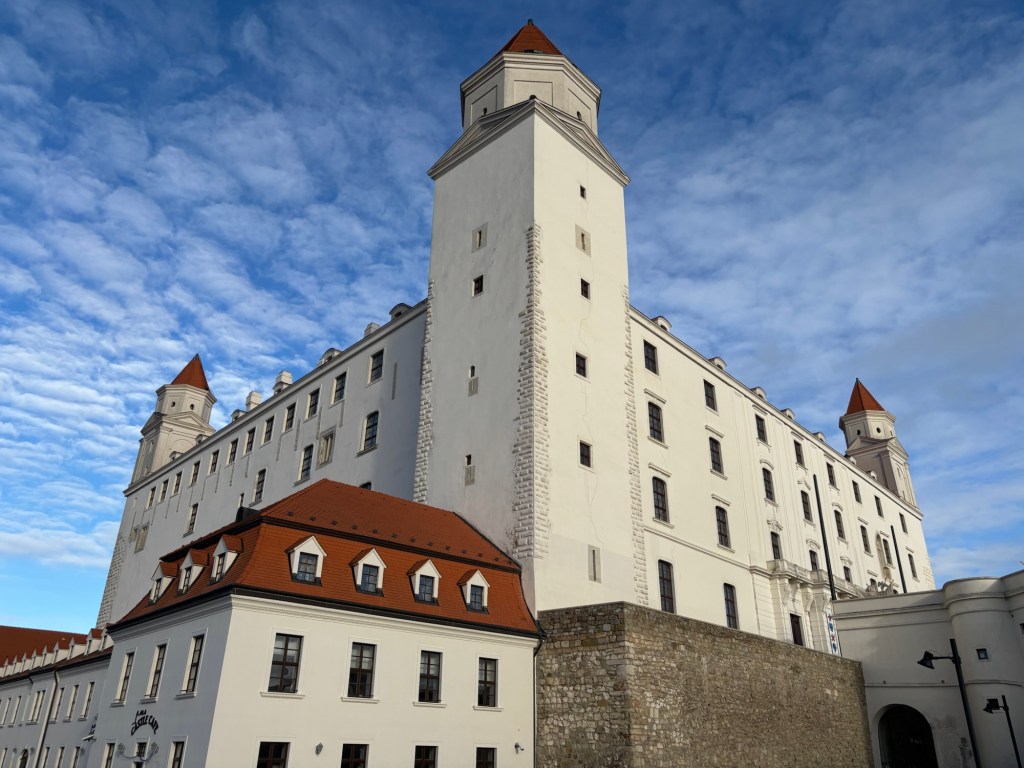
On her only officially sanctioned royal visit with her husband, Franz and Sophia were assassinated and modern history tells us that their death in 1914, was the cause of the start of WW1.
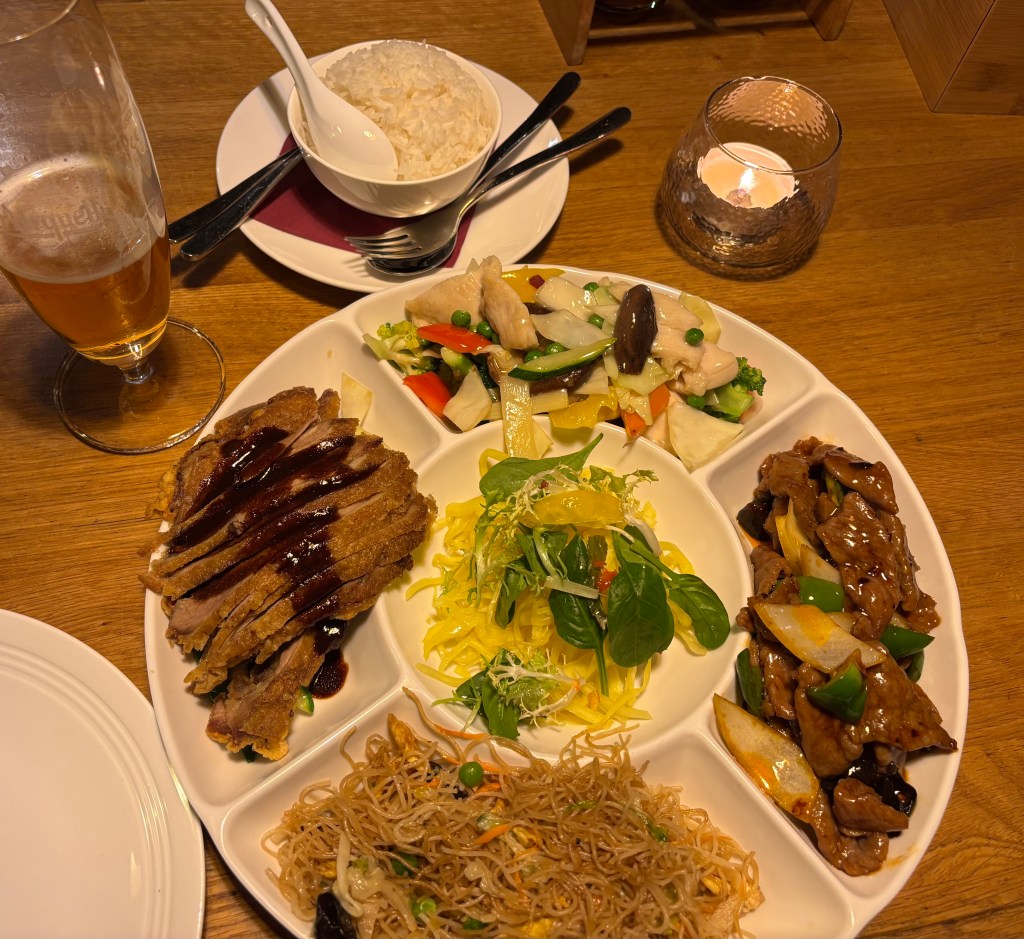
We rounded off a fantastic day with a delicious Chinese meal taking the set menu meal for 2 at ‘Jasmin’ in the old town: all for under €50 including drinks. It was delicious! https://jasmin1.sk/takeaway
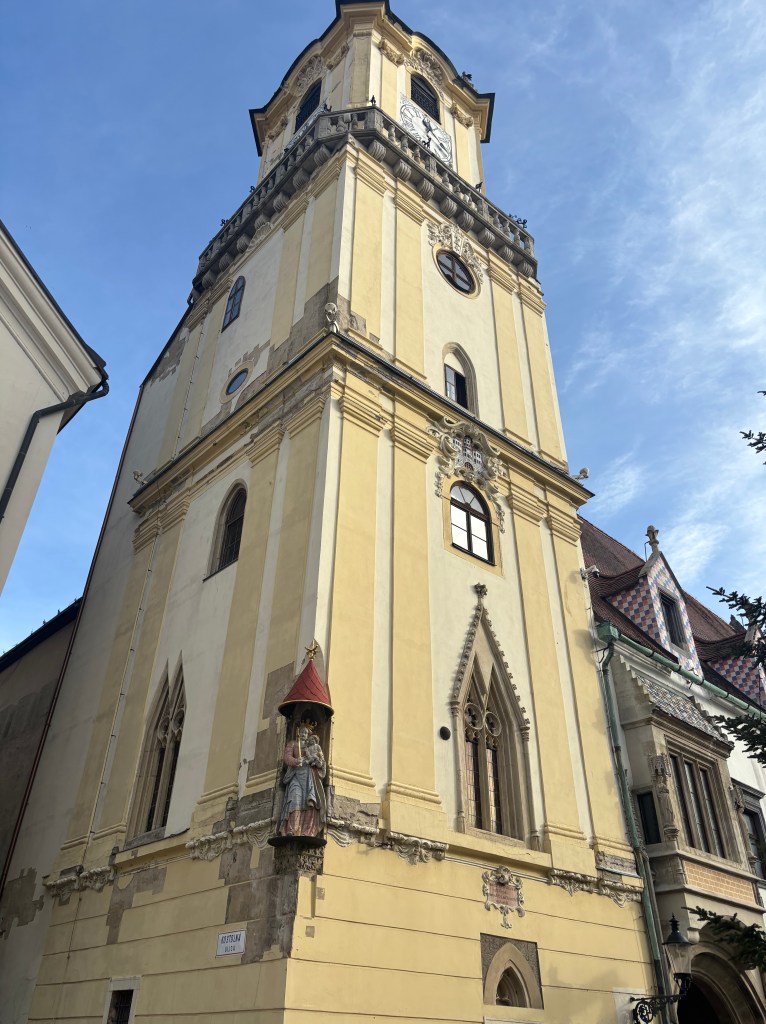
On our second full day in Bratislava we picked up another free tour: this time a ‘Castle and Old Town’ tour with another enthusiastic and knowledgeable guide.
We discovered that the town hall had a Napoleonic canon ball stuck in its facade. Apparently, despite his best efforts Napoleon Bonaparte had never been able to capture the city, but his army had left plenty of spent ordinance across Bratislava.
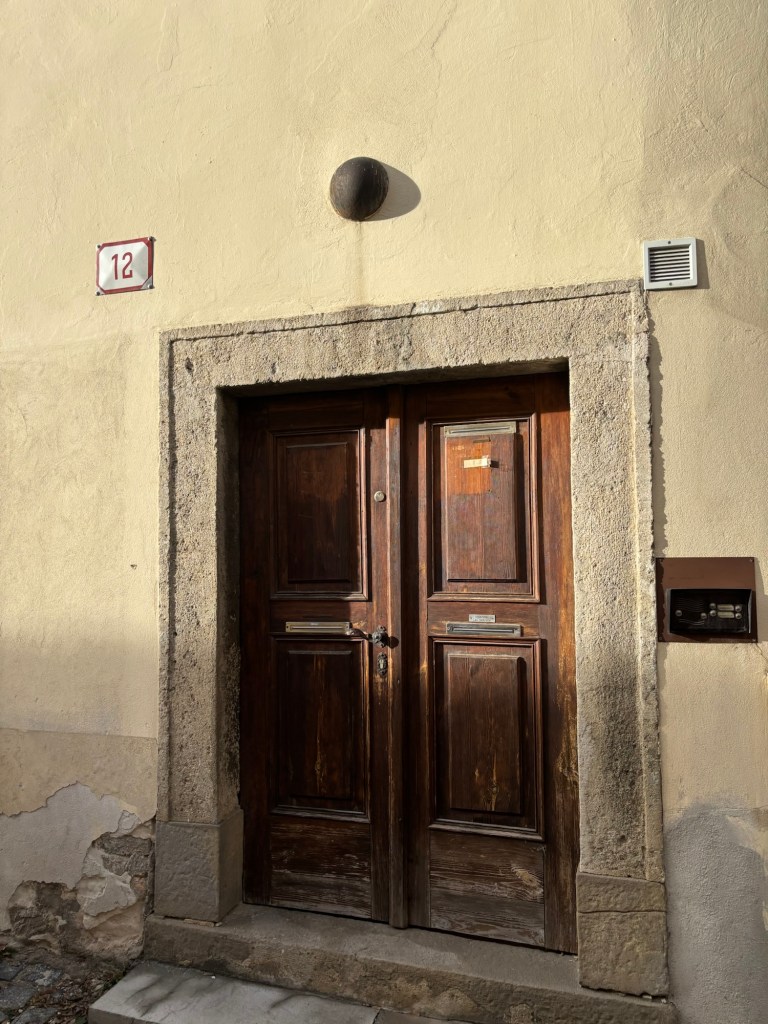
Across the city we became aware of more cannon balls neatly cemented into the walls of buildings in the old town. Apparently a tax dodge, homeowners quickly realised that they could avoid paying a tax if they could ‘prove’ war damage! One particular canon ball had been set centrally above the front door: far too perfectly aligned to bear testimony to the accuracy of ‘Boney’s’ artillery.
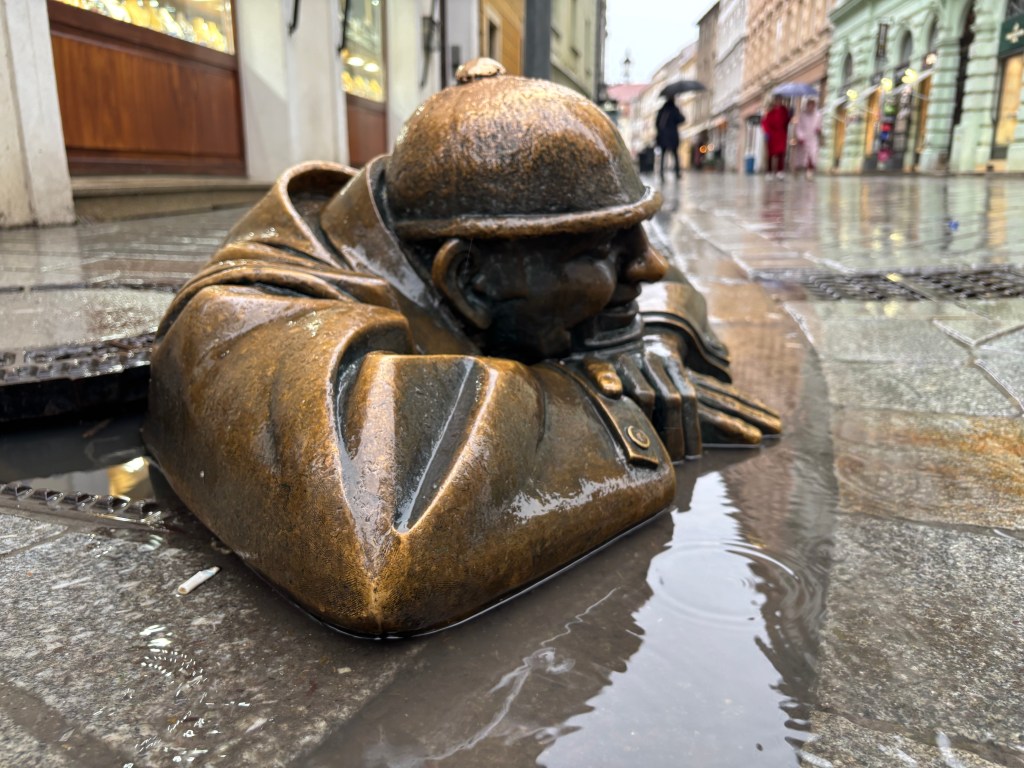
Our guide introduced us to ‘Cumil’. A bronze sculpture commissioned by the government to raise Bratislava’s profile. It depicts a workman peering out of a manhole cover. They hoped that by installing more sculptures around the city they would attract more tourists and become as popular as Vienna.
.

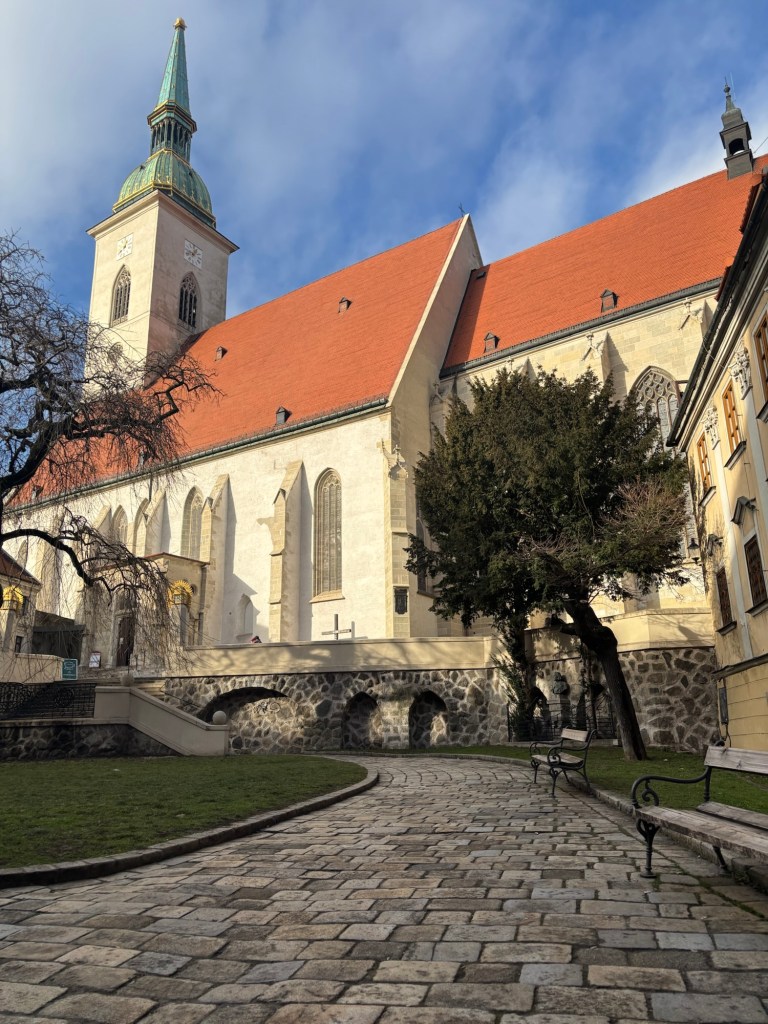
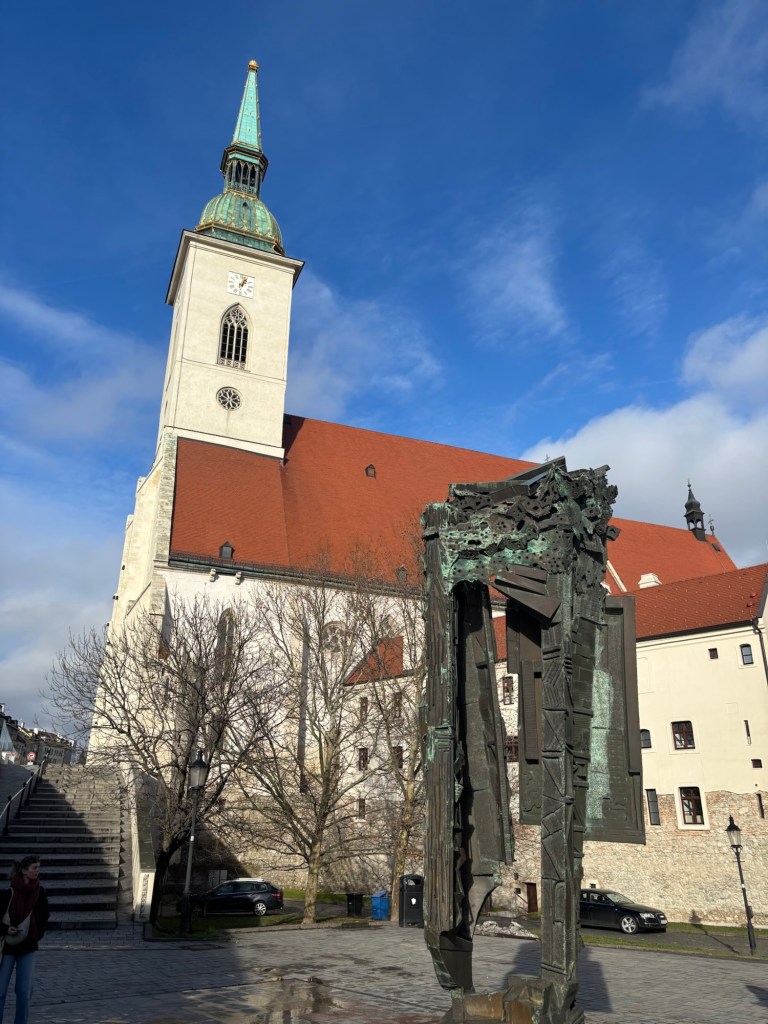
We visited several churches including Saint Martin’s Cathedral and The Blue Church. Apparently Bratislava has more than 50 churches.
In an increasing secular Europe, Slovakia bucks the trend with 70% of the population adhering to the Christian faith (mostly Roman Catholicism).
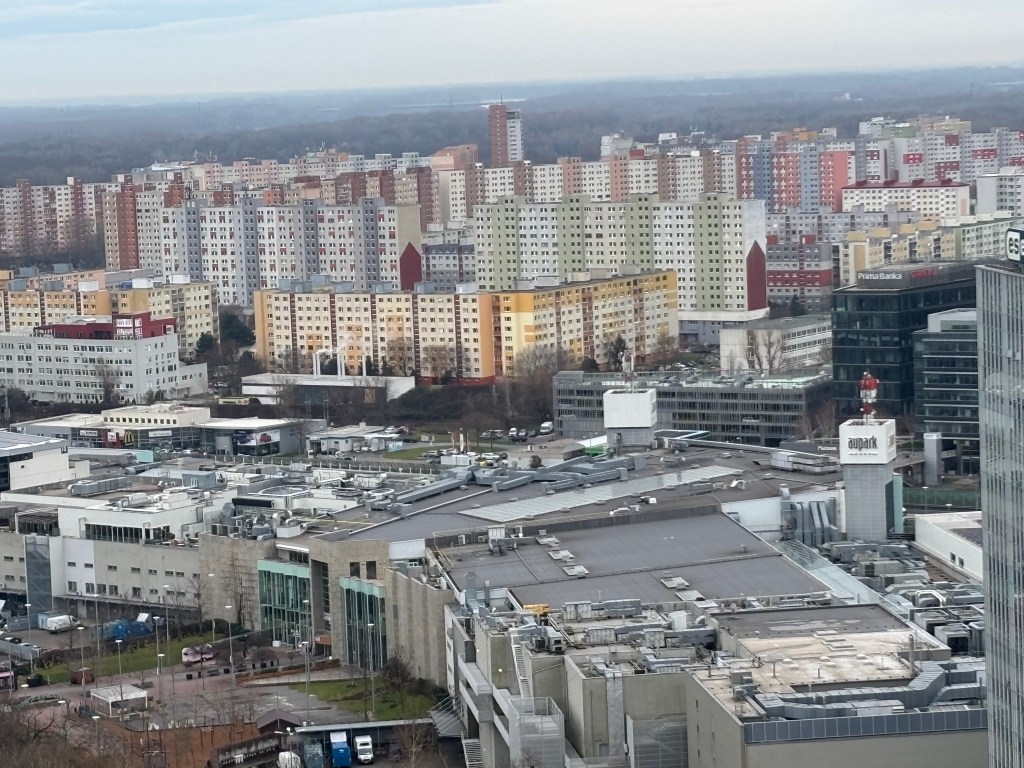
On our last 2 days we decided to further investigate the communist architectural influence that is so evident in Bratislava.
We crossed the Danube on the peculiar landmark known as UFO bridge. Since 1972, this flying saucer has been hovering above the city. The concept behind it was to portray communist states as being ahead of the USA in the ‘space race’ of the 1970’s.
For many the UFO bridge has become the symbol of modern Bratislava.
An expensive restaurant stands at the top of this 95 metre tall tower which is crowned by an open viewing platform. There is an unforgettable view from the toilet which overlooks the biggest socialist mass housing project in Central Europe – Petržalka.
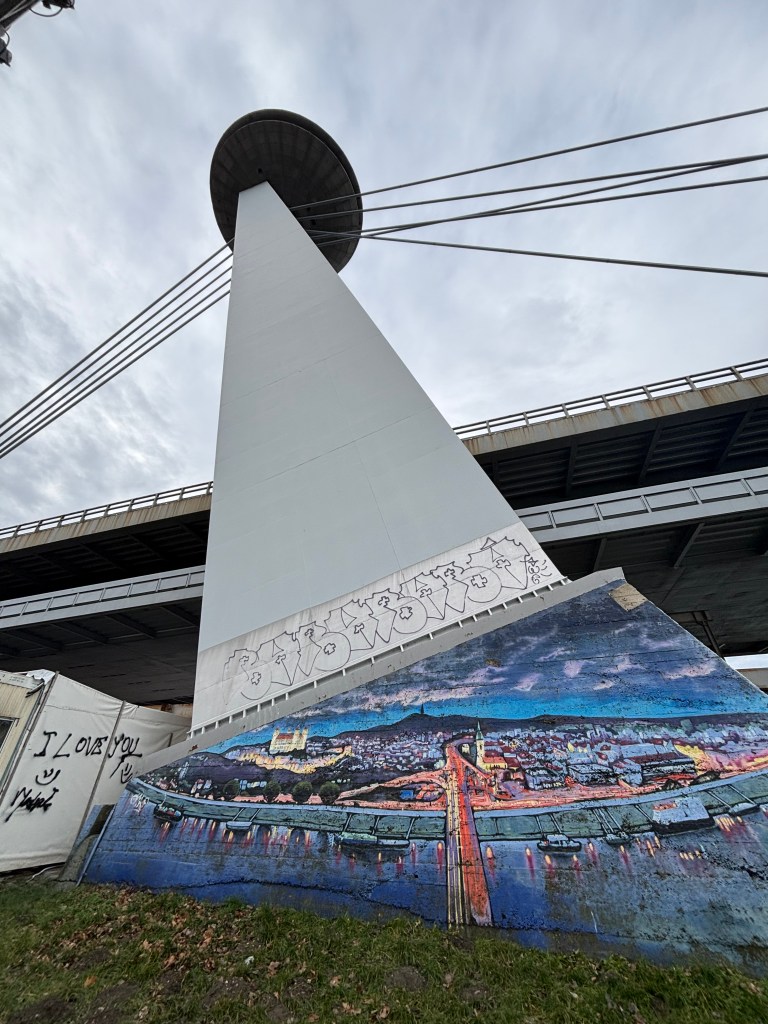
The urban planning of Petržalka built in the 1970’s was completed but apparently it had insufficient connections with the rest of the city. Governmental decisions to build the UFO bridge to rectify this were taken without respecting either the city’s history, its minority Jewish community or wider public opinion. As a result about one fifth of the Old town and the entire Jewish quarter including a beautiful oriental synagogue were demolished.
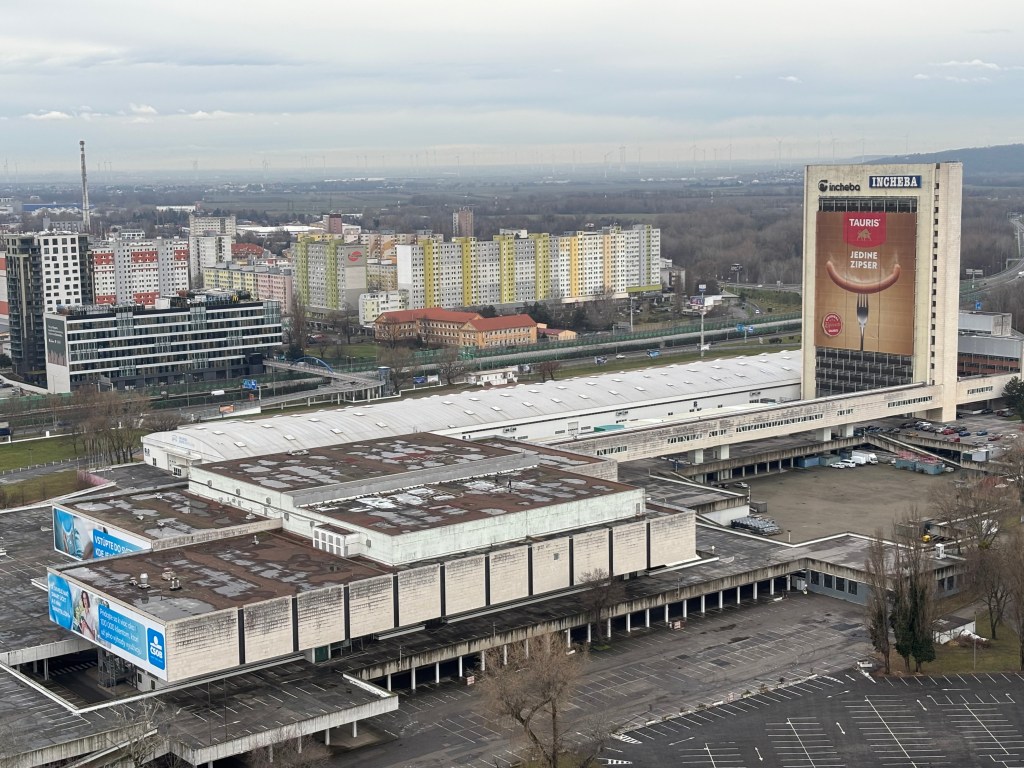
The housing blocks of Petržalka could at one time, claim to host the densest population per square kilometre of any city in Europe.
We found the vast swathes of uniform concrete blocks bizarrely alluring and found exploring Petržalka to be a fascinating experience.
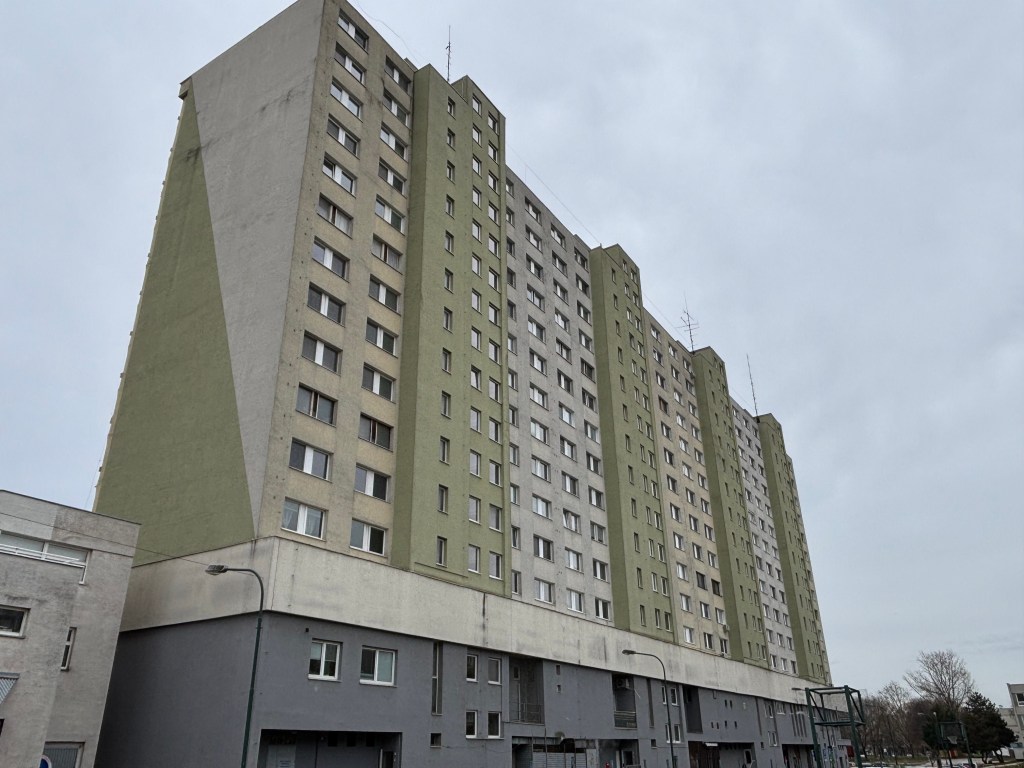
The city’s architectural joy lies in the confluence between the art nouveau buildings of the Austria-Hungarian Empire and the austere concrete housing estates built for the masses, that were a core feature of the city for the four decades of communist rule.
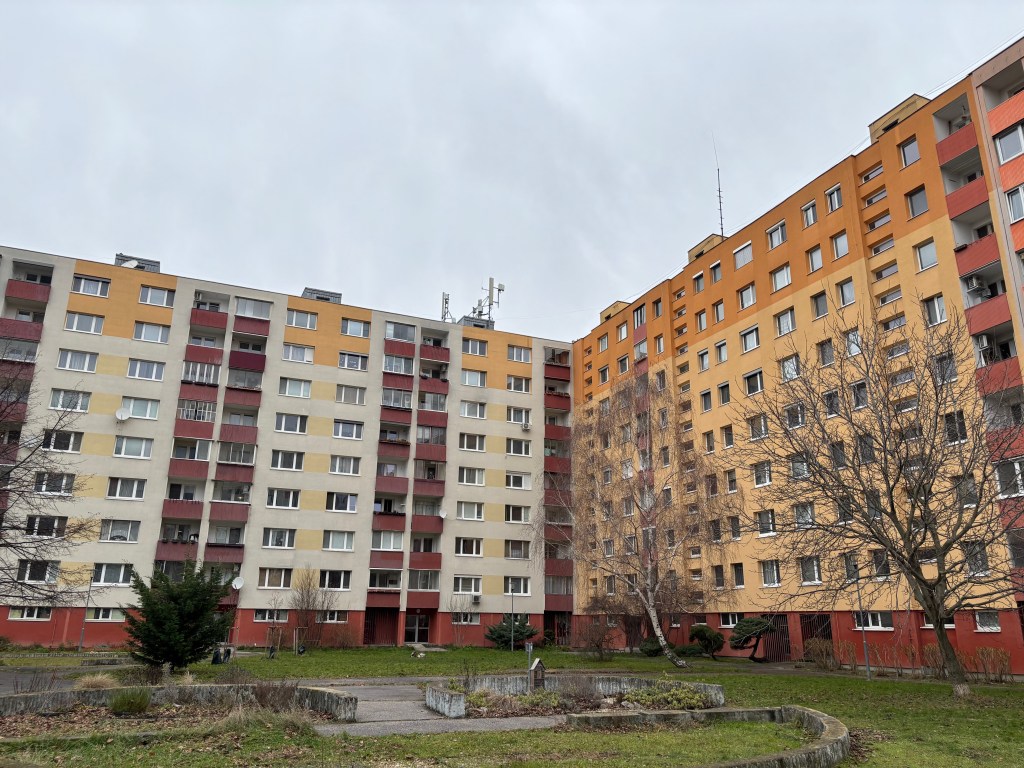
Somehow the 2 styles seem to compliment each other perfectly.
We enjoyed more reasonably priced and tasty meals at the Punjabi Dhabi Indian restaurant (https://www.bistro.sk/restauracia/punjabi-dhaba-prievozska/ ) and a trendy burger joint called Roxor, just 200 metres from our Airbnb. (https://roxorburger.sk/)
Eating out was always affordable and tasty.
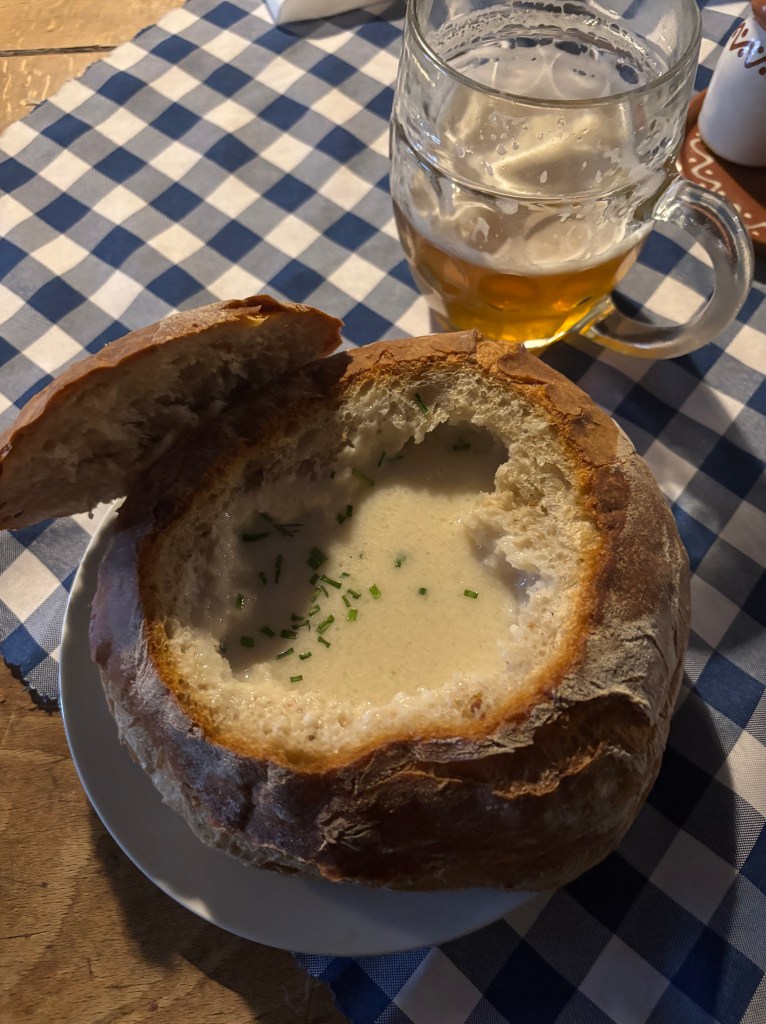
Whilst Slovakian food sounded too ‘heavy‘ for our palates we heard lots of good reports about it. We did try the famous garlic soup, served in a hollowed out 400g cottage loaf. It was tasty but far too much bread even for a bakery lover like myself. At €7 our garlic soup provided us with a very filling and affordable lunch
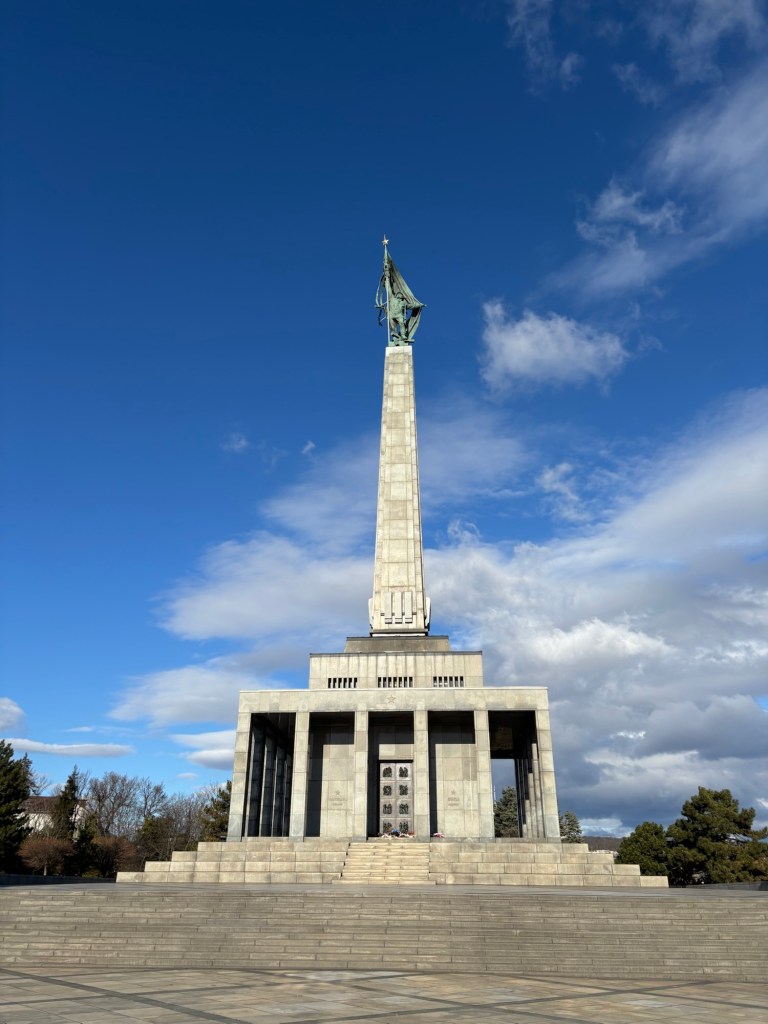
On our last full day we visited the Slavin monument that towers above the city some 2km from its centre. This memorial encompasses a military cemetery and is the burial ground of thousands of Red Army soldiers who fell during WW2 while ‘liberating’ the city in April 1945 from the occupying German Nazis.
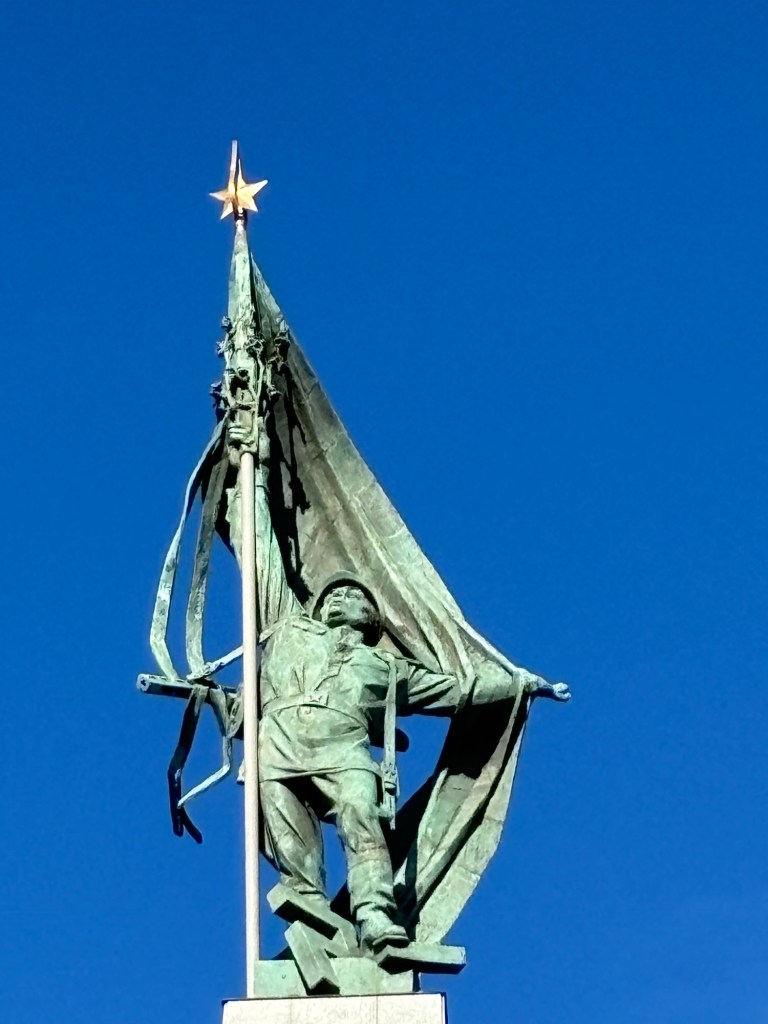
The Russian soldier on the top of the monument unfurls the Russian flag whilst trampling on a swastika.
All in all, including flights, a checked in 20kg suitcase, Airbnb for 5 nights, all meals and entrance fees this city break cost just over £500 for the 2 of us.
We found the people to be friendly, courteous and extremely proud of their fledgling independence: 32 years and counting.
It is a tribute to the charms of Bratislava that despite it only being 59 minutes away by bus, we decided not to take time out to enjoy the delights of Vienna.
So in gratitude to this lovely city and country I’ll sign off: “ďakujem a dovidenia” as we like to say in Slovakia! 🤣
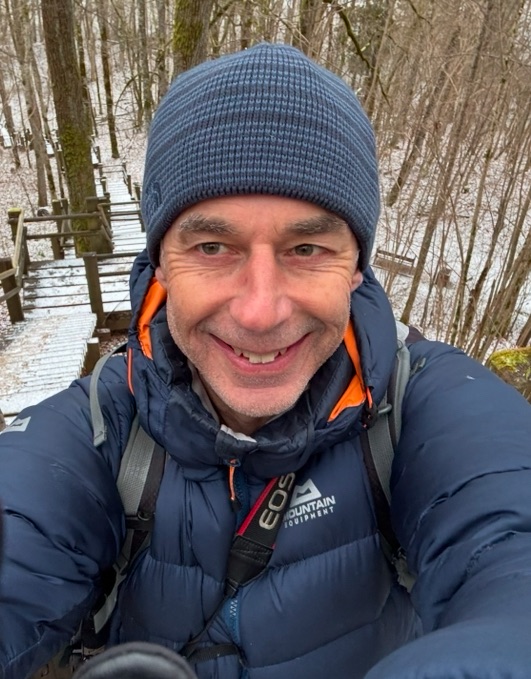
Martin Moorman January 2025
(Martin visited Bratislava from. 6-11 January 2025, flying out from Leeds Bradford Airport)
 Martin Moorman
Brilliant write up Martin! You are definitely so much better. Sounds like you have had a gre
LikeLike