Gdansk!
Wow!
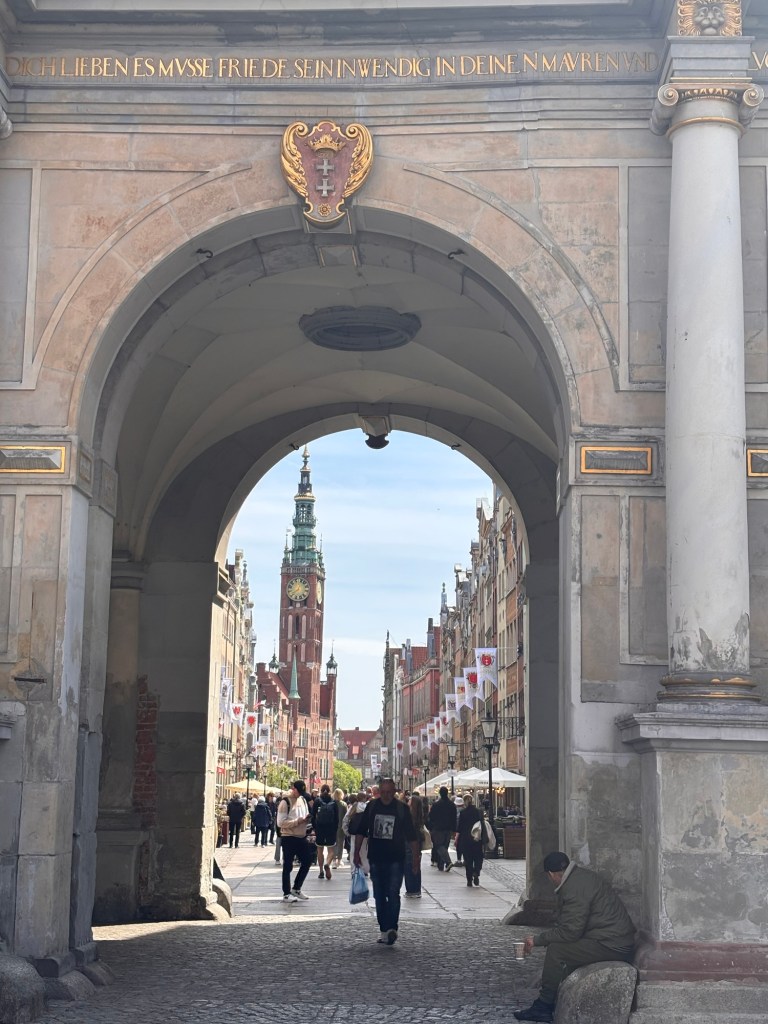
We were told it was going to be good,
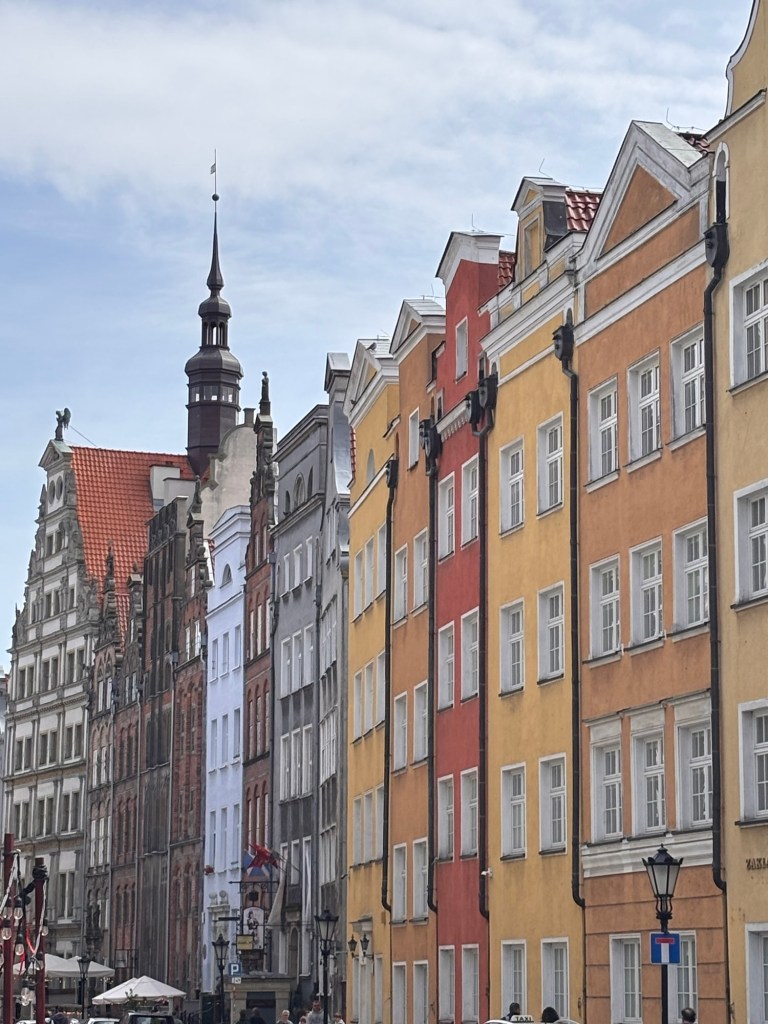
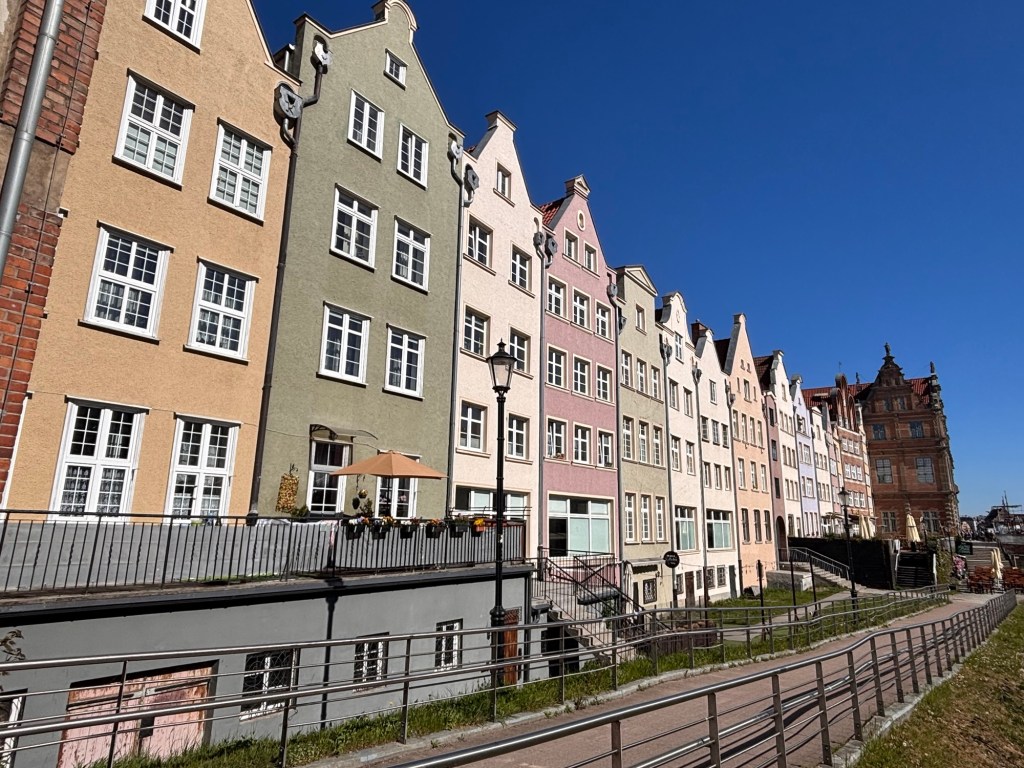
They weren’t wrong!
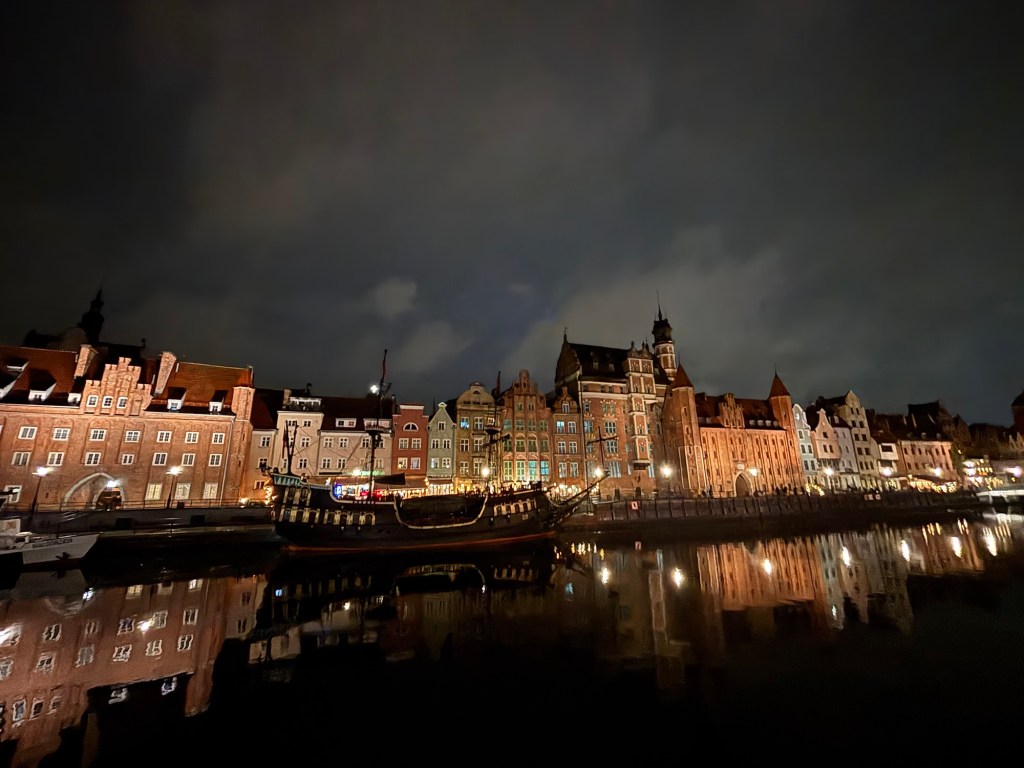
It really is a special city!
Since retiring in autumn 2020, my wife Nicky and I, have been fortunate enough to visit 3 of the main cities in Poland:
Krakow, Poznan and Wroclaw.
All 3 have been stunning visits.
This week we came back to claim our 4th Polish city:
Gdansk.
All 4 cities share so many positive attributes; affordability, climate, great public transport links, a thousand years plus of history, culture, a hard working and friendly people, a flat and easily accessible environment, a varied European menu that can accommodate most palates and a vibrant and a bustling river life that all show each city off at its best.
Gdansk tops the Polish ‘hot spot’ list though!
Hot? Mmmmmm.
Not quite so in our experience.
In truth, it was pretty ‘Baltic’ 🥶 for 2 of our 5 days, with a raw north easterly wind meaning clothing layers were very much in vogue.
Conversely, for the first 3 days of our visit, the mercury hovered on or above the 20 degree mark.
A game of 2 halves: to steal a football cliche.
Apparently, last winter (November to January 2025) it was -25 degrees every day in Gdansk, for weeks on end and the locals were skating on the city’s rivers, the Motława and the (Dead) Vistula, throughout the winter.
I now put Gdansk right up there with Budapest as one of Europe’s brightest 21st century, city destinations.
With a travel time of just over 2 hours from Leeds Bradford airport, this is also a really well connected city to get to.
The Jewel in BOTH the Polish AND European Crowns?
Gdansk is quite possibly the best of the lot.
The ‘lot’ being Europe: with all its significant ‘big hitters!’
Barcelona, Prague, Rome, Copenhagen and Paris!
Just!
And of course, the bar for that personal judgement is very high.
I absolutely love Poland!
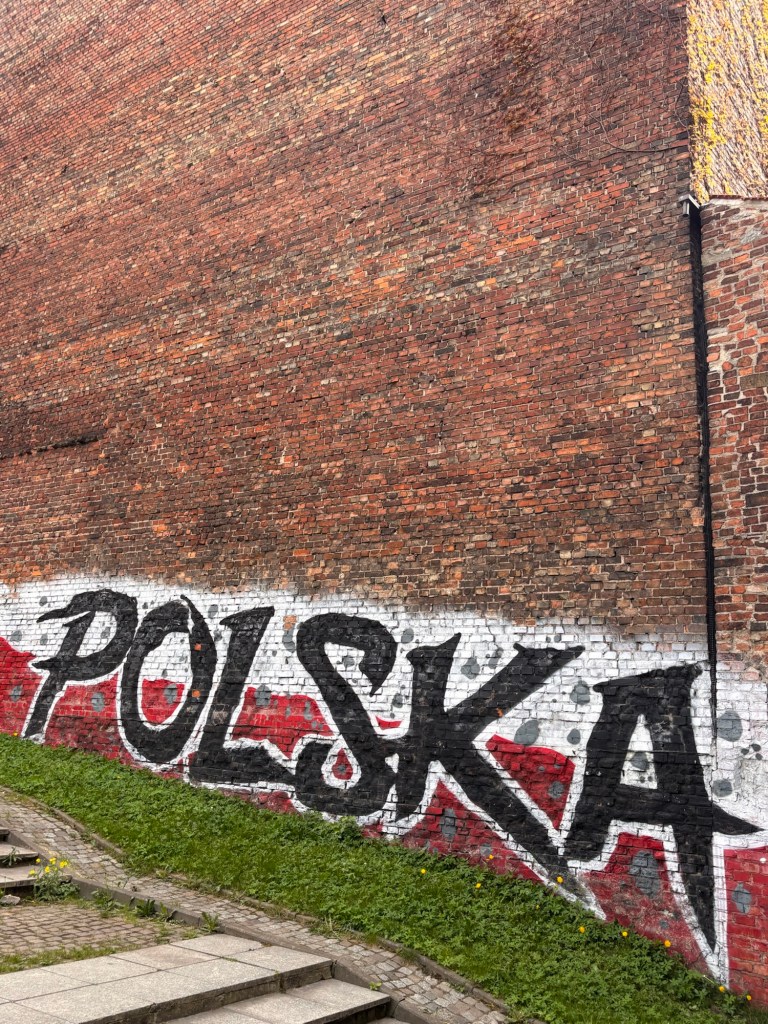
Maybe I will relocate there?
Marten Moormaneski has a certain ring about it.
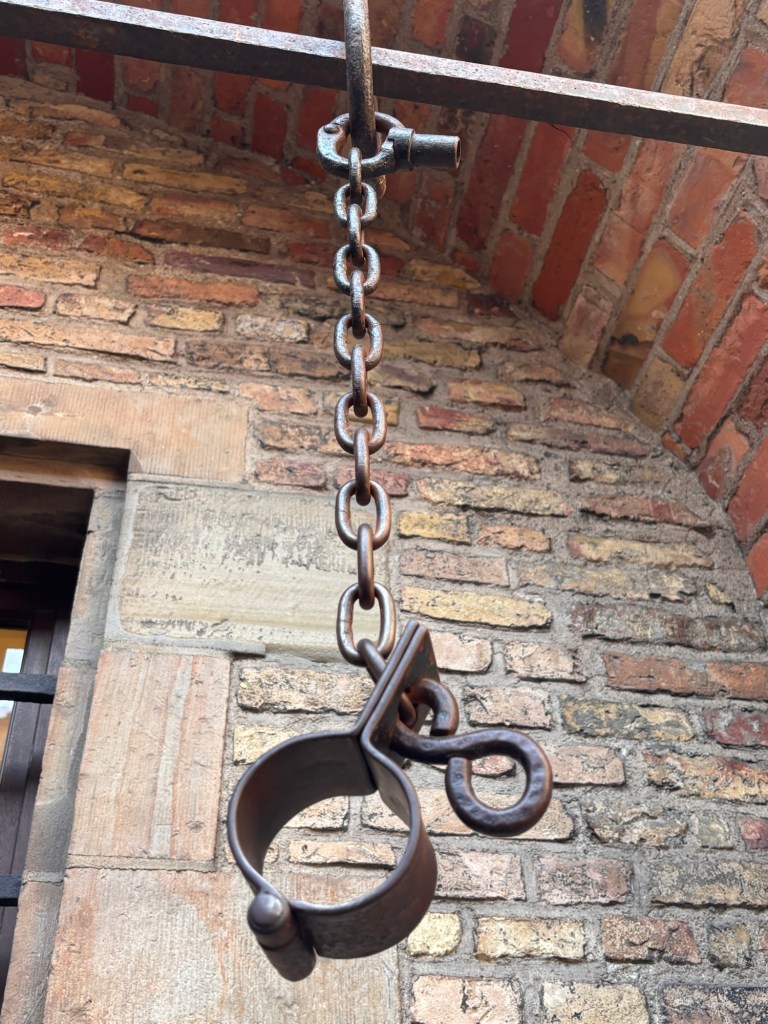
It certainly is a beauty!
A few facts for you:
Gdansk was known as Danzig back in the years before the outbreak of WW2. (It has always had strong connections with Germany and was often considered to be more ‘German’ than ‘Polish’.)
The first battle of WW2 took place at Westerplasse, just 6km to the north of the city.
Daniel Fahrenheit, of the thermometer and temperature fame, was born here and lived in the city for 15 years.
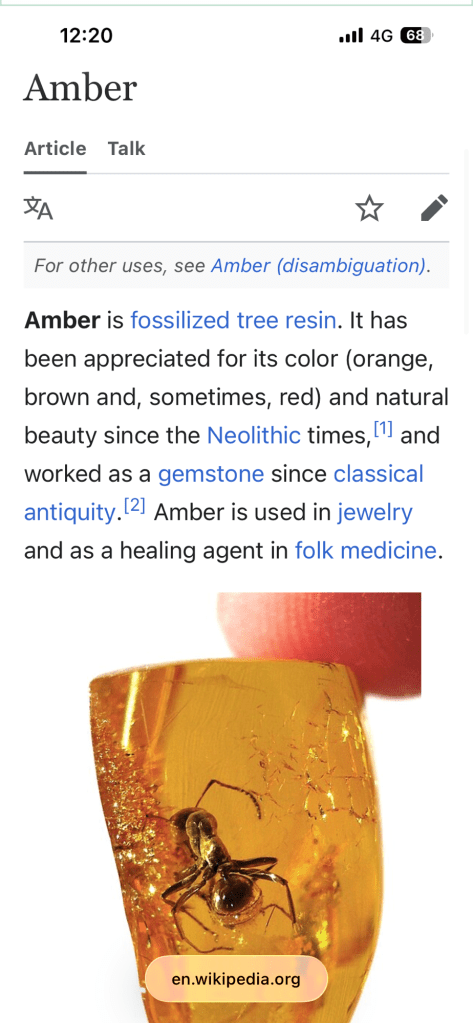
Gdansk is considered to be the ‘Amber capital of Europe’.
St. Mary’s Church in Gdańsk, is the largest brick church in Europe, capable of holding over 25,000 people.
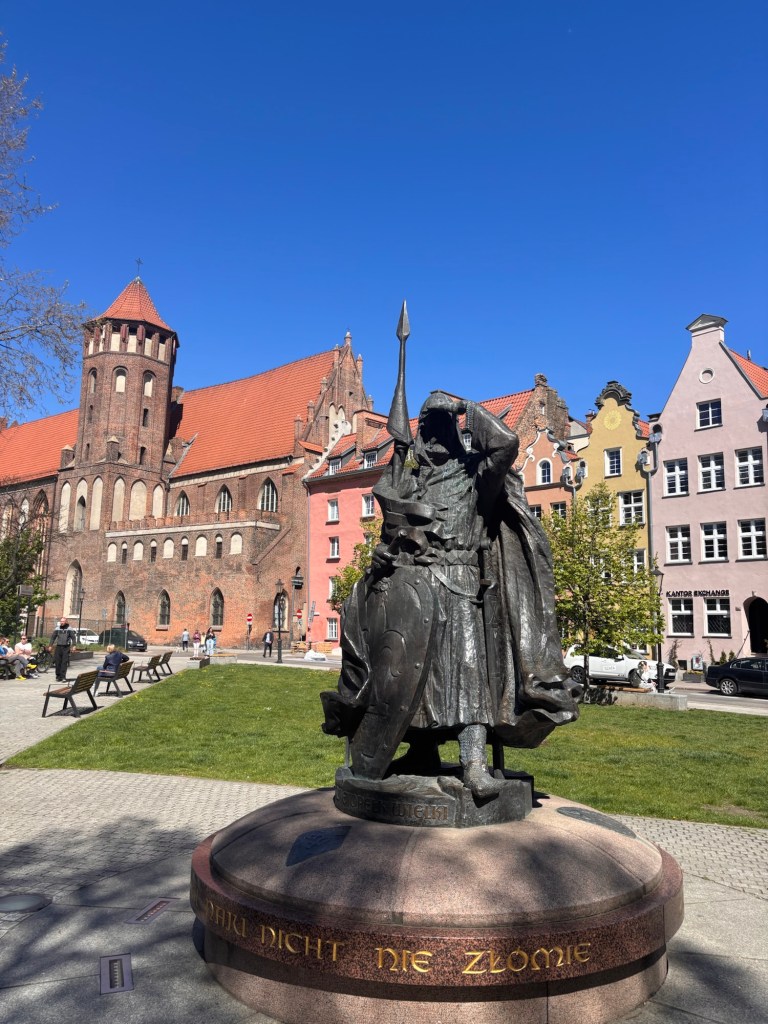
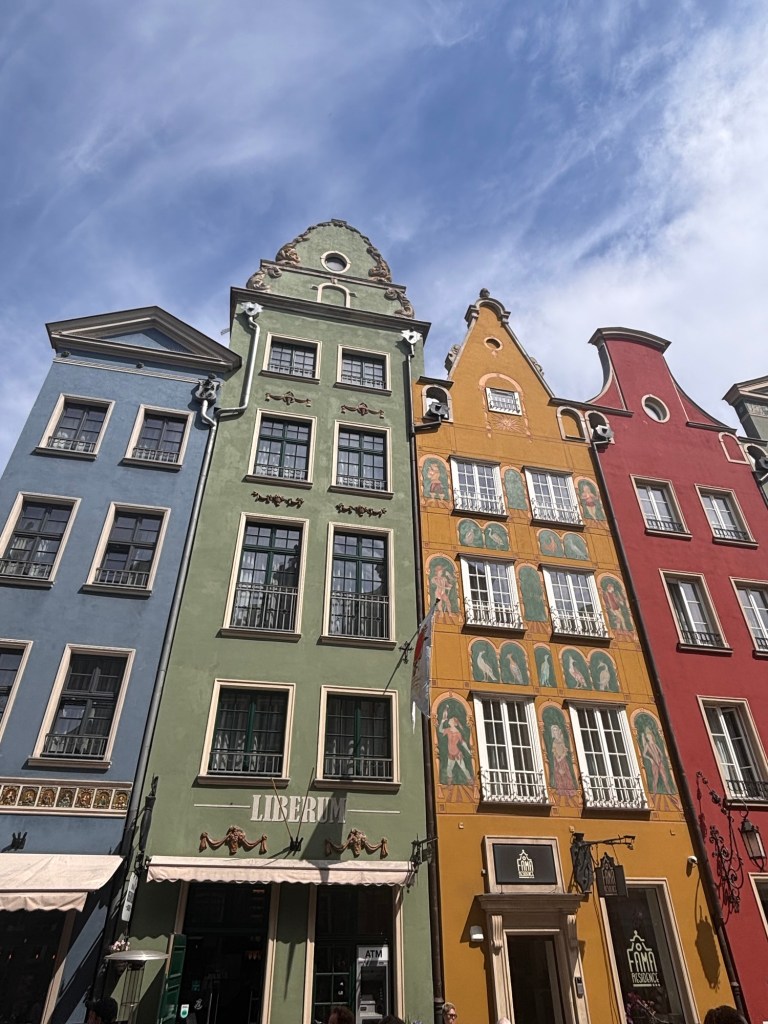
Gdansk actually looks like Amsterdam: this is due to its intense trade with Dutch architects in the city during the 16th/17th centuries. The city’s architecture in the Old Town strongly resembles Amsterdam.
A significant number of German U boat submarines were engineered and manufactured in Gdansk.
The historical significance of this Baltic city has transcended over 1,000 years.
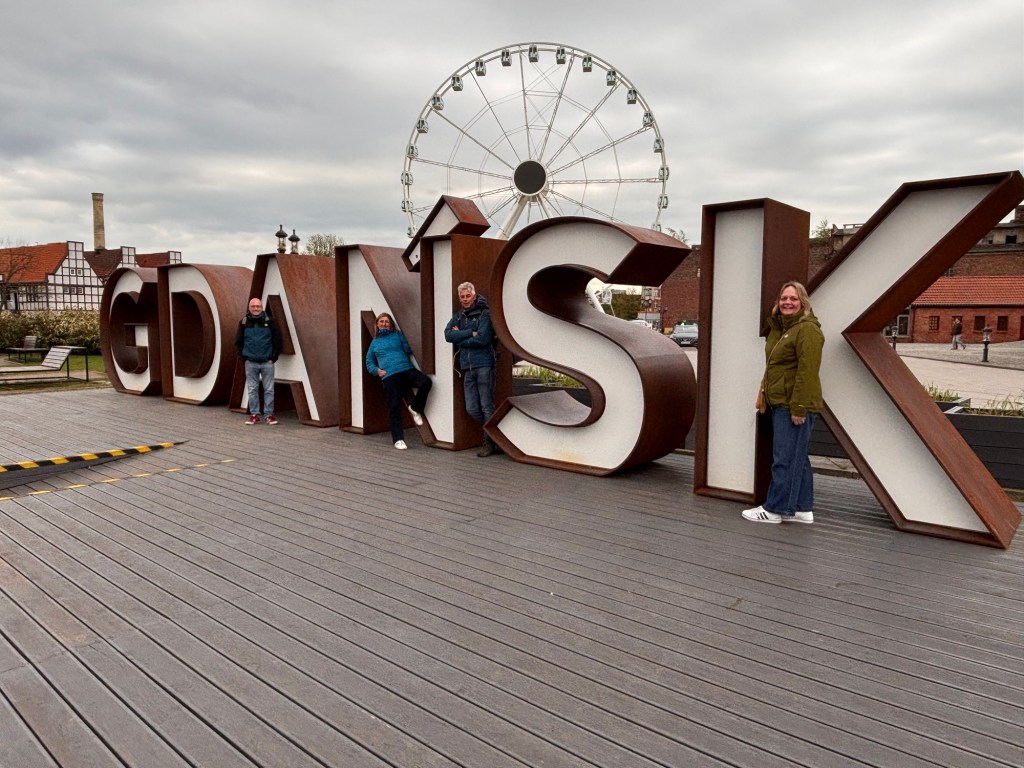
We arrived here only 5 days after I had finished my 650 mile/1060km/1.4 million step walk from the tip of Portugal to Santiago de Compostella at the top of northern Spain. I had started in Cape St Vincent on the Algarve coast and after eventually walking to Lisbon, I carried onwards and northwards to Porto, on what has become known as the ‘Camino Portuguese’. (One of the many historic pilgrimage routes collectively known as ‘The Camino de Santiago’.
I’d walked a long way and the soles of my feet had taken a bit of a battering.
So I was a touch apprehensive, that this foot pain would limit my enjoyment of Gdansk and that it would become a ‘Hobbling City Break’ for this particularly ‘accidental tourist’.
Amazingly, for the whole of this visit, my feet were great.
5 days of respite after those 37 walking days along swathes of (sometimes) brutal Iberian cobblestones, had allowed my soles to recover a little and I had no problem managing the 8 mile average walking distances we covered during our stay in Poland’s 6th largest city.
I think my walking companions had secretly feared that I would make them walk Camino-length distances.
As it happened, we only walked a total of 33 miles during our 5 night stay.
We came here with our great friends and fellow ‘parent in laws’, Jo and Jason, who are the mum and dad of Abbi, the wife of our youngest son, Jake.
Last year we had visited Poznan together and enjoyed a fantastic 4 night stay.
We hatched our plans for Gdansk just before Christmas 2025, and tracked down some brilliantly priced air fares.
Our return flights, including 1 checked 10kg suitcase per couple, cost just £170!
Ryanair!
You love them when they are cheap and land on time.
You loathe them when they are late, or uncommunicative, when they operate their ‘disappearing staff policy’, or when their CEO Mr O’Leary threatens to charge ‘extra’ for anything tenuously connected to the flight.
Too often!
Michael O’Leary is that ‘angry man!’
Very angry!
His ‘legendary customer service’ skills, can often resemble the subtlety of a sledgehammer.
He needs to take some ‘chill pills’.
Life’s is really too short for that level of stress.
But we all love a bargain and in fairness he and his beloved Ryanair do deliver a bargain flight, with a fairly high level of frequency.
I could easily pay more than that £170, just for me to get to London.
We had such a fun time and all of us loved the whole ‘Gdanskian Vibe.’
This city oozes a feeling of ‘living history’.
All 4 of us are old enough to remember the rise of the ‘Solidarity’ – (Soludarnosc) – Movement of the 1980’s.
Lech Walesa had become the ‘Zelensky’ of Poland at that time, and the passive resistance of his trade union movement had seen the eventual collapse of the communist regime that had existed and dominated life in Poland since the end of World War 2, in 1945.
We spent our first morning in Gdansk on a ‘Free City Tour’ organised by ‘Guru Walk’.
They are a great tourism concept.
The tours are offered free of charge, with attendees invited to ‘tip’ their guide at the end of the trip.
Your ‘tip’ should reflect your appreciation of the guide’s efforts.
They are, in our experience, always such good value.
The guides are always knowledgeable and fun.
Not only do the tours help to orientate you into the city’s life, but you also find out so many interesting snippets of information: often very quirky information that you would have very little chance of discovering yourself.
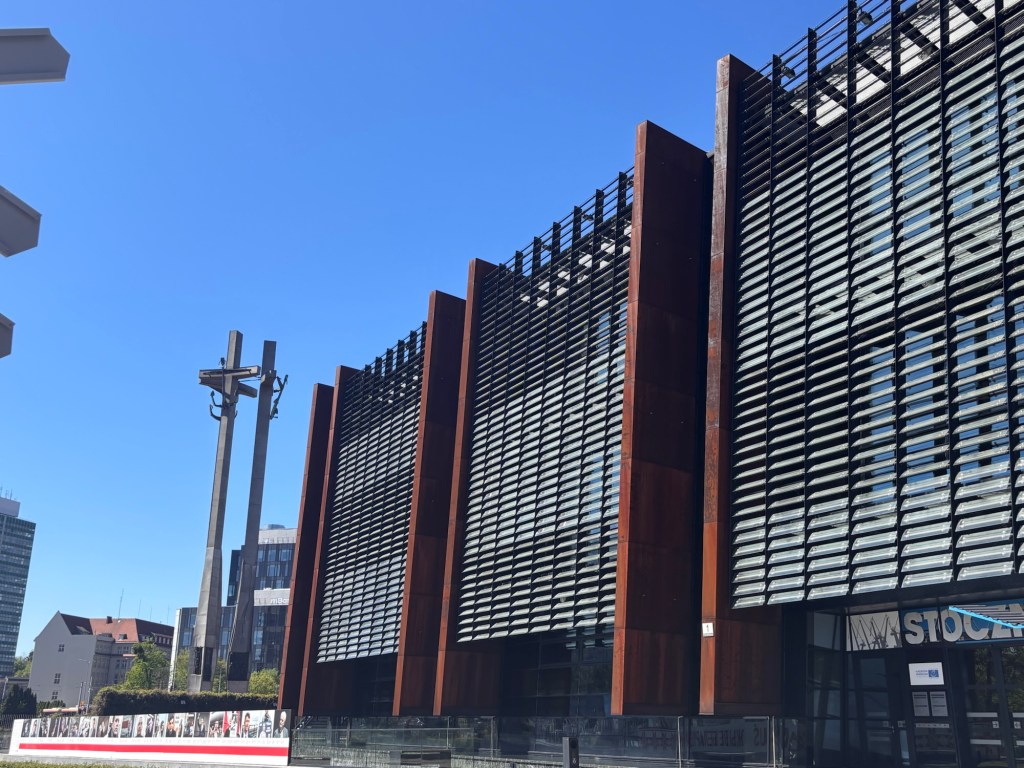
These tours are always our ‘go to’ on the first day of any European city break, especially as they really help us, as a first time visitor, to get our bearings.
We learned so much more about ‘Solidarity’, life in Gdansk at the time of this popular resistance to the communist regime, and the importance of the shipyards of Gdansk in the city’s history and most especially its recovery from the brutalist ravages of Soviet style communism.
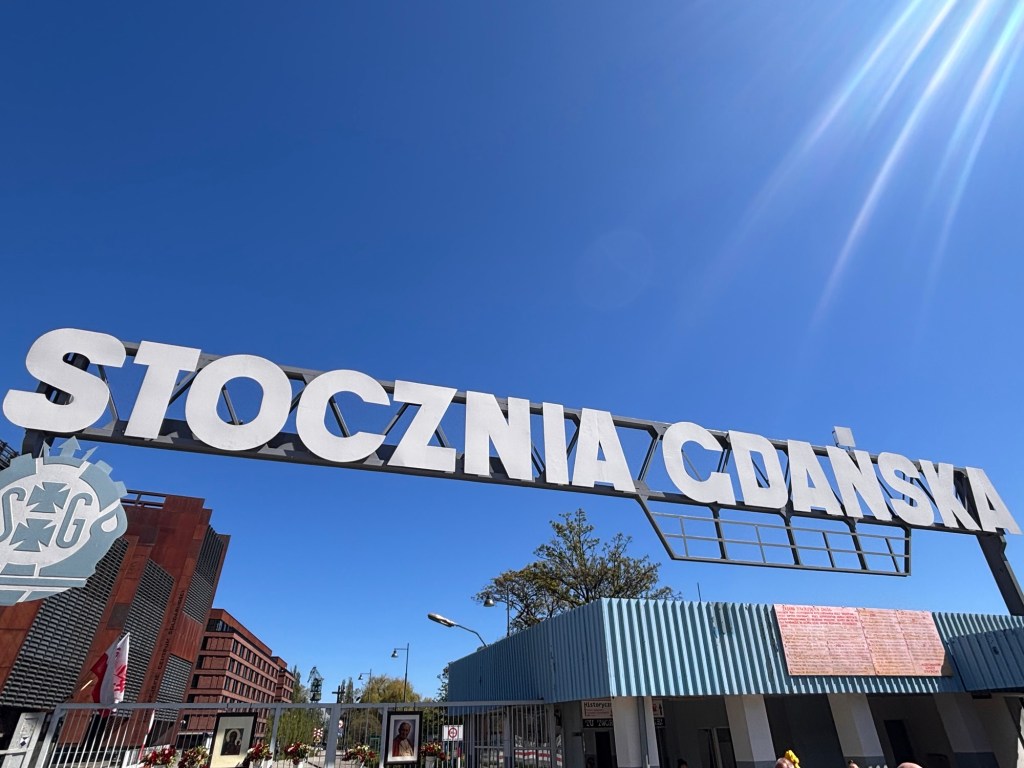
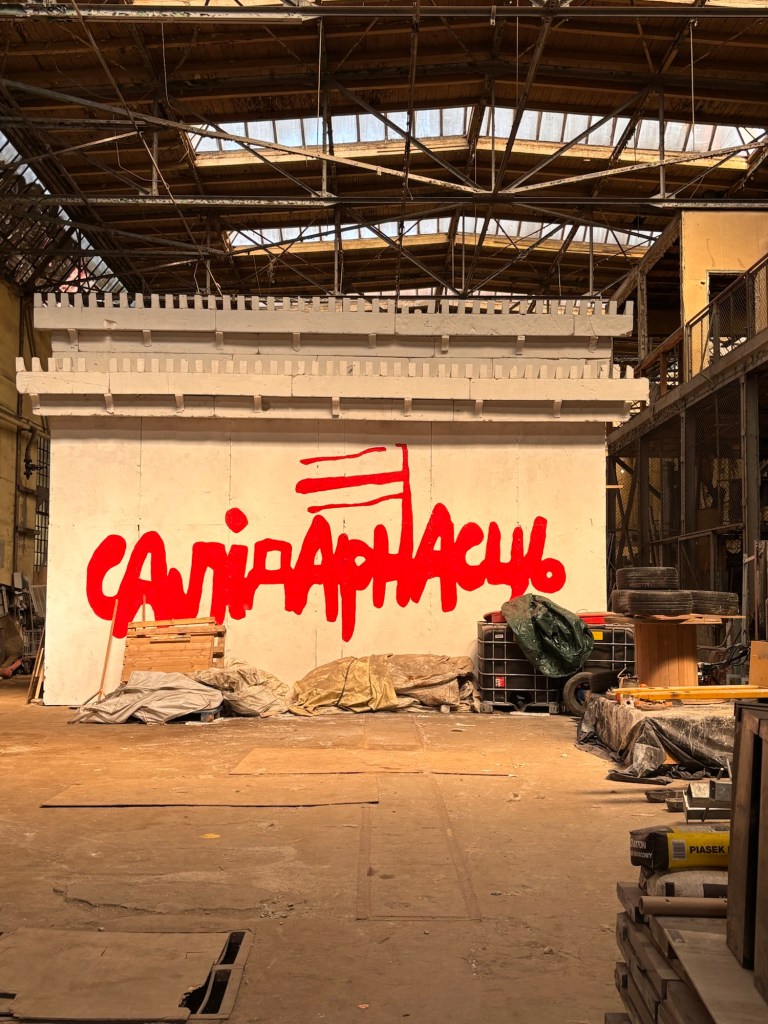
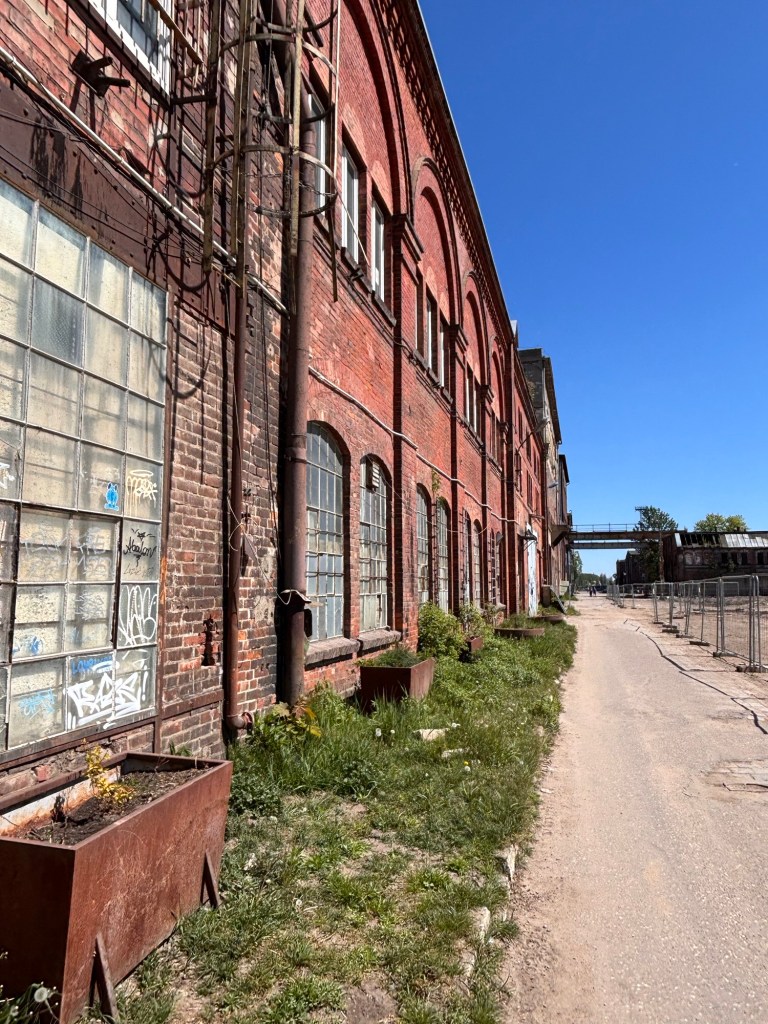
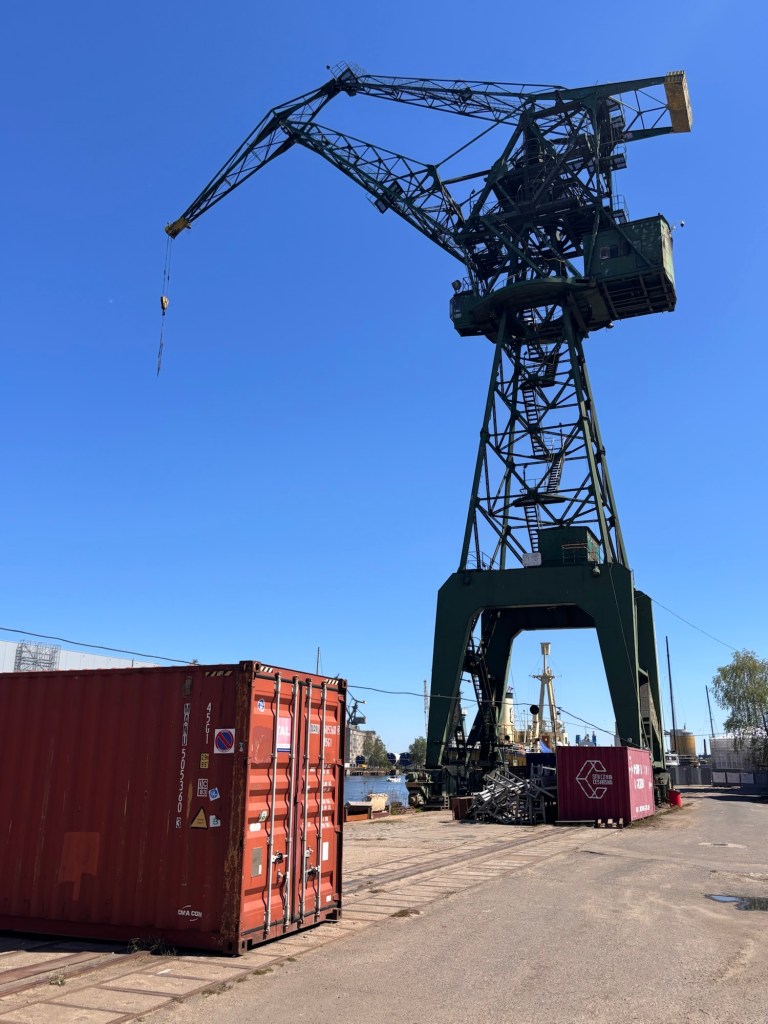
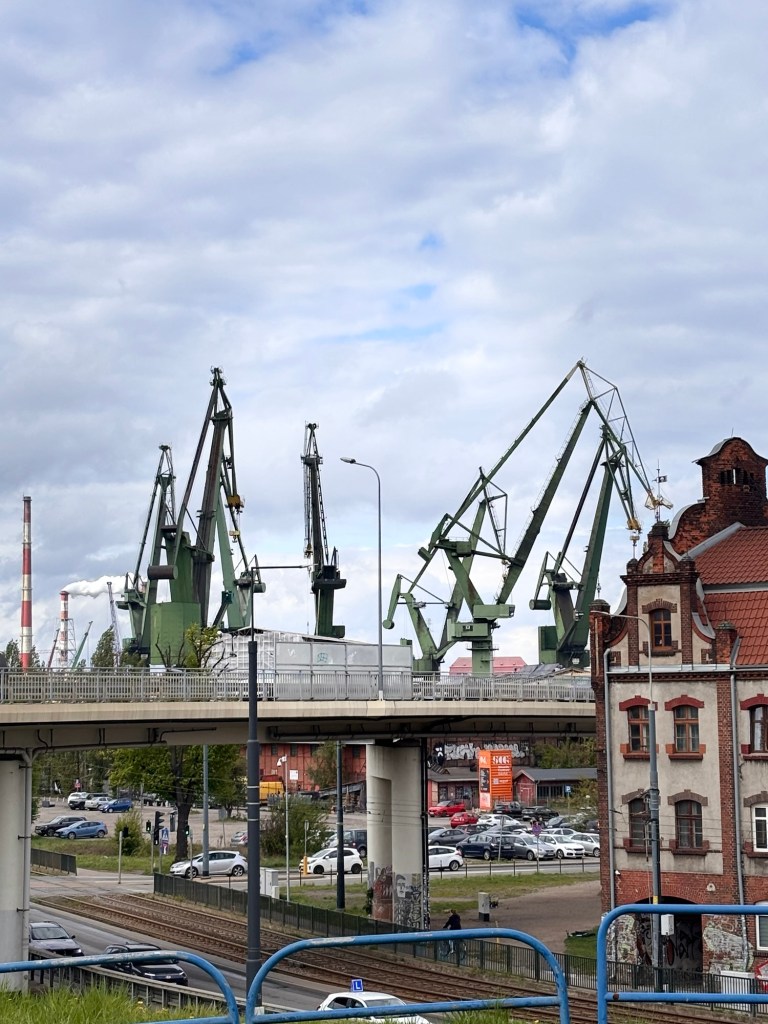
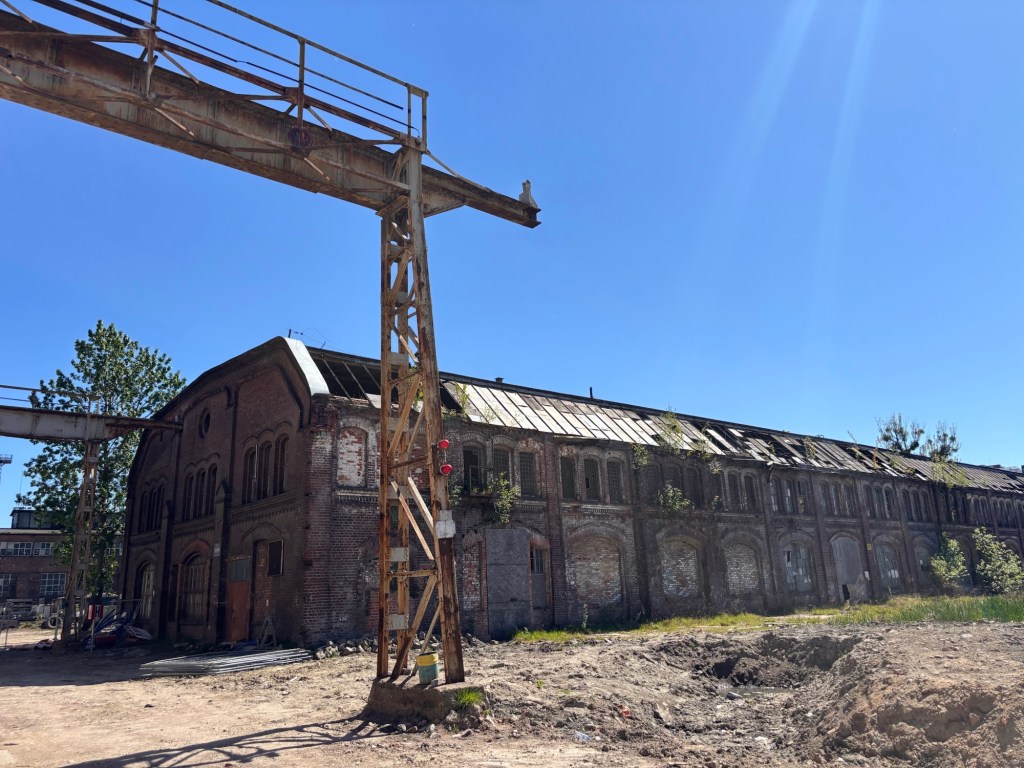
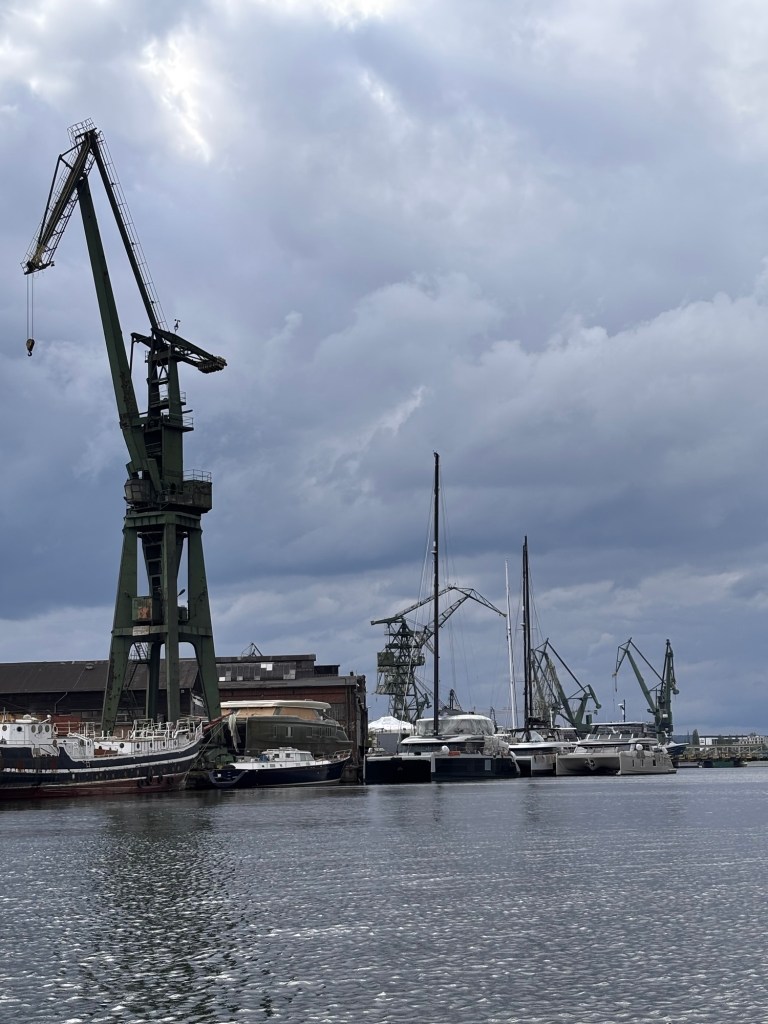
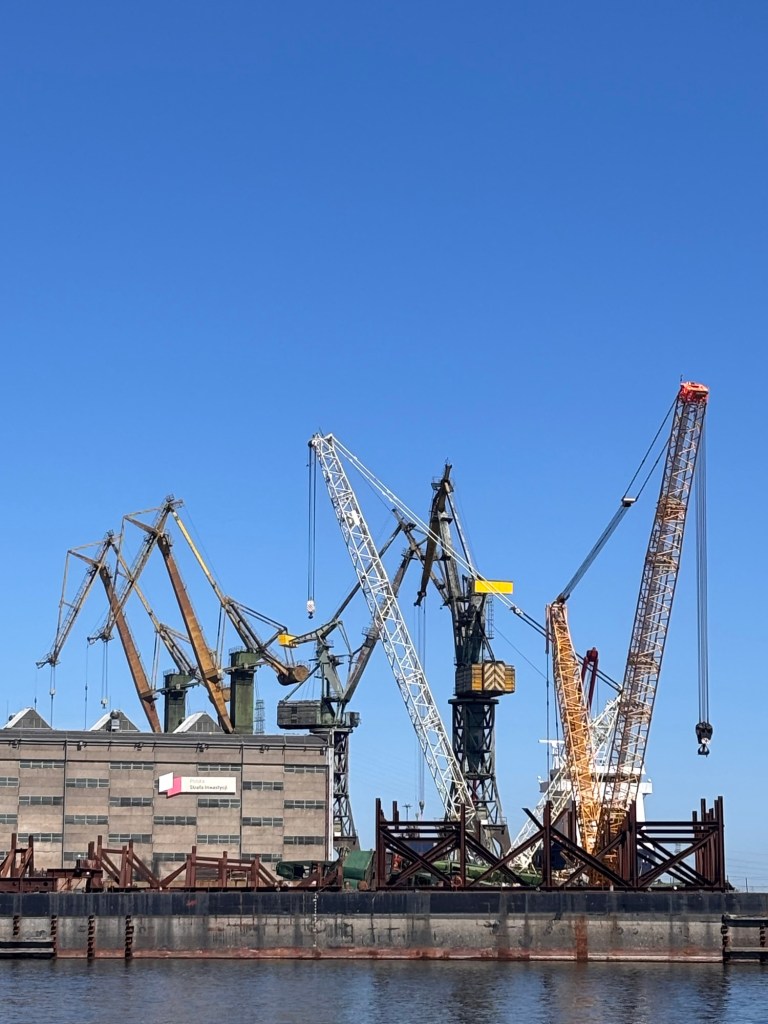
The views of long-redundant cranes presented a ‘War of the Worlds’ dystopian welcome in our approach to the shipyard’s gated entrance.
In truth, Gdansk doesn’t do this period of history justices
It fails to adequately celebrate this powerful story about the Solidarity Movement’s struggle for freedom and worker rights.
It needs to do it better.
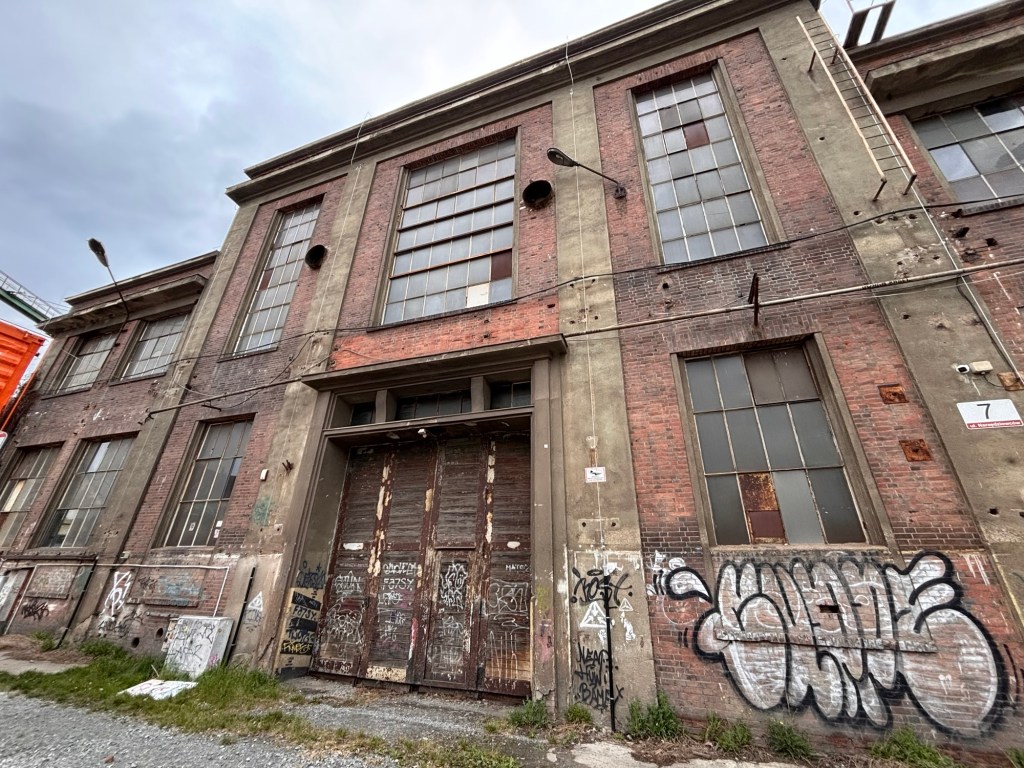
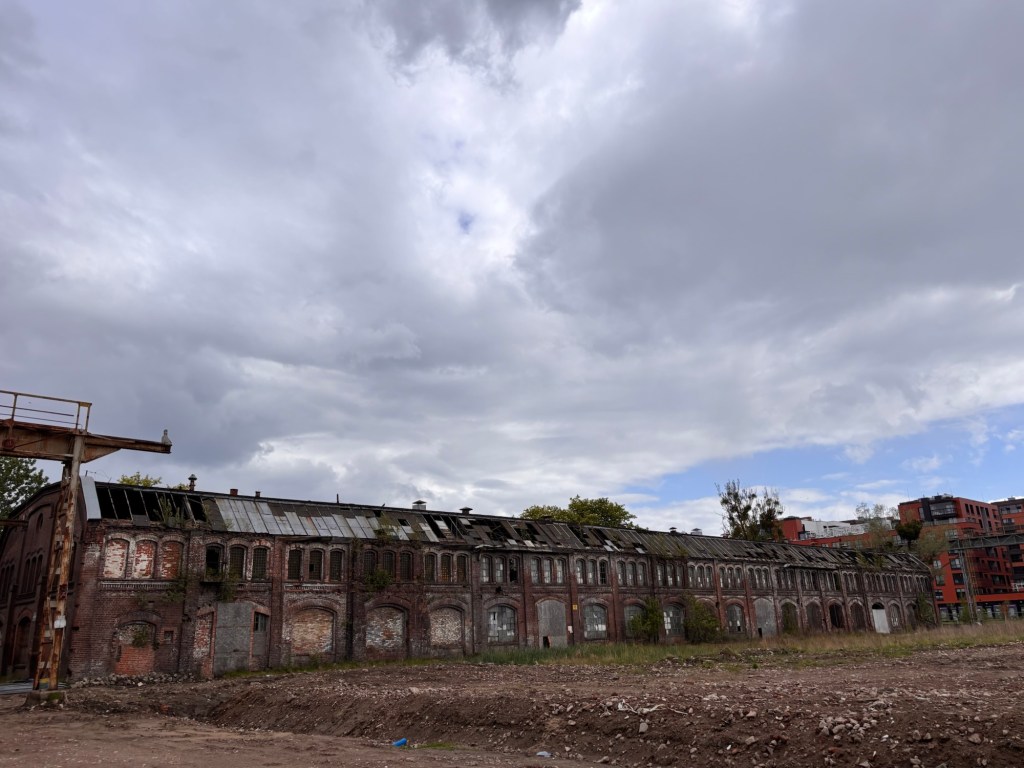
The former shipyard area is run down and derelict in parts.
Wasteland, between decrepit old factory blocks is clearly in a moment of transition.
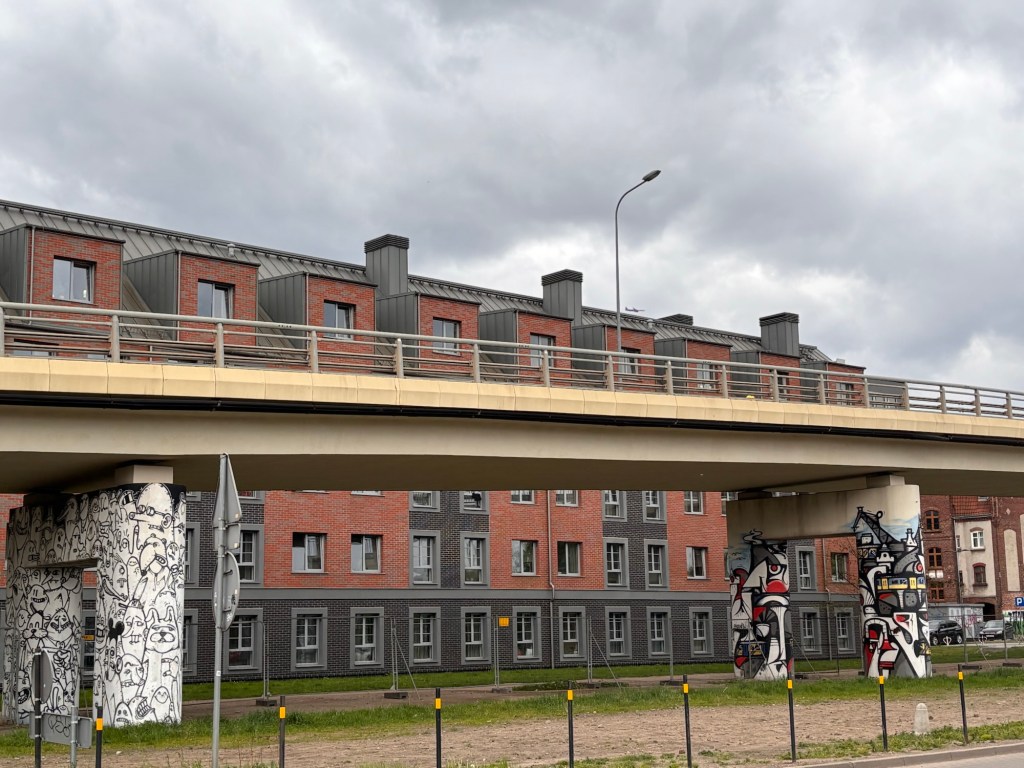
Fast forward 10 years and it is almost certain that this area will be over-developed into expensive and swanky waterfront apartment blocks.
I’m so pleased that we travelled now.
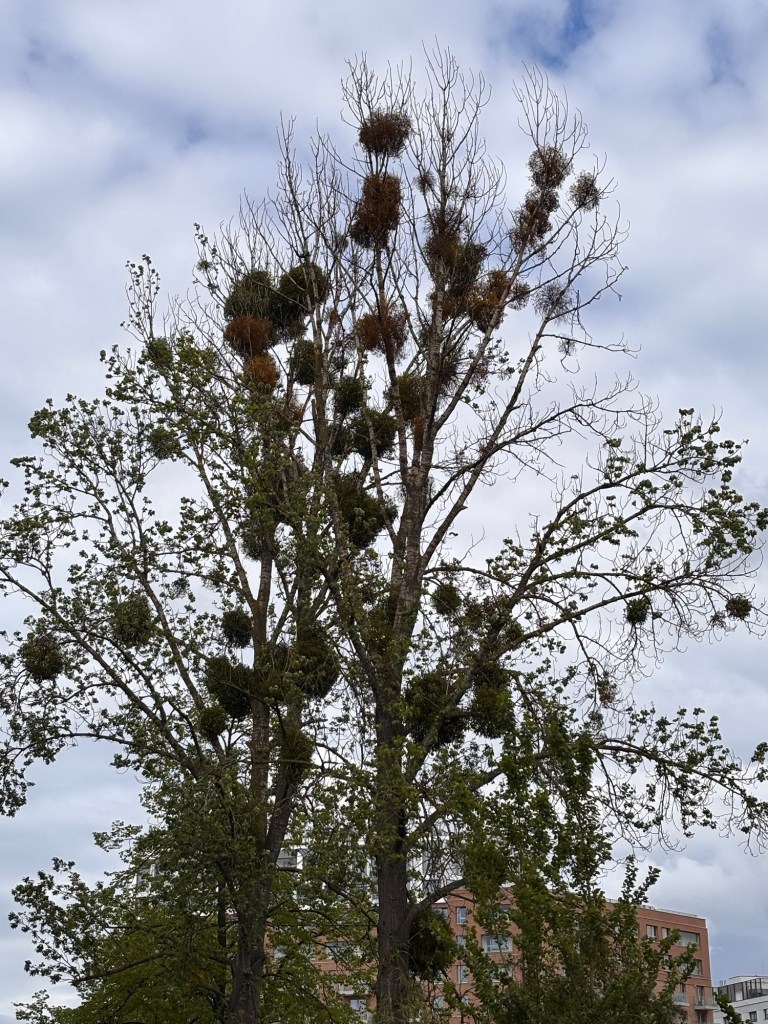
The only ‘High Rise’ in these parts are the ‘mistletoe trees’.
Great swathes of the parasitic plant cling to the branches of so many riverside trees in Gdansk: it must be a climatic thing in these parts!
Much of the historic shipbuilding has gone.
To be replaced by newer but smaller boat building industries, high in technological innovation, who manufacture ’super catamarans’ for the rich and famous.
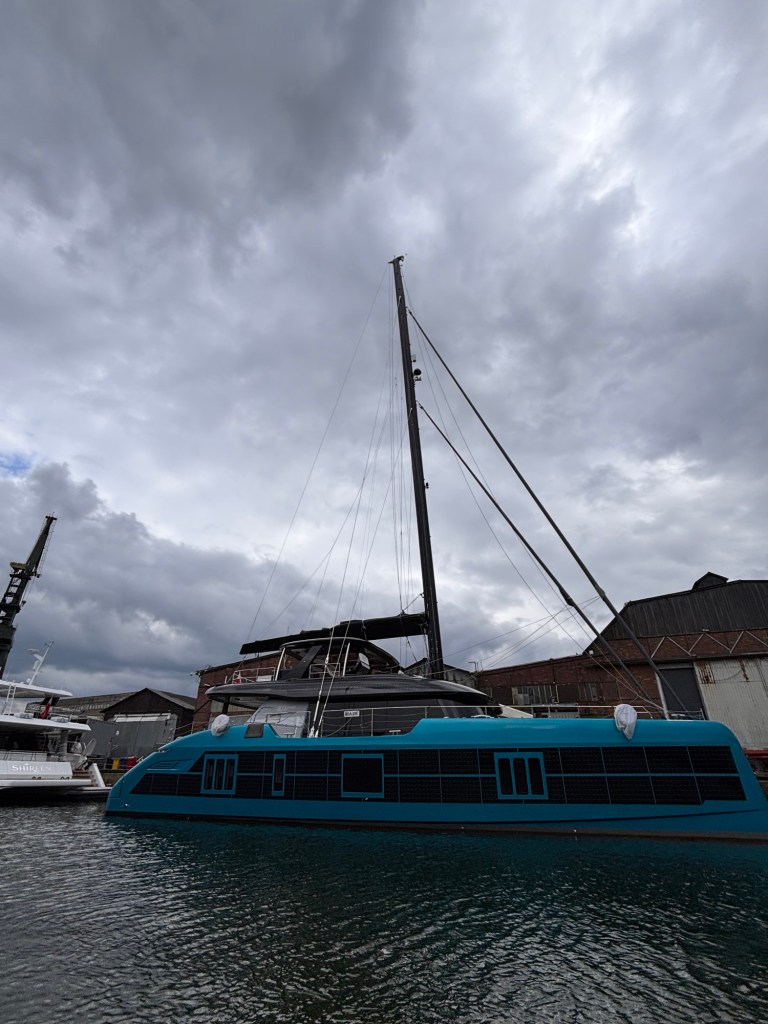
Purchasing one if these will set you back millions of euros, pounds or dollars.
Apparently tennis superstar, Raphael Nadal, paid a cool £25 million for his sleek sailed catamaran, just a couple of years ago.
And that is not the most expensive boat built here.
Paris Hilton has 3!
Is owning 3 ‘super cats’ really necessary?
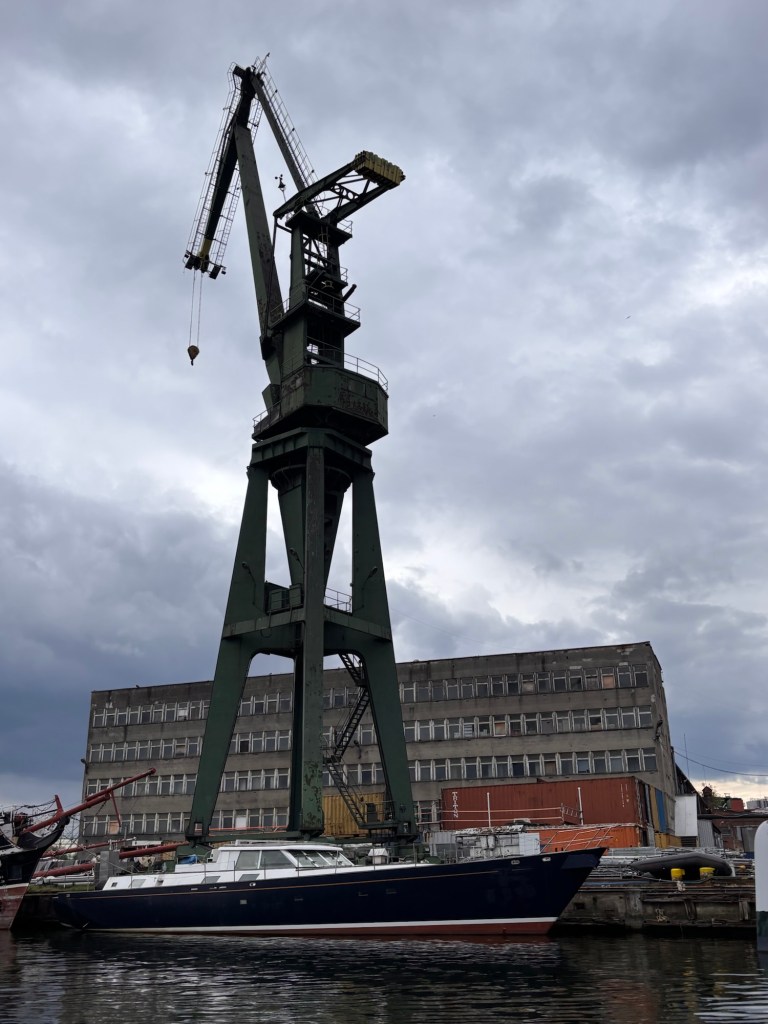
The rusting cranes that have dominated this skyline for over 100 years, pay testimony to ‘the times they are achanging!’ 🎵
Large grain silos still feed giant container ships.
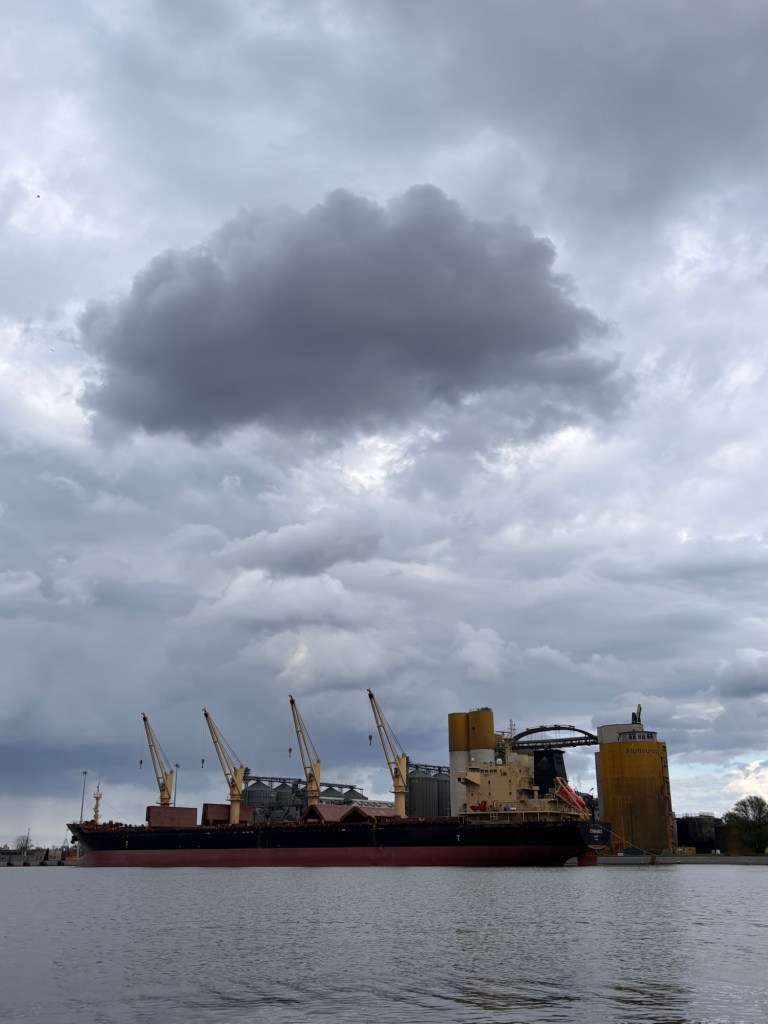
As run down as it is, the old Gdansk shipyards still oozes nostalgia and charm that you can almost ‘taste’ as you walk through the district.
The former Electric Company warehouse is now a trendy food hall, where you can source any edible combination that your palate demands.
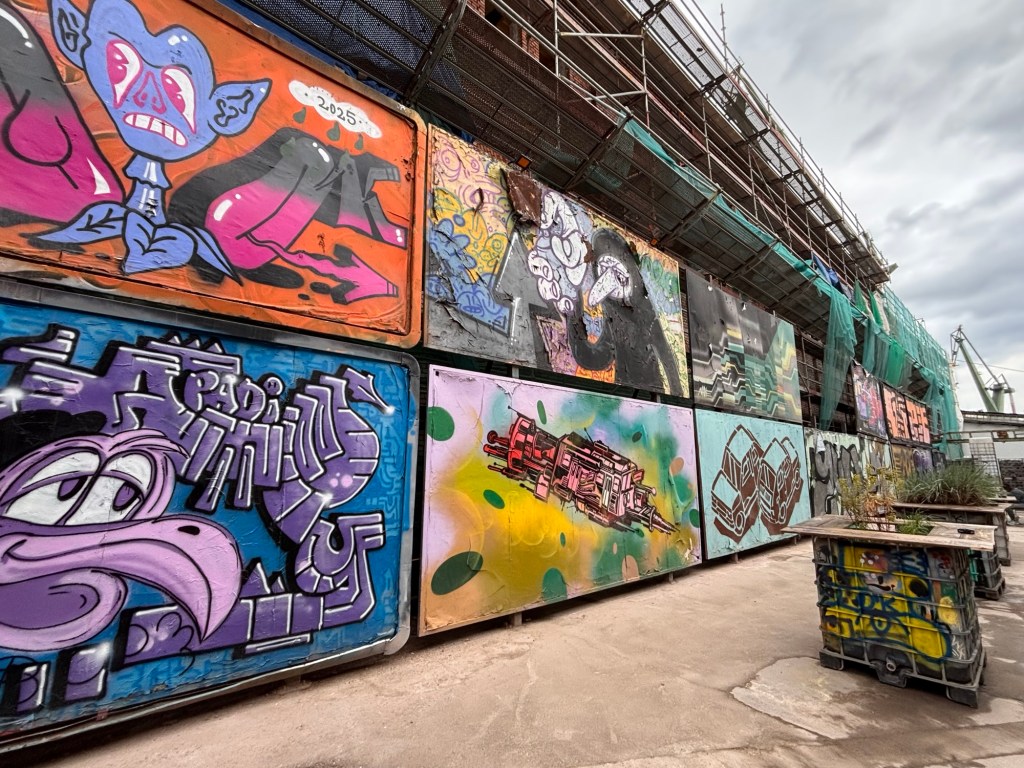
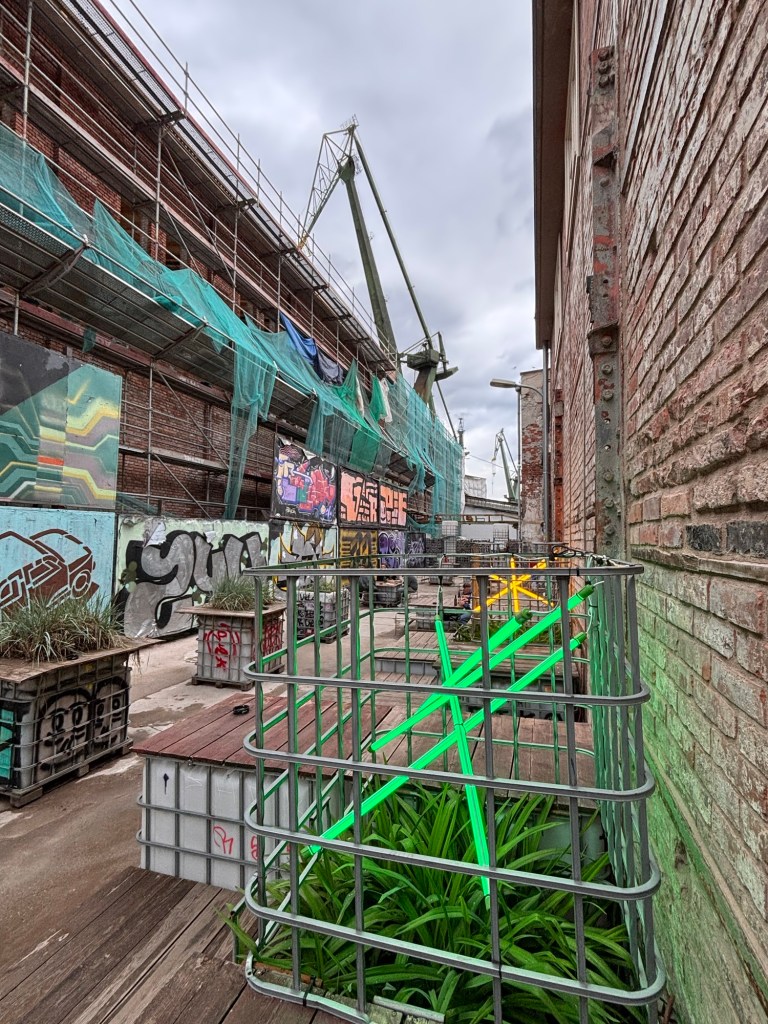
All at a very cheap price: £10 at most.
Street foot is very much a cool and trendy concept in Gdansk.
Back to the shipyard relics of yesterday:
‘Local Hero’(es) from my lifetime actually maintained their peaceful protests, in those self- same disheveled streets, that we walked through last Sunday afternoon.
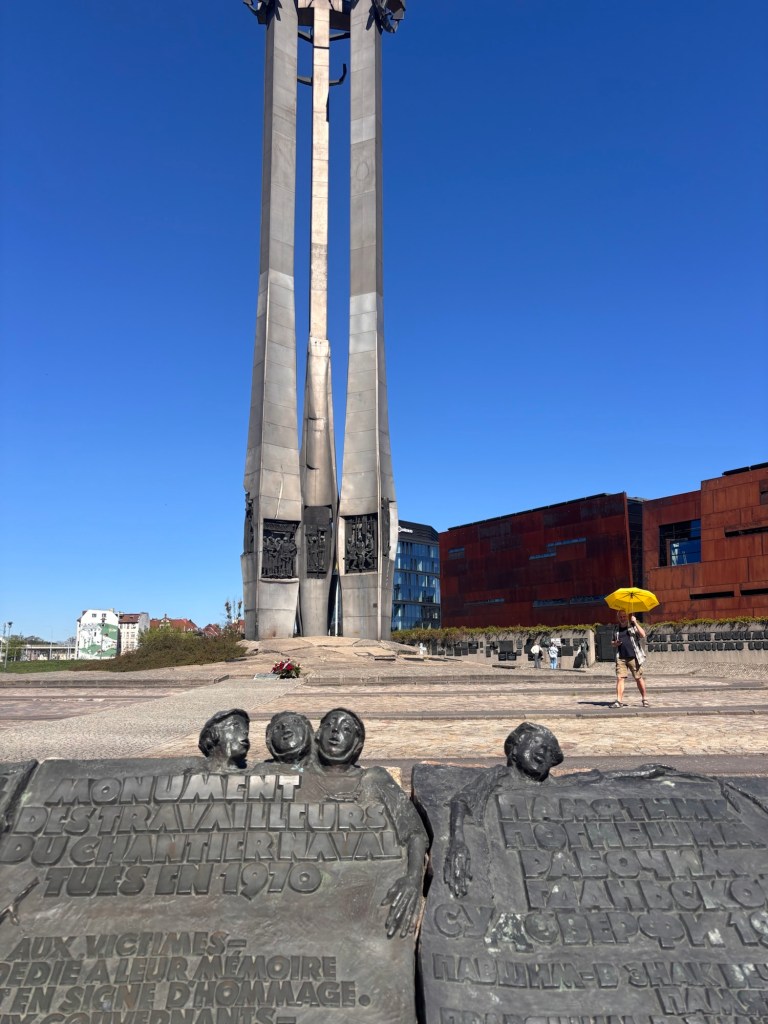
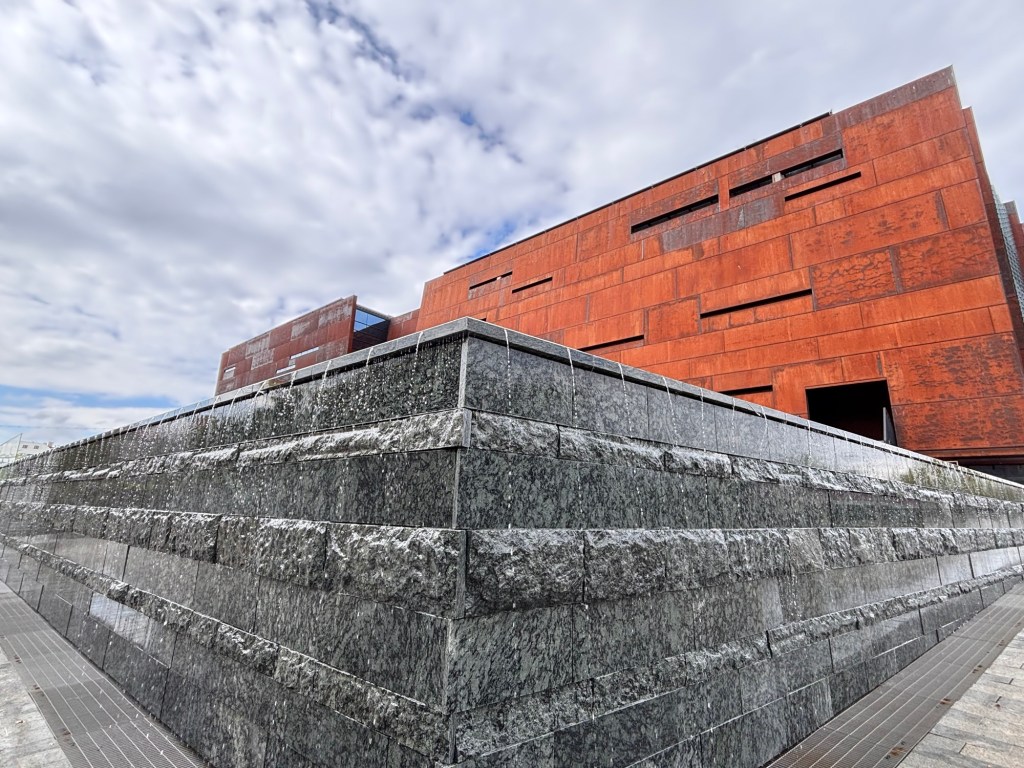
From such humble beginnings, a movement of the people proceeded to overthrow one of the most oppressive regimes of modern times.
We saw the marker stones that recorded the death of those who had dared to protest and who made ‘the ultimate sacrifice’ for the freedom of their people.
A simple banner strewn over a rusting gate, was the only visual indication that these brave people had lost their lives supporting the Solidarity-led, anti government protests.
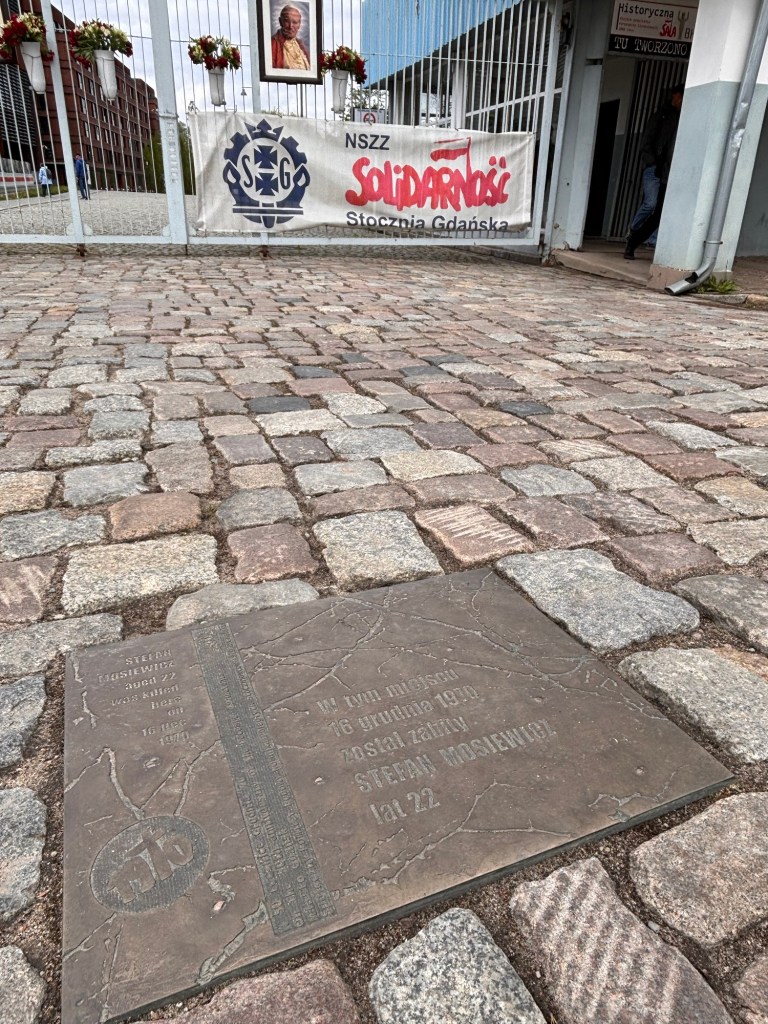
We barely saw any reference to Lech Walesa himself.
Apparently, like so many heroic political leaders, his lustre with the Polish people has lost some of its shine over time.
He still lives in the city and he is often seen walking its streets.
Sadly we didn’t meet him.
I would have loved to.
It appears that Walesa is now, ‘The man out of time’ 🎵, as Elvis Costello famously sang back in the 80’s:
The 80’s were the heydays of Walesa’s political life.
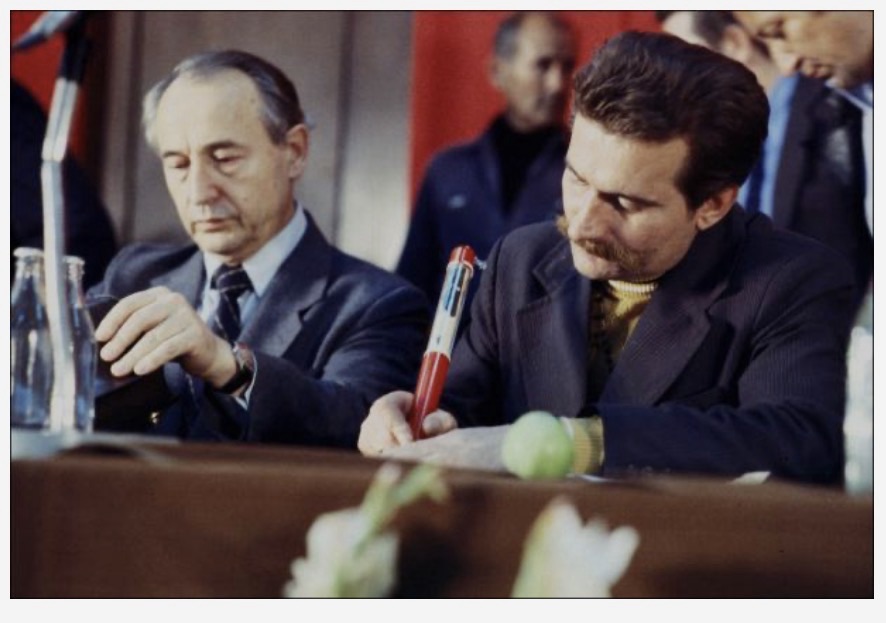
The distinctive walrus-shaped moustache is still vivid in my memory.
Apparently Walesa did use that giant ‘Disney-style’ pen to eventually sign the historic Gdansk Agreement, that gave the Solidarity Movement its victory and ultimately led to the overthrow of communism and the establishment of a totally democratic and independent Polish state.
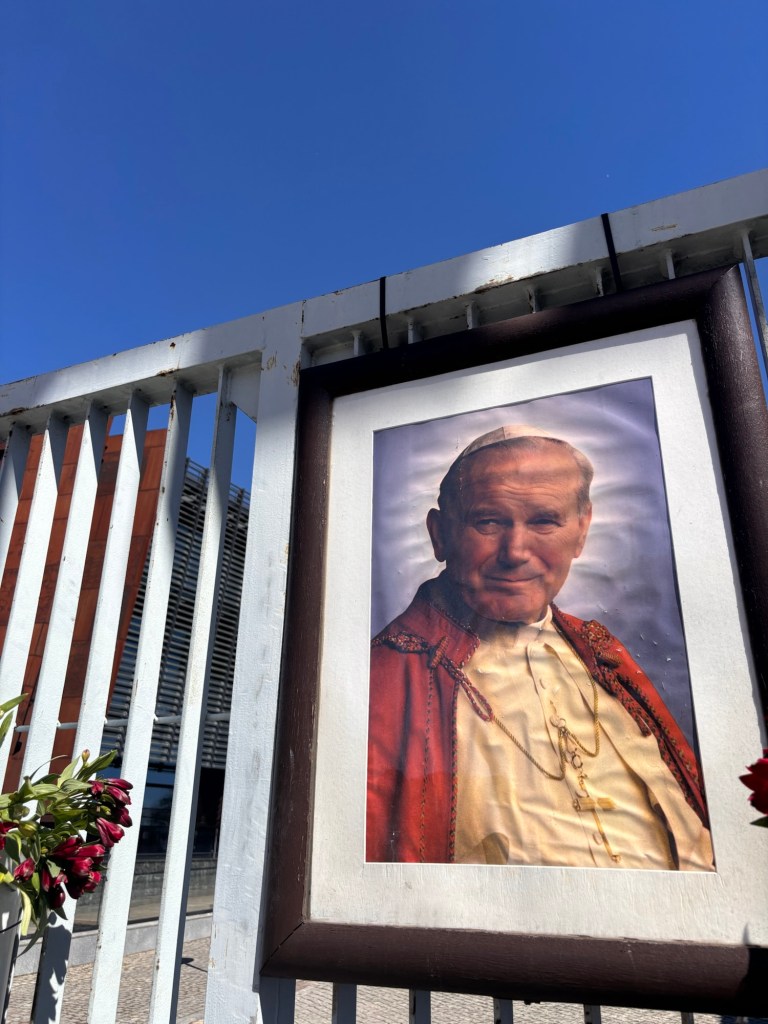
The only photographic reference we saw of Walesa in those shipyards was a faded picture adorning those entrance gates, alongside another washed out image of one much more popular, modern day Polish hero: Pope John Paul 11.
During my life time, this great city has undergone a dramatic turnaround.
Just 40 years ago, it would have been considered unreachable or unappealing to most British travellers.
It was ‘hidden’ away behind the Soviet imposed ‘Iron Curtain’ and life in Gdansk must have felt, lonely, forsaken, grey, grim and gloomy.
In my opinion the city doesn’t celebrate its release from the grip of communism, as much as it really should do.
This is perhaps my only real criticism of Gdansk.
Despite this, our tour was a fascinating introduction to a city that has so many contrasting storylines.
A visit to to the Zaspa district of the city, some 6km to the west, where grey ‘brutalist’ apartment blocks dominate the skyline, reinforced the feeling that this city and its citizens have experienced really ‘hard times’.
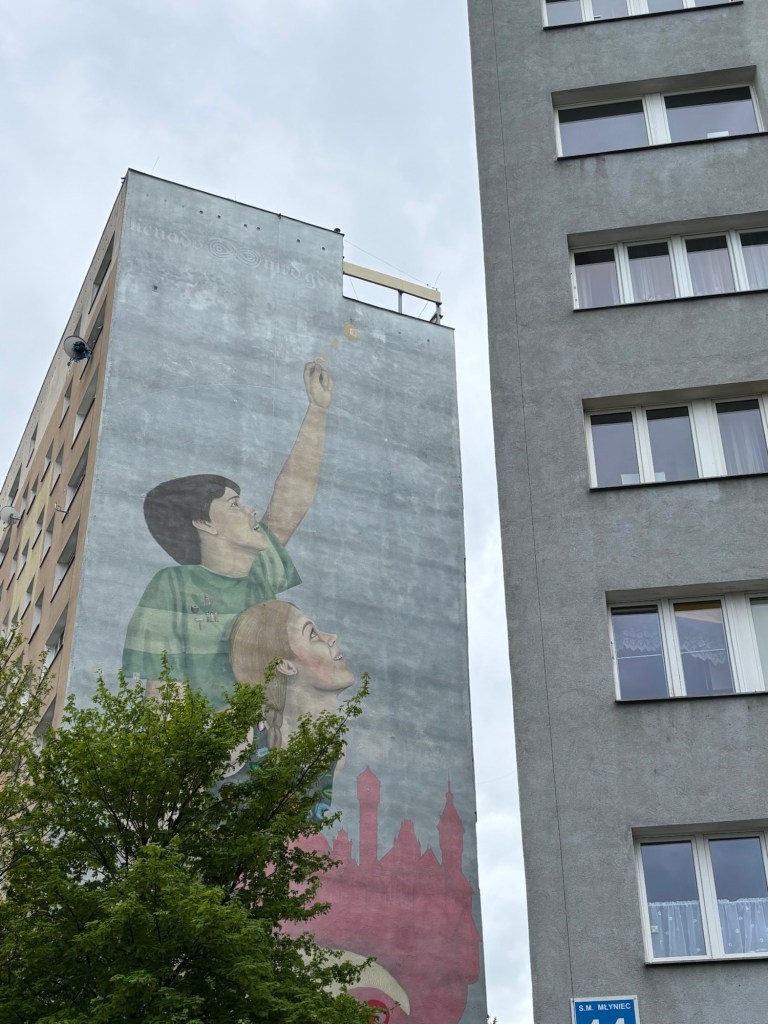
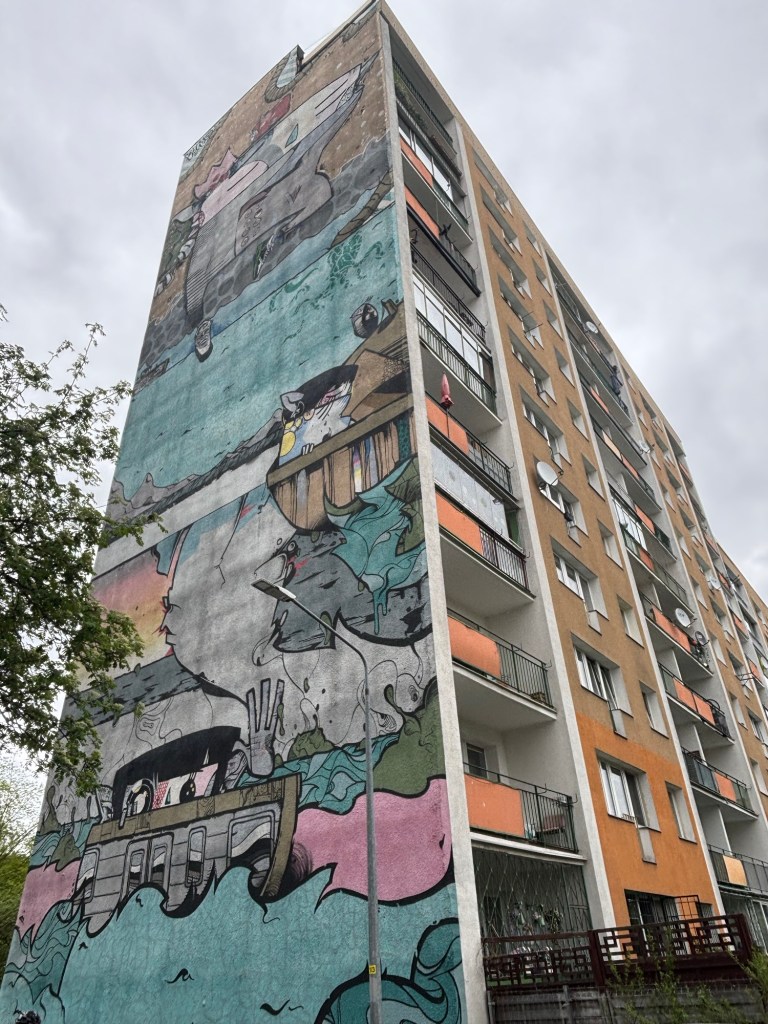
Massive murals drawn by some of eastern Europe’s most influential artists have helped to create a sense of colour and vibrancy, in what must otherwise have been a grim and unappealing grey concrete dominated landscape.
Political satire lies at the heart of some of these frescoes.
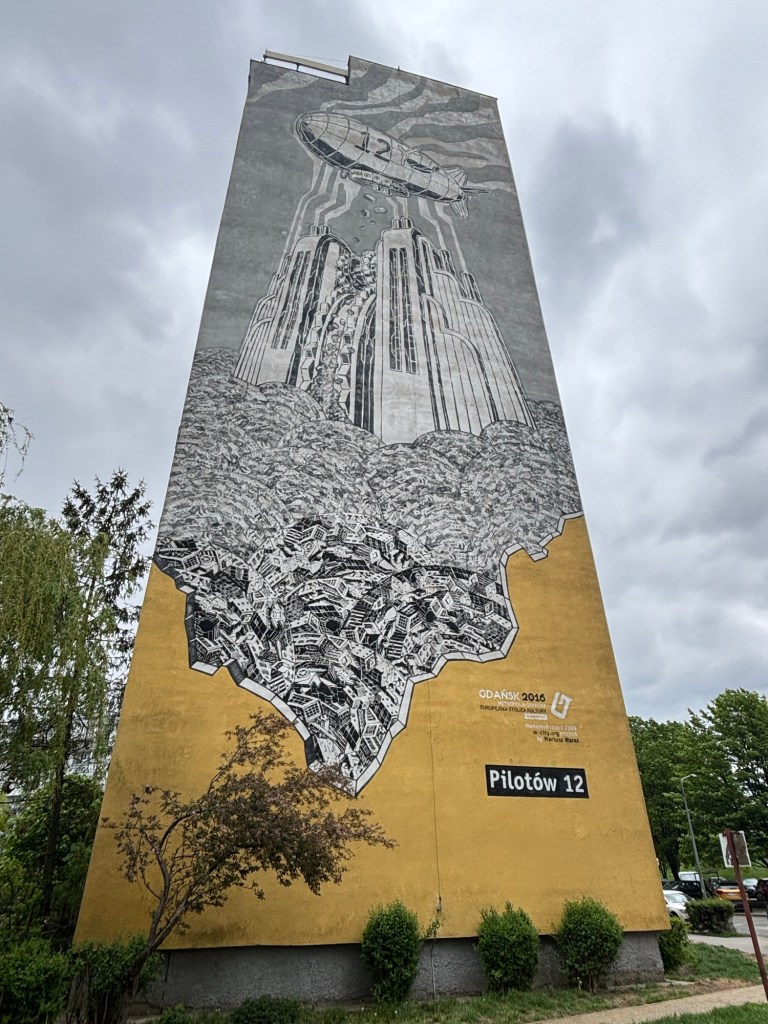
Cycling to them on the way back to the city, after a bike ride to the coast, was probably the highlight of Gdansk for me.
The art work was breathtakingly good!
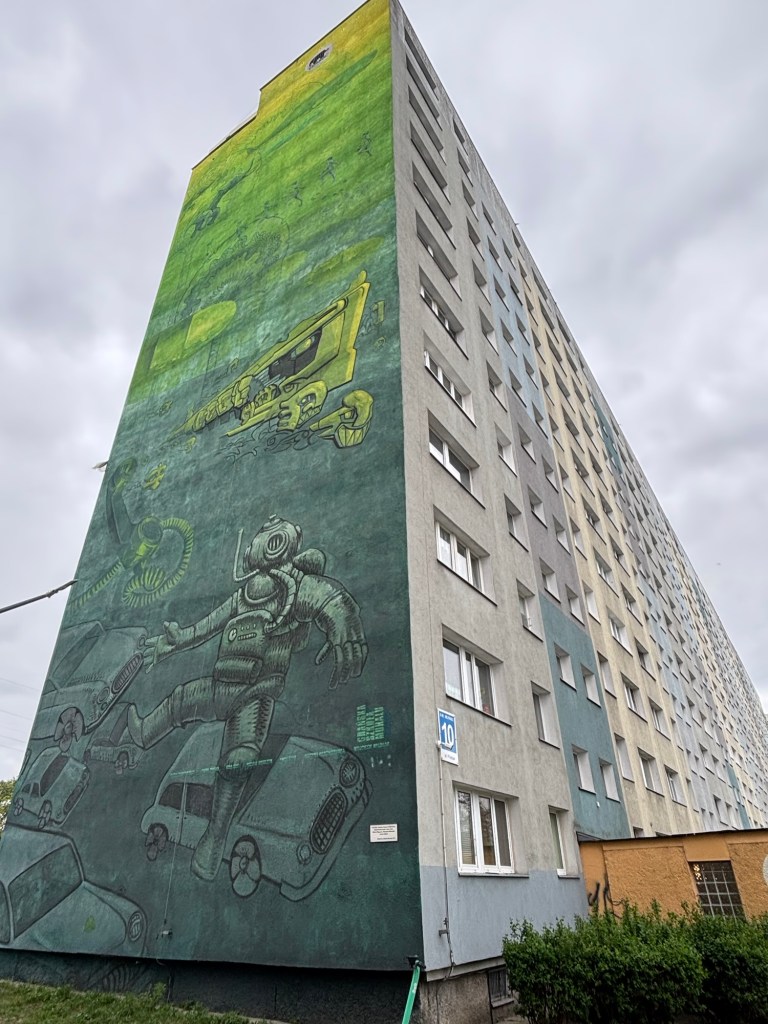
We saw about 25 murals. Apparently there are 68!
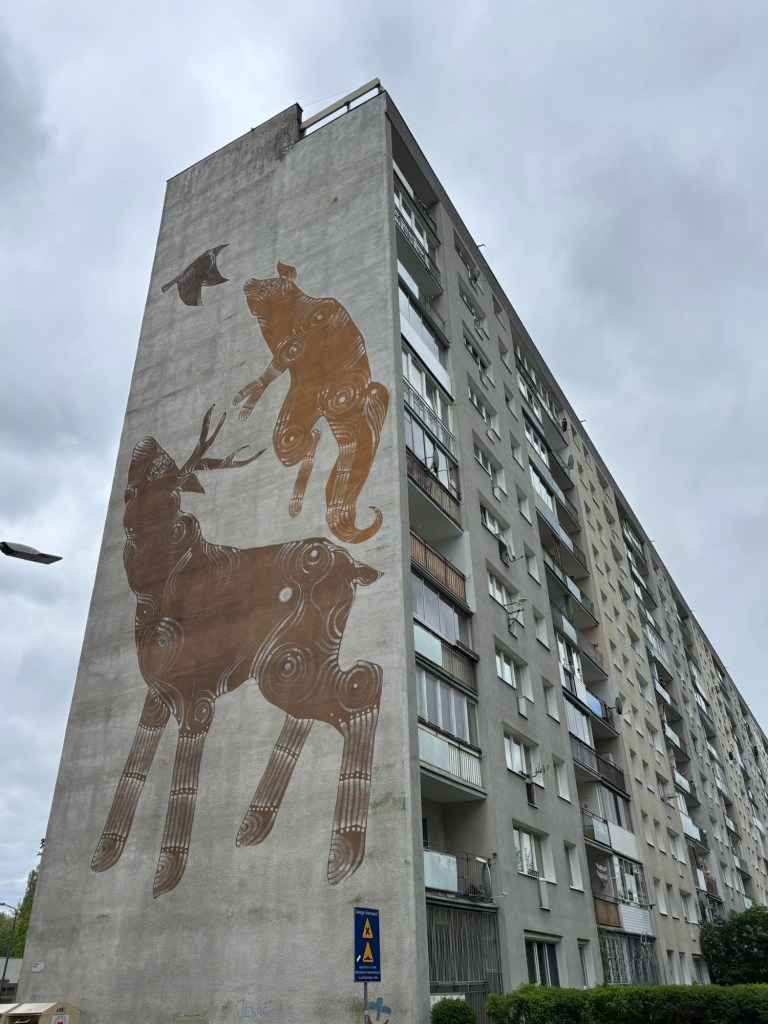
I love a good mural!
These were exceptional.
Later in our stay we enjoyed another free city tour: this time of the old town.
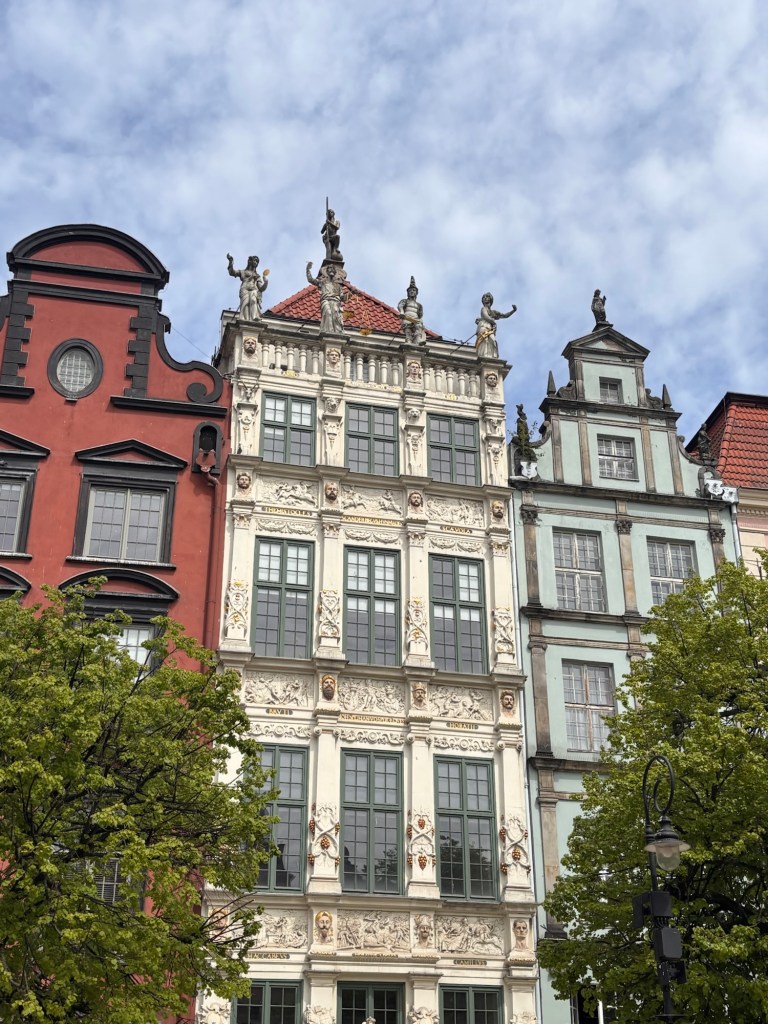
The ‘old town’ buildings were amazing: especially given that most aren’t even old.
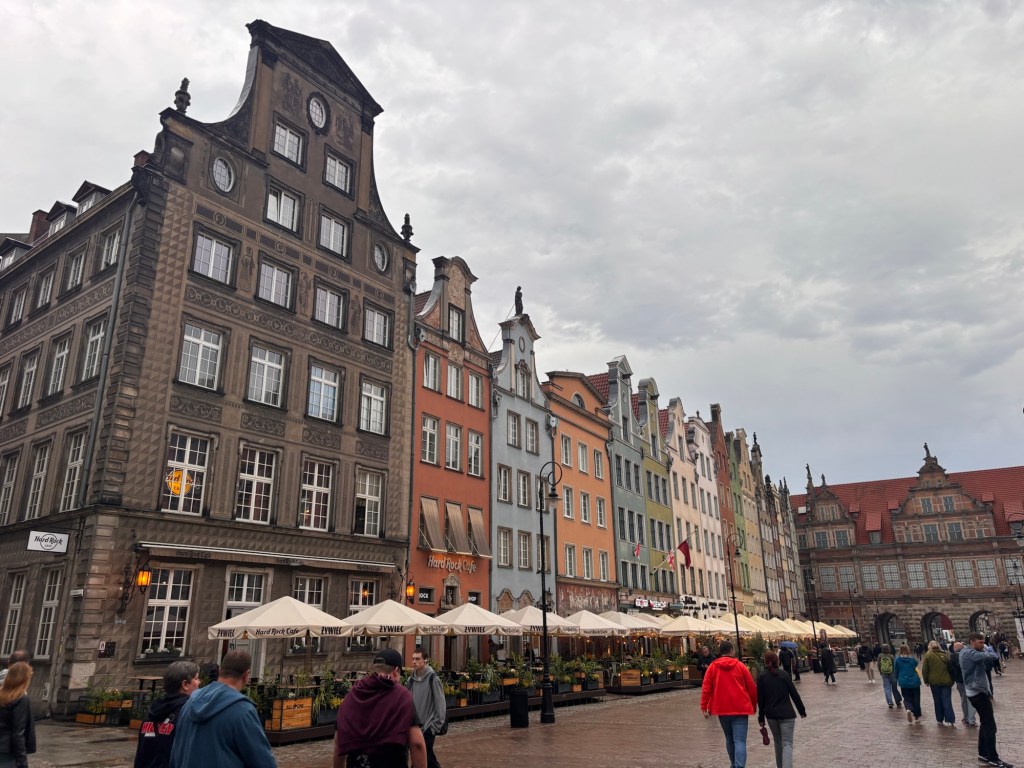
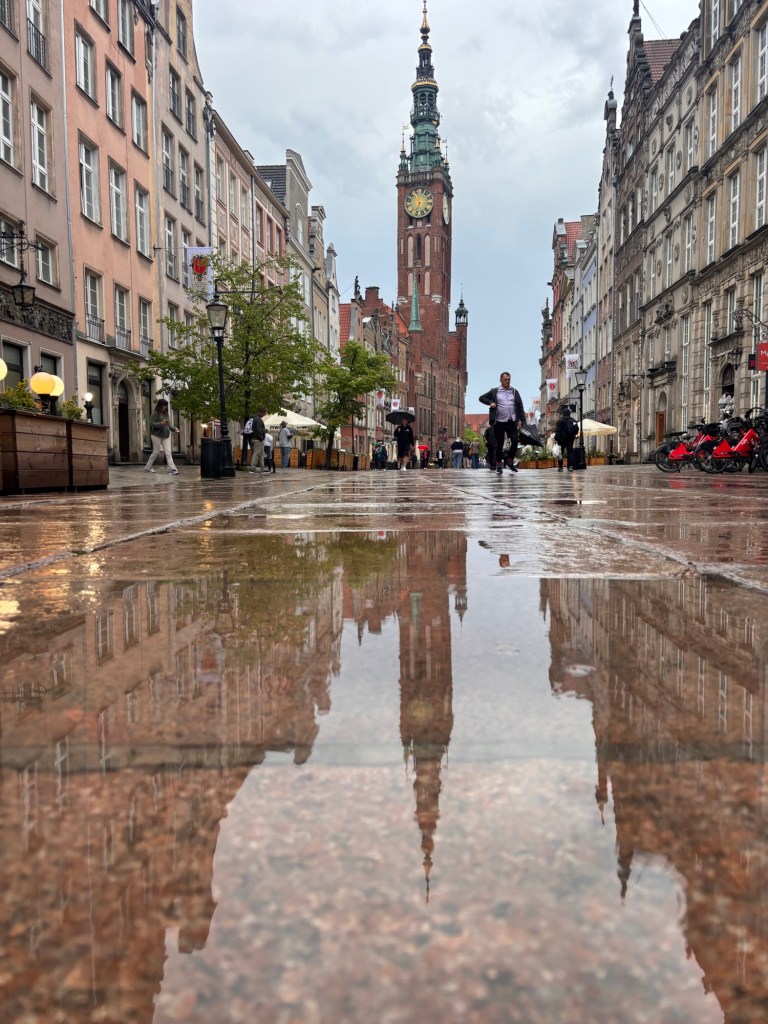
Gdansk was pummelled by allied bombers from 1943 onwards, as Bomber Command were tasked with destroying the spawning grounds of the U Boat submarines, so many of which were manufactured in Gdansk: (Danzig)
90% of the old town was destroyed. This rebuilt city ‘in keeping’ with its medieval past, is therefore doubly impressive.
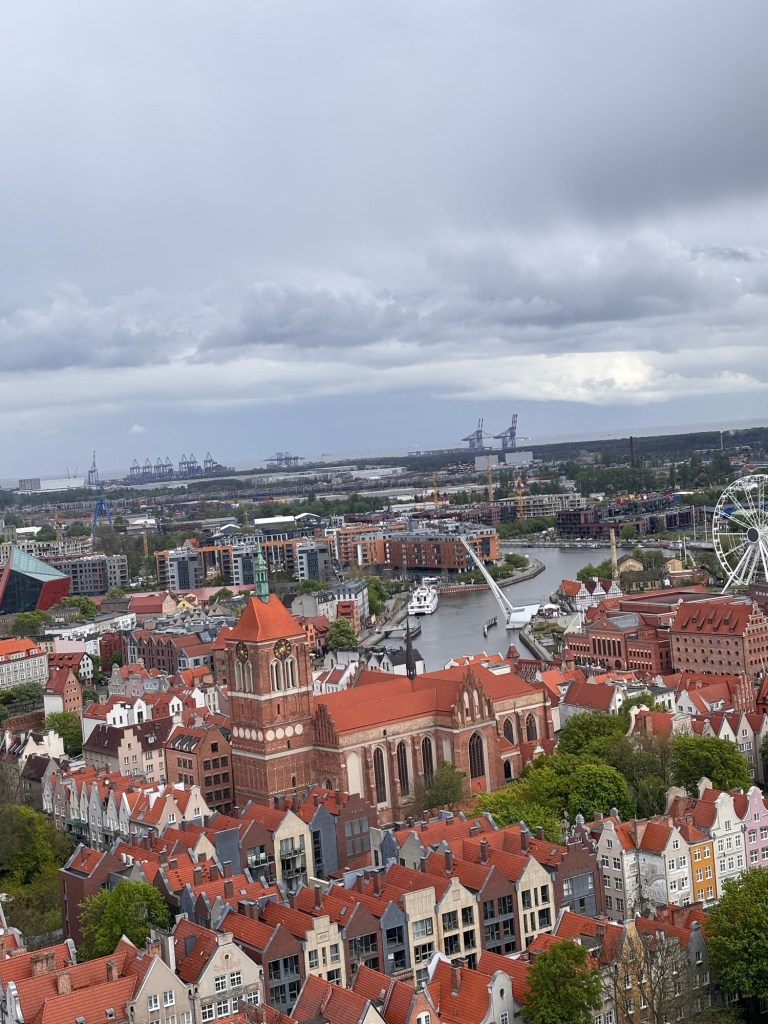
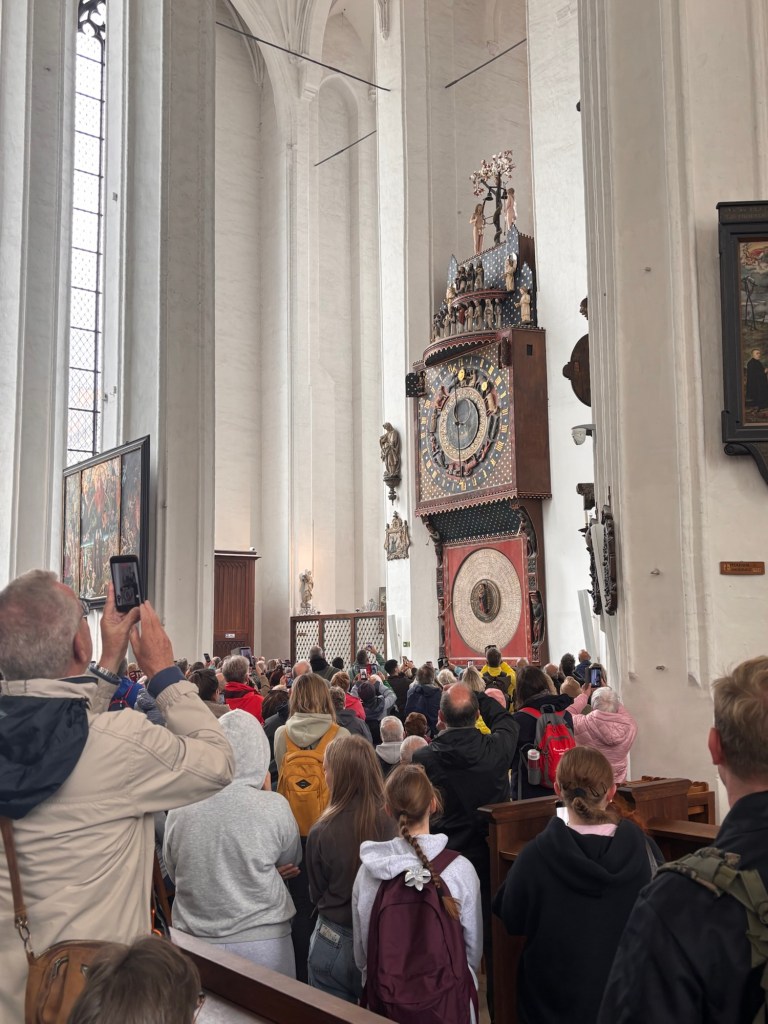
St Mary’s Basilica, dominates the skyline.
It houses Gdansk’s ‘Astronomical Clock’, which is centuries old.
Every day at noon, tourists flock to watch it operate its own piece of theatre.
The 12 apostles strut their stuff during this daily spectacle.
The tourists love it of course.
Hundreds of mobile phones record the daily performance.
If you can’t beat them, join them!
I was more interested in the uniquely simplistic design of the church: a sop to its short Lutheran influence back in the 16th and 17th centuries.
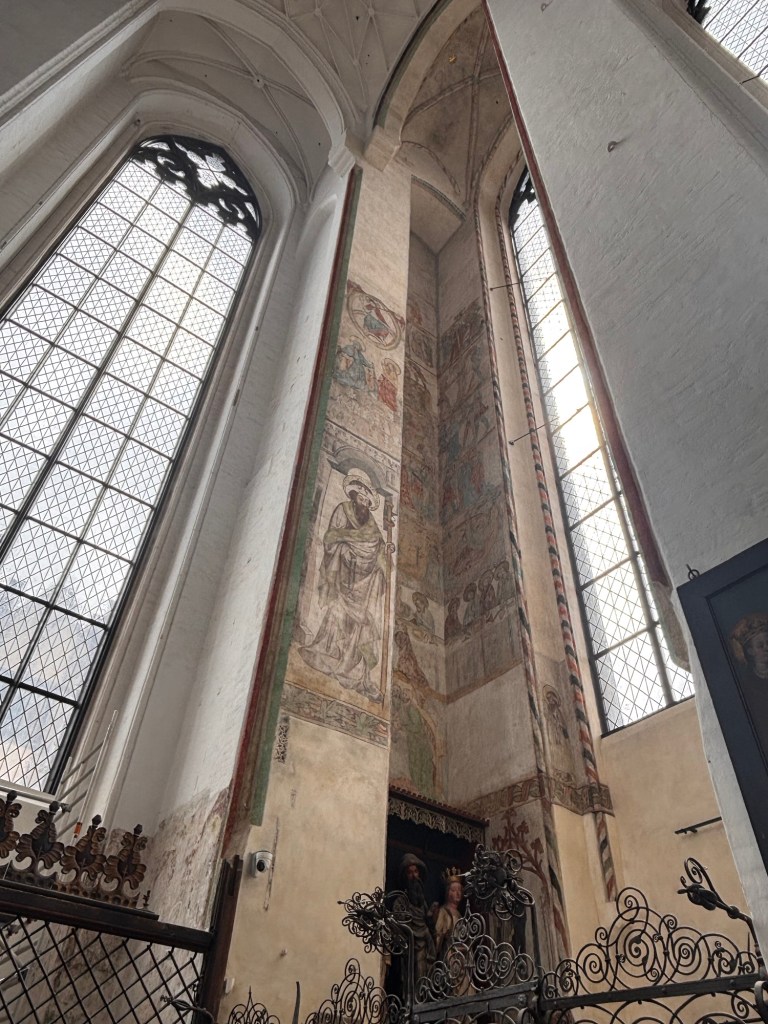
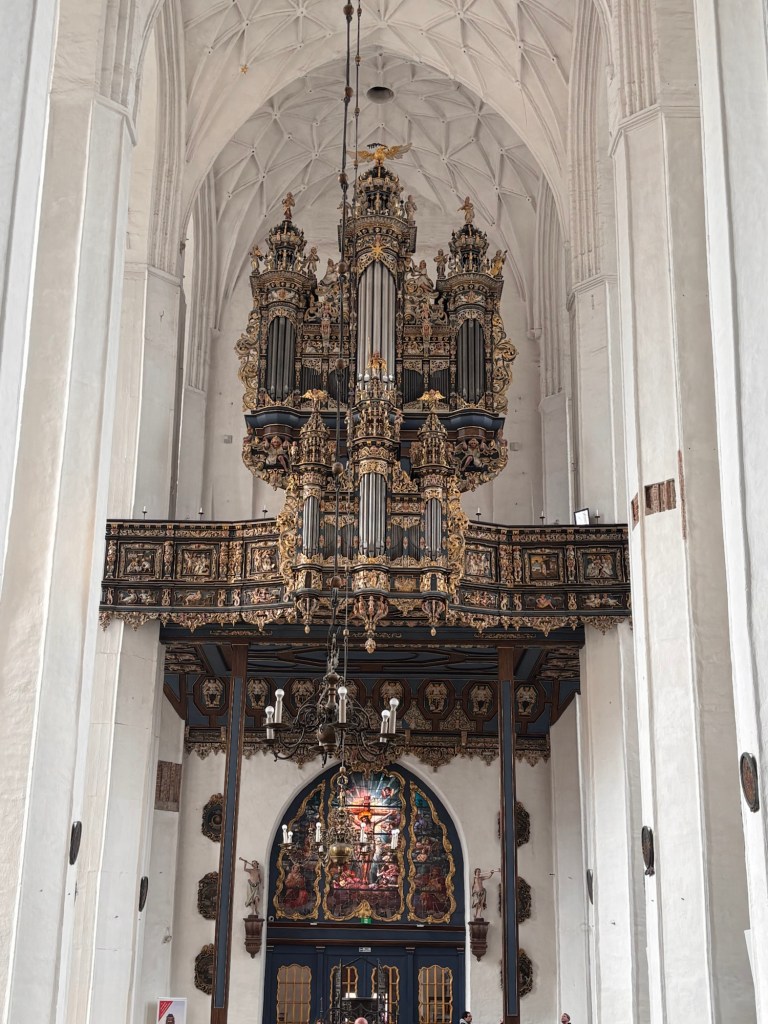
Now though, it remains a place of worship within the Roman Catholic tradition.
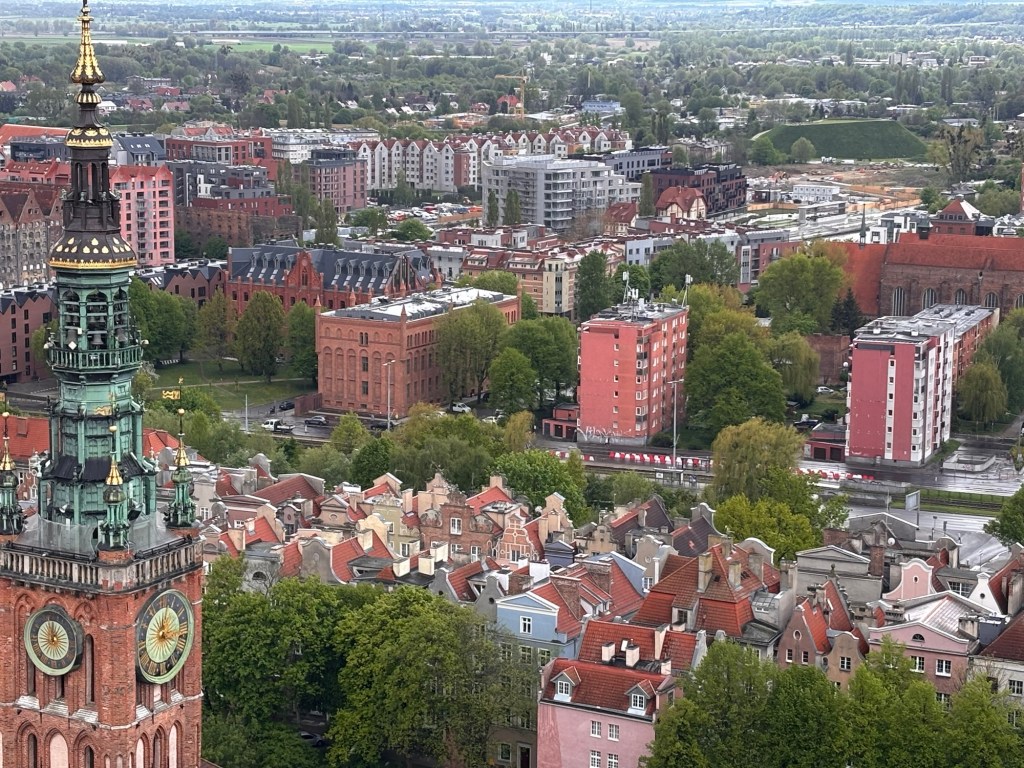
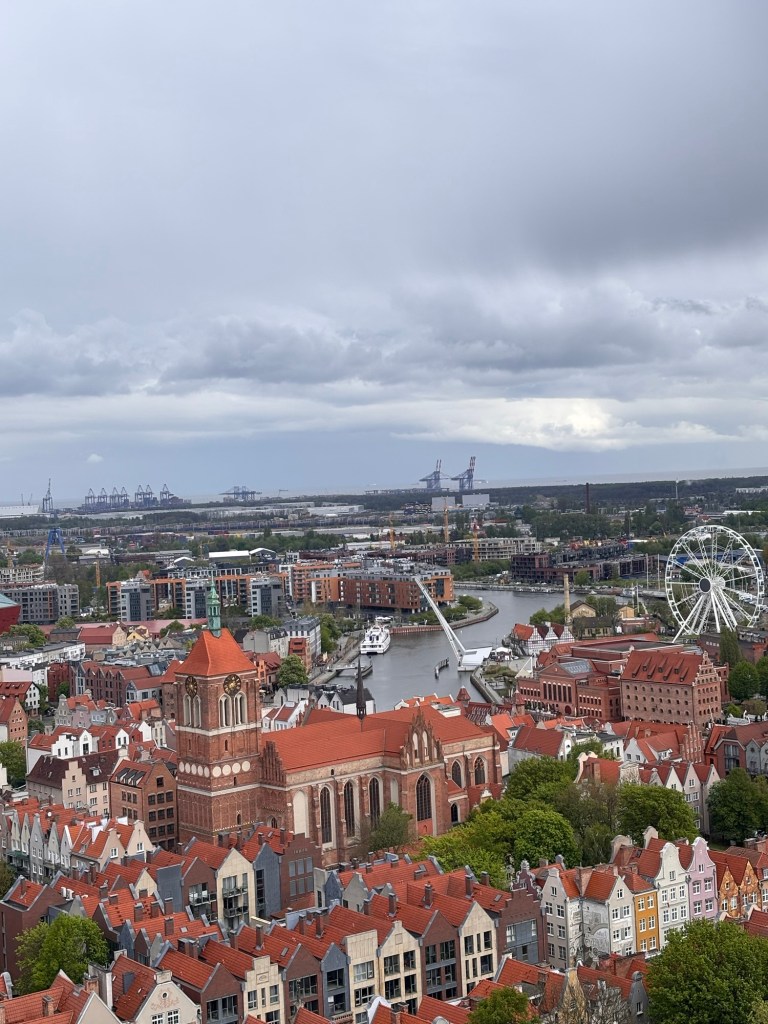
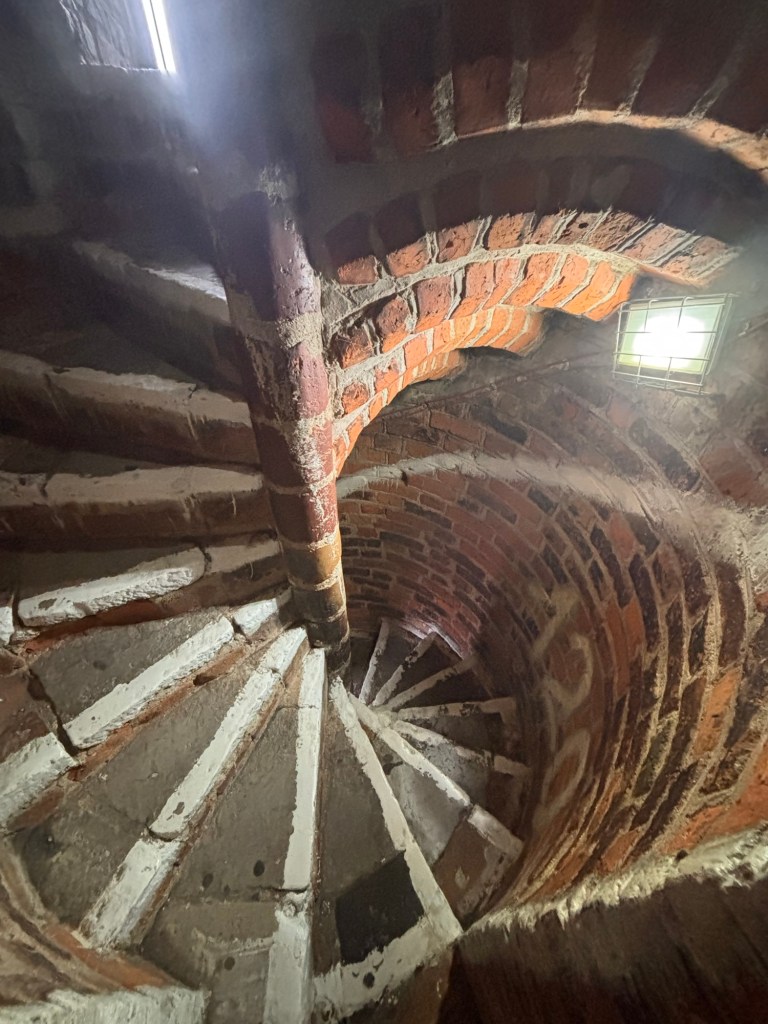
For £4 (20 zloty) you can climb the 410 steps up the Basilica’s tower.
I did.
It was so worth it.
What a view on all 4 compass points.
Unlike many European cathedrals, entry to the basilica was free.
So refreshing.
Cathedral’s belong to the people.
There should be no charge in my opinion.
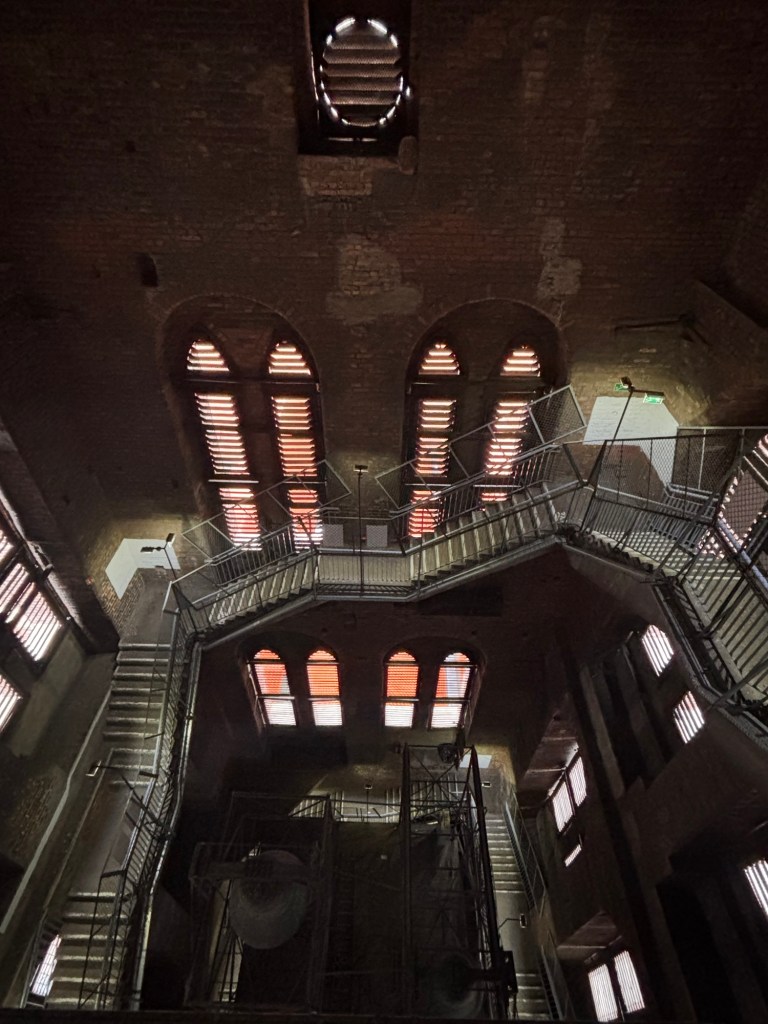
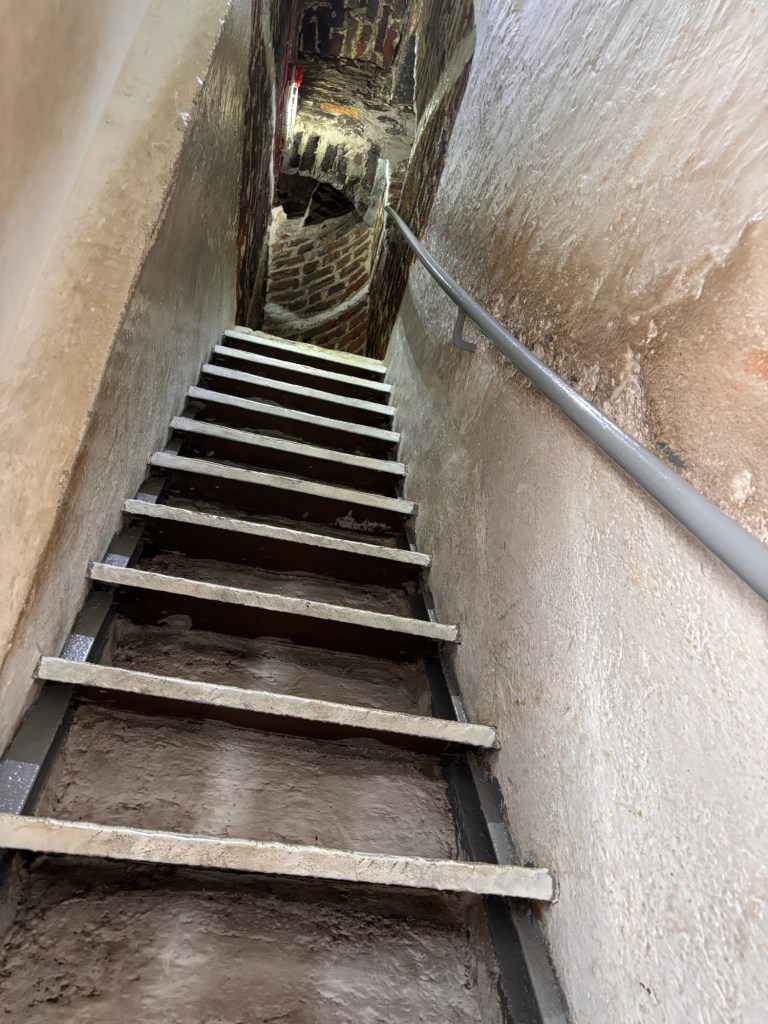
Thankfully, for this particularly tall pilgrim, most of the stairs were easy to manoeuvre: but not all of them!
We visited the Millennium Cross on Gradowa Hill, just outside the city.
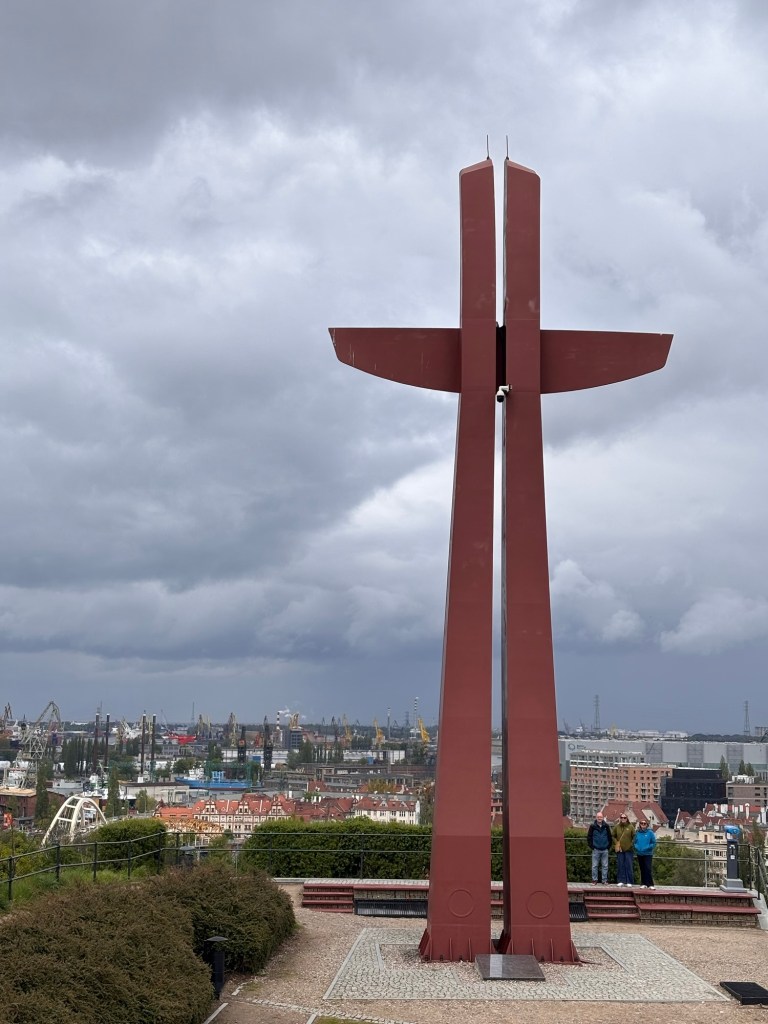
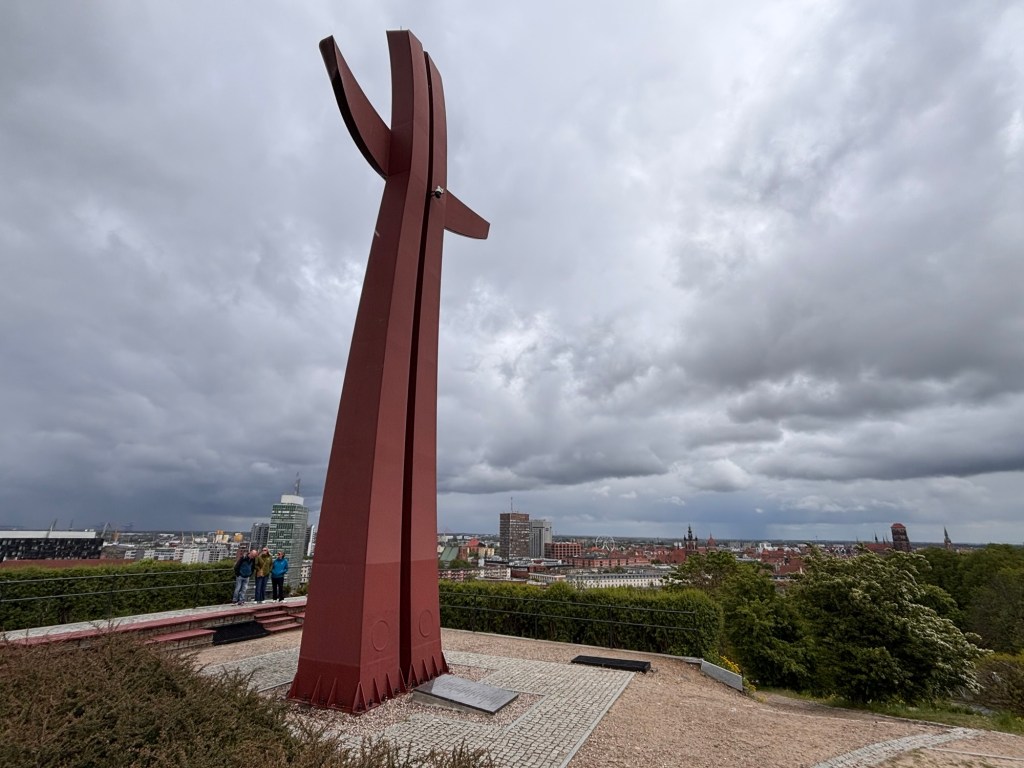
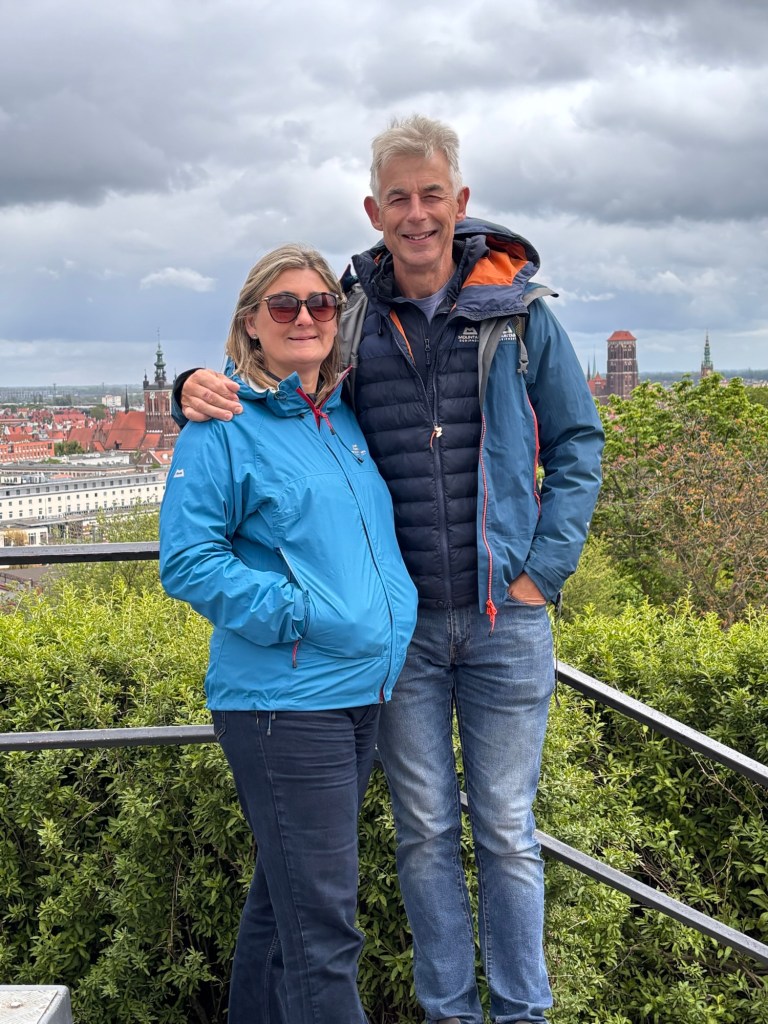
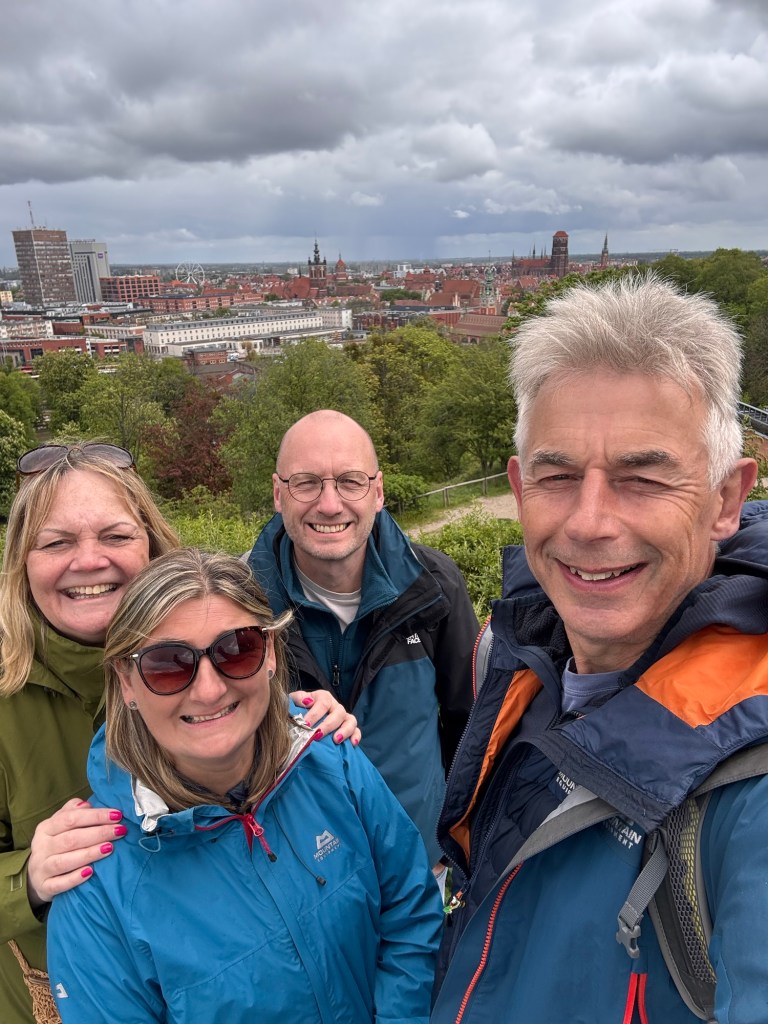
The views over the city were immense.
Unveiled on September 3, 2000 on the site of a World War II anti-aircraft gun, the Millennium Cross is one of the most visible monuments in Gdansk. As it name suggests, it is a Christian cross and stands at over 16m tall. It sits overlooking the city from the highest point in the city, in an area which houses the remains of a Napoleon-era fort and a modern day science museum. The cross was created to mark 2,000 years of Christianity, the 1,000th anniversary of Gdansk (created 997) and to commemorate those who had died in the city during the previous 300 years. The cross was designed by sculptor Jacek Luczak.
Bunkers from the Second World War surround the area in which the cross stands.
It resembled Hobiton from Tolkien’s ‘Lord of the Rings’.
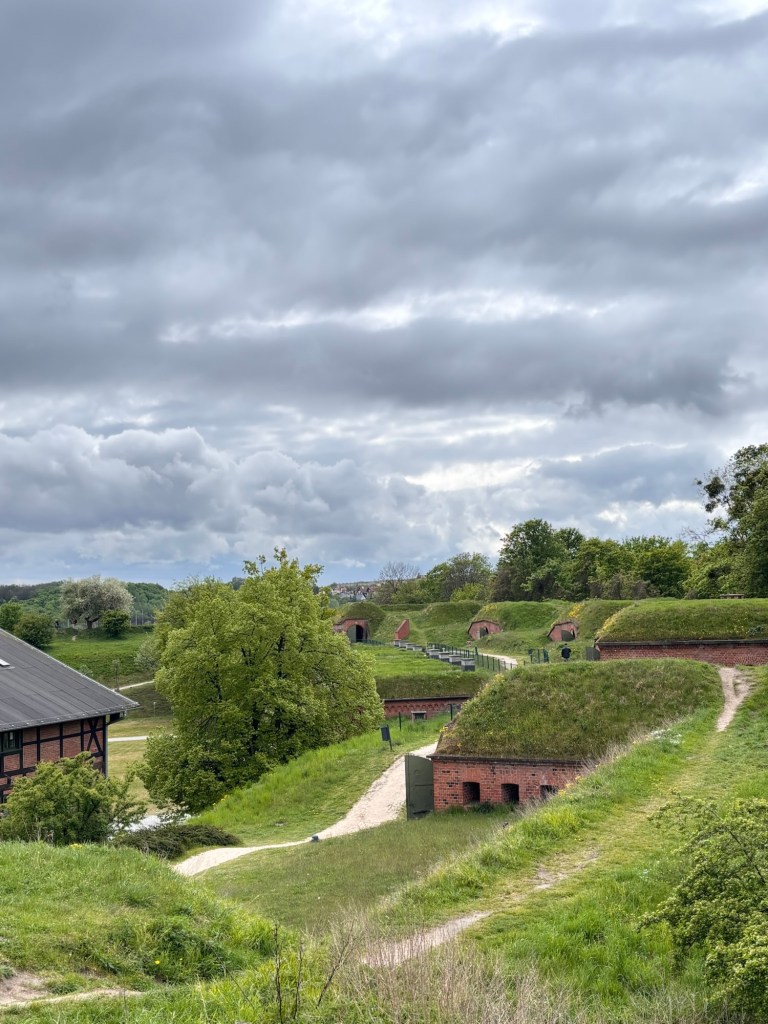
Only Hobiton was a place of fun in Tolkien’s masterpiece.
These bunkers provided ‘shelter’ to the residents of Gdansk at a time of apocalyptic bombing.
Fun?
Highly unlikely I would guess.
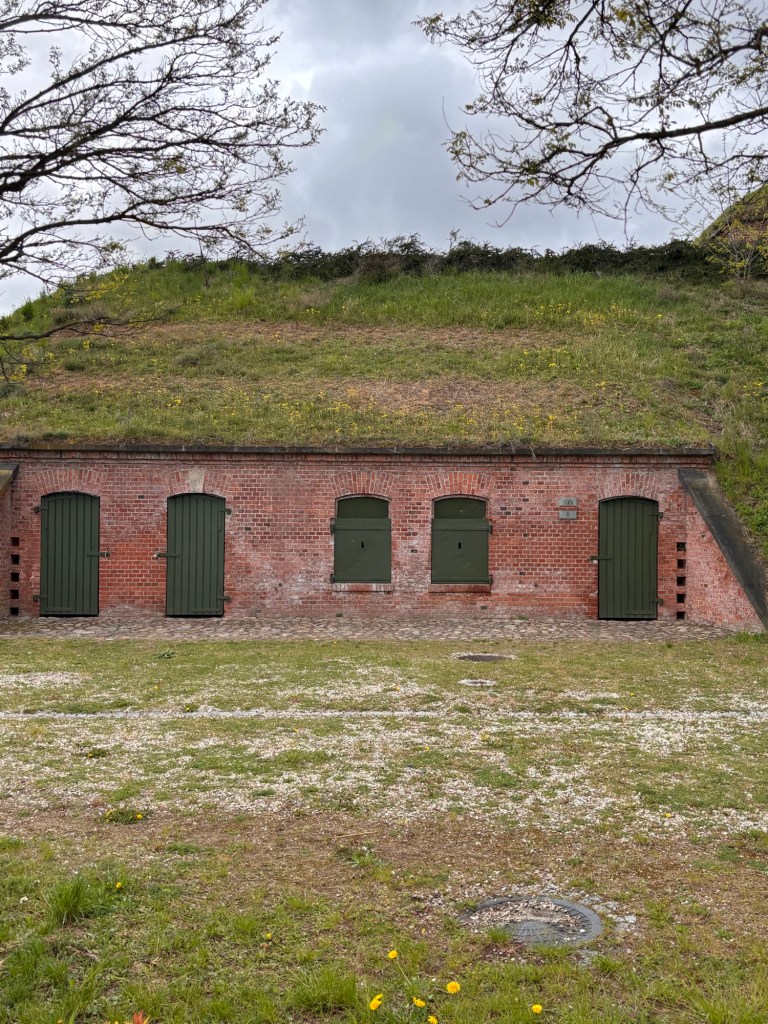
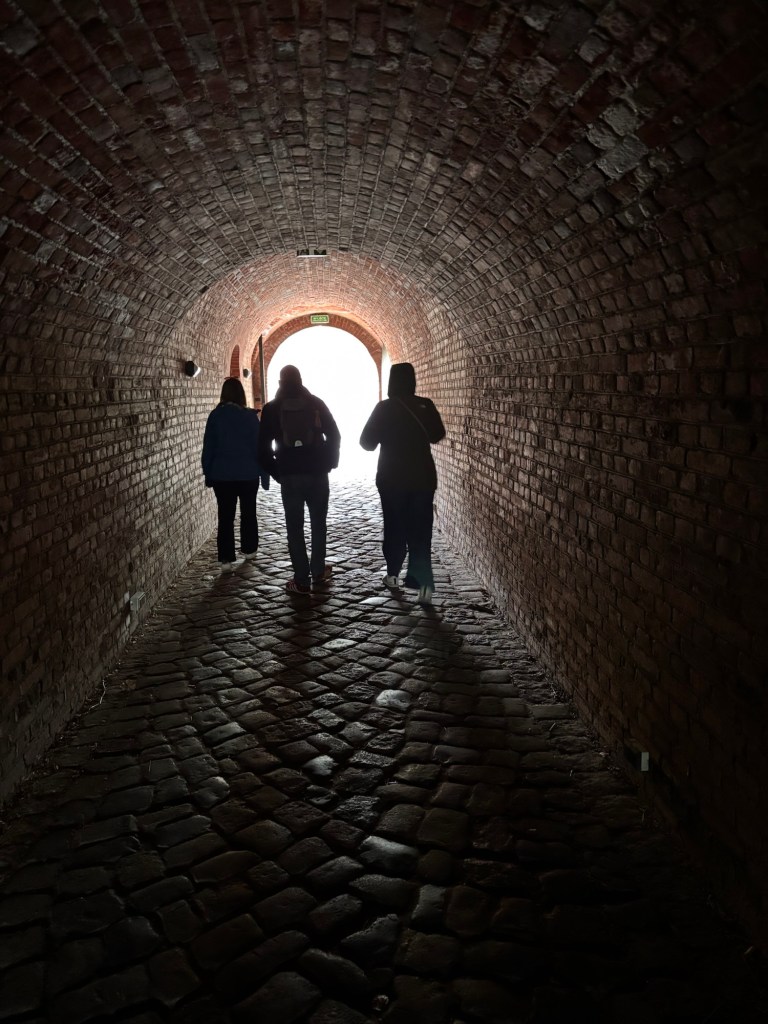
Cosy they would not have been: especially in minus 25 degree temperatures!
An interesting additional Fact!
JRR Tolkien’s great grandfather was from Gdansk.
Why does Tolkien always get a feature in my blogs? 🤷🏻♂️
My wife thinks I’m obsessed!
She has a point.
Time doesn’t allow me to do this magnificent city the justice it deserves.
In short, we did do much.
In only 4 full days.
A 33km coastal bike ride to the resort town of Sopot, albeit on a bitterly cold day, was great fun.
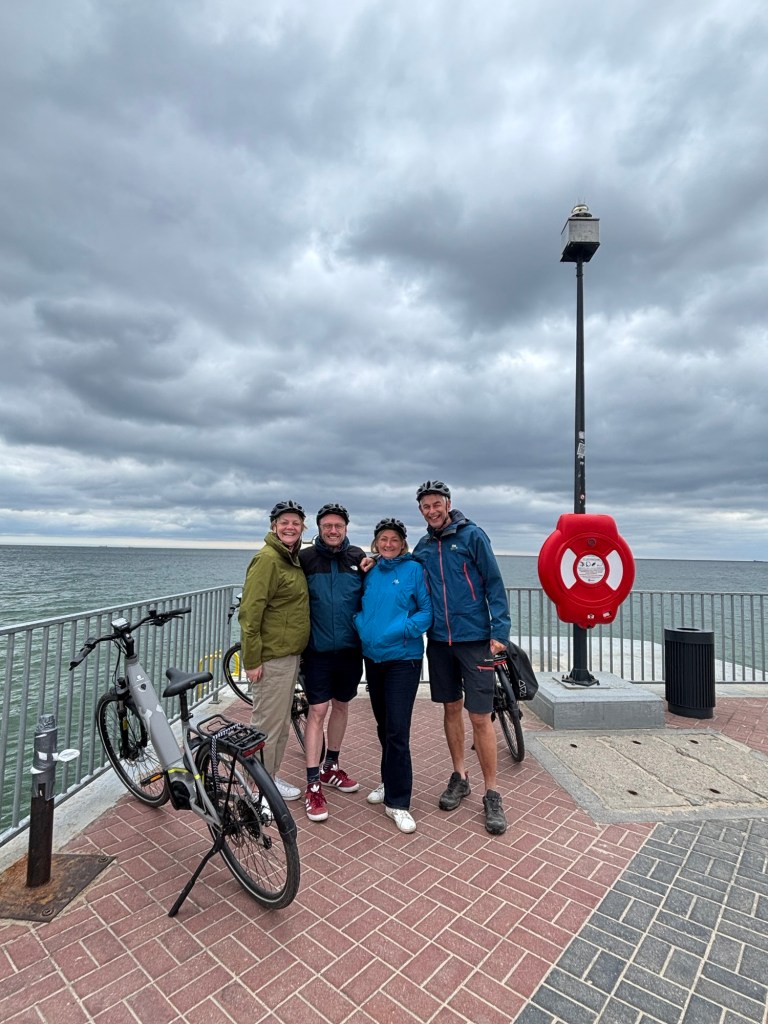
Behind the smiles, we froze!
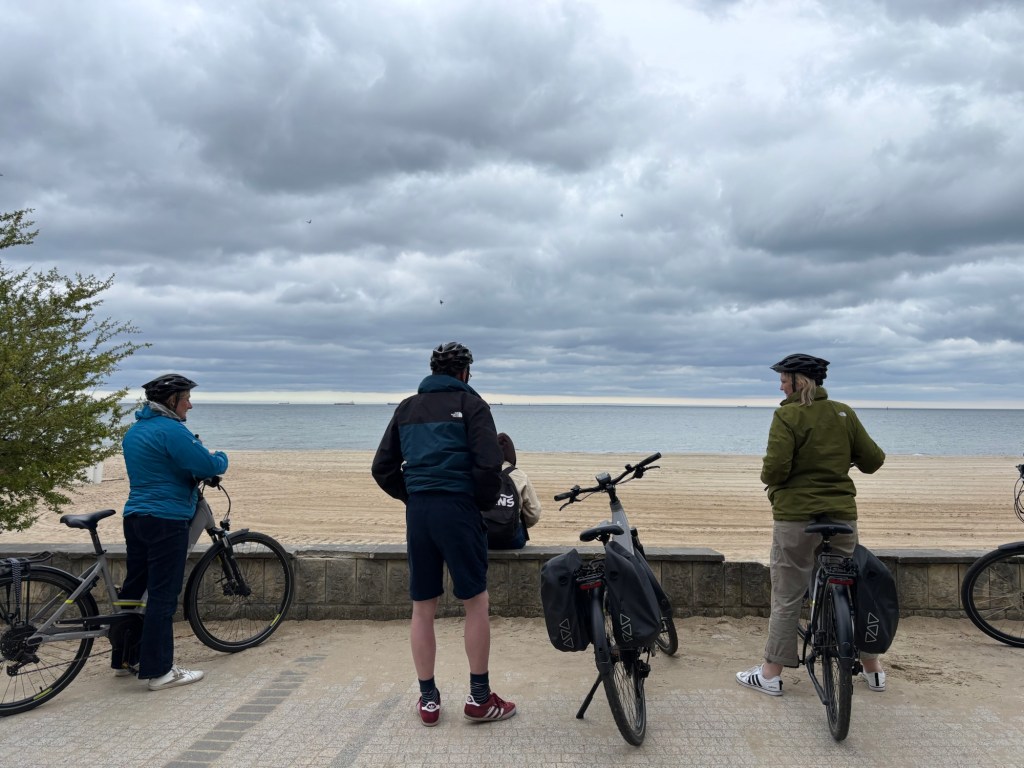
That Baltic Sea really is Baltic!🥶
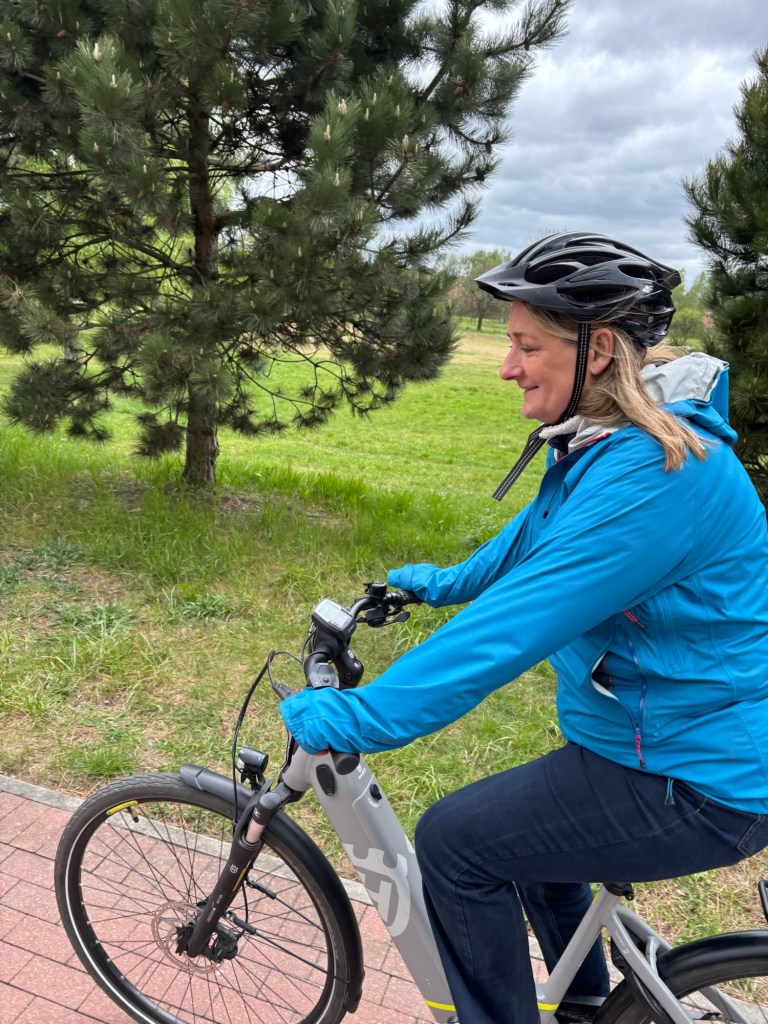
Nicky, Jo and Jason loved their electric bikes.
I on the other hand, preferred to pedal like mad, on my more traditional steed: just to keep warm:
Whilst all the time, regretting my foolish decision to wear shorts!
13 degrees they forecast!
But that wind chill was straight from the artic tundra!
The food we sampled was always great.
All bar one edible disappointment for Jason, whose pork chop, really wasn’t!
We tried most types of cuisine, except Polish.
That was just too much of a ‘stodge-fest’ for any of us.
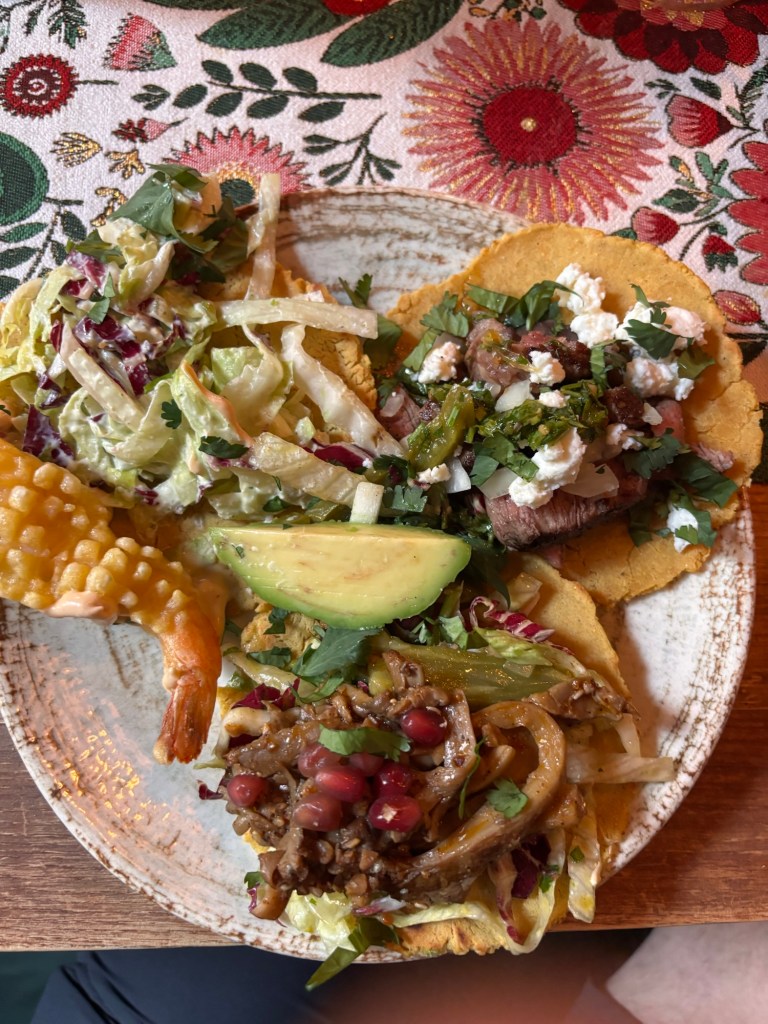
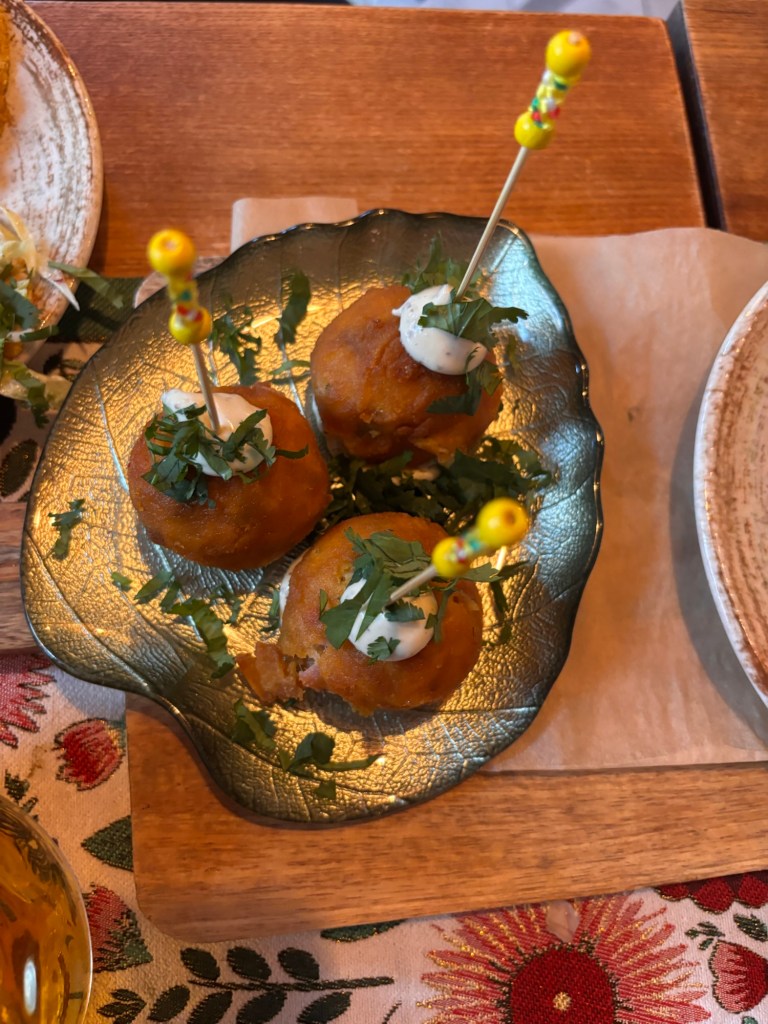
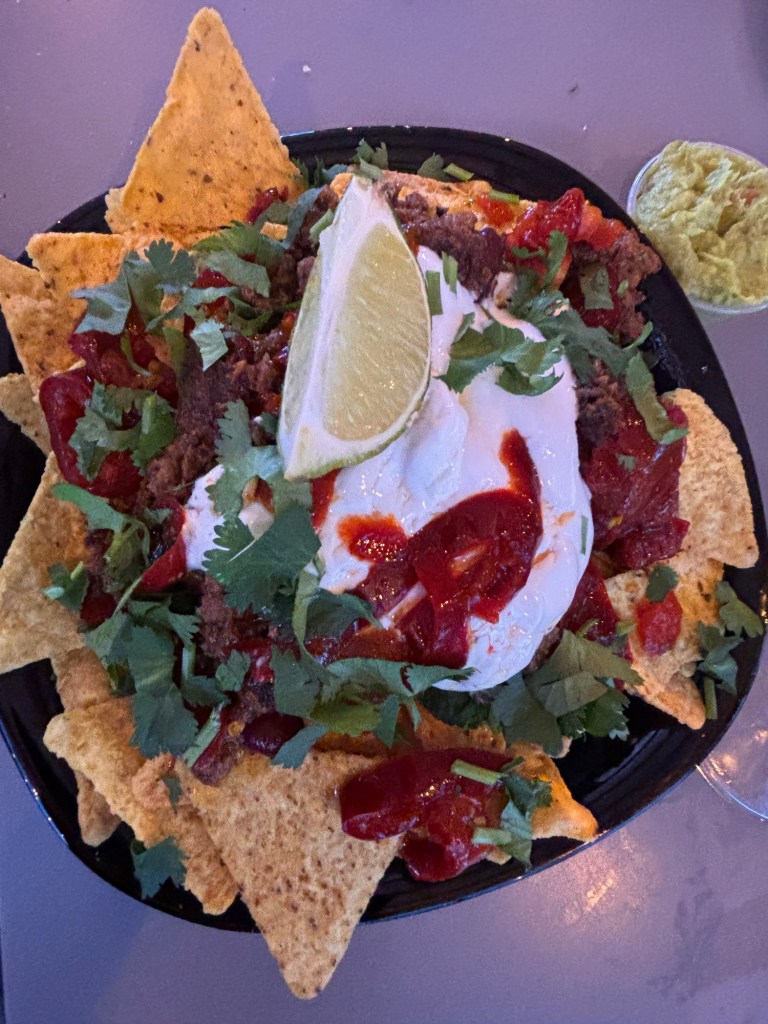
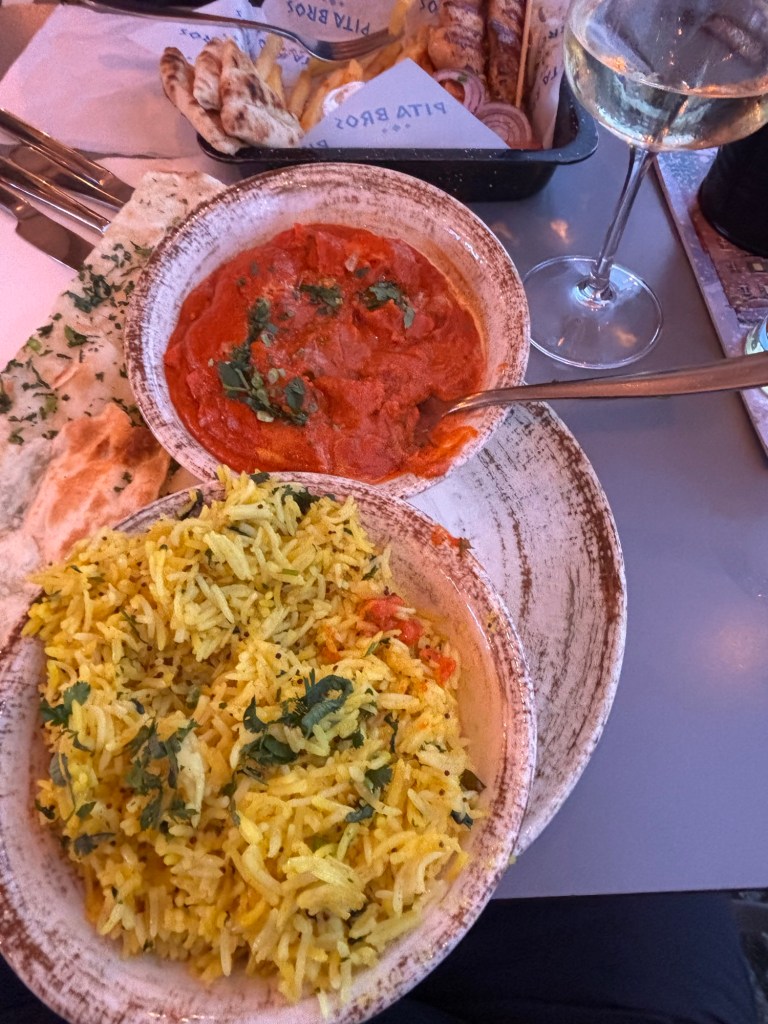
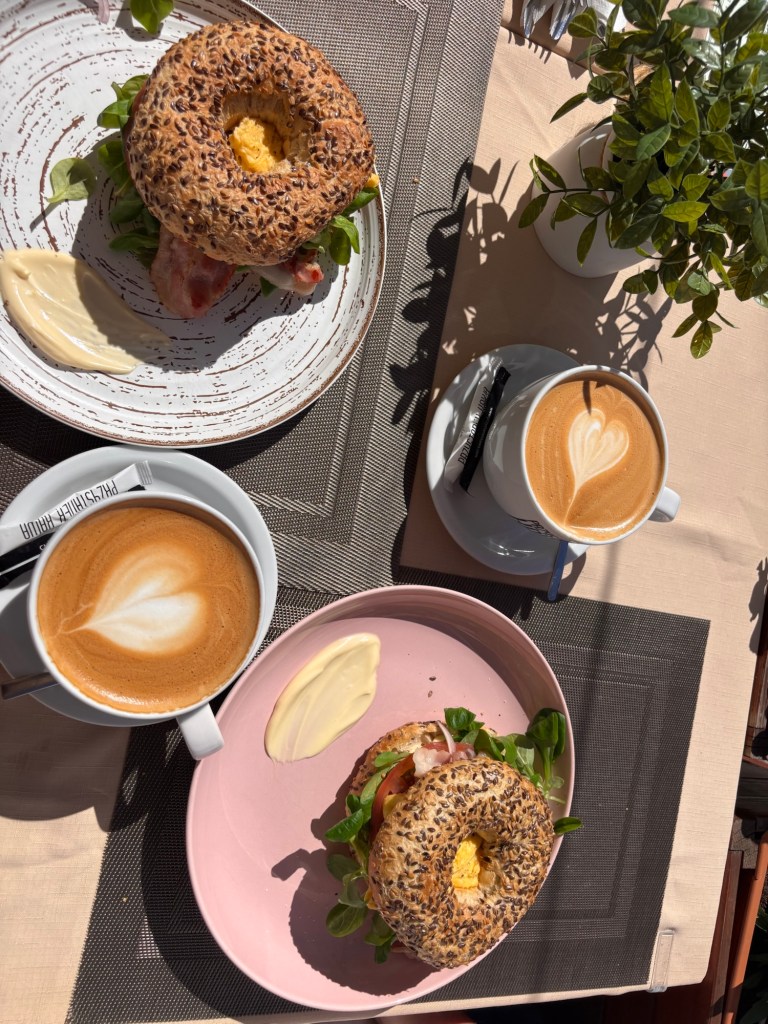
Mexican, Italian, Chinese, Thai and Indian: all were tasty, fairly priced and colourfully presented.
Drinks were always well priced.
Coffee was definitely more expensive in a riverside cafe though.
Our penchant for flat white (us) and americano coffee (Jo and Jason) were always satisfied.
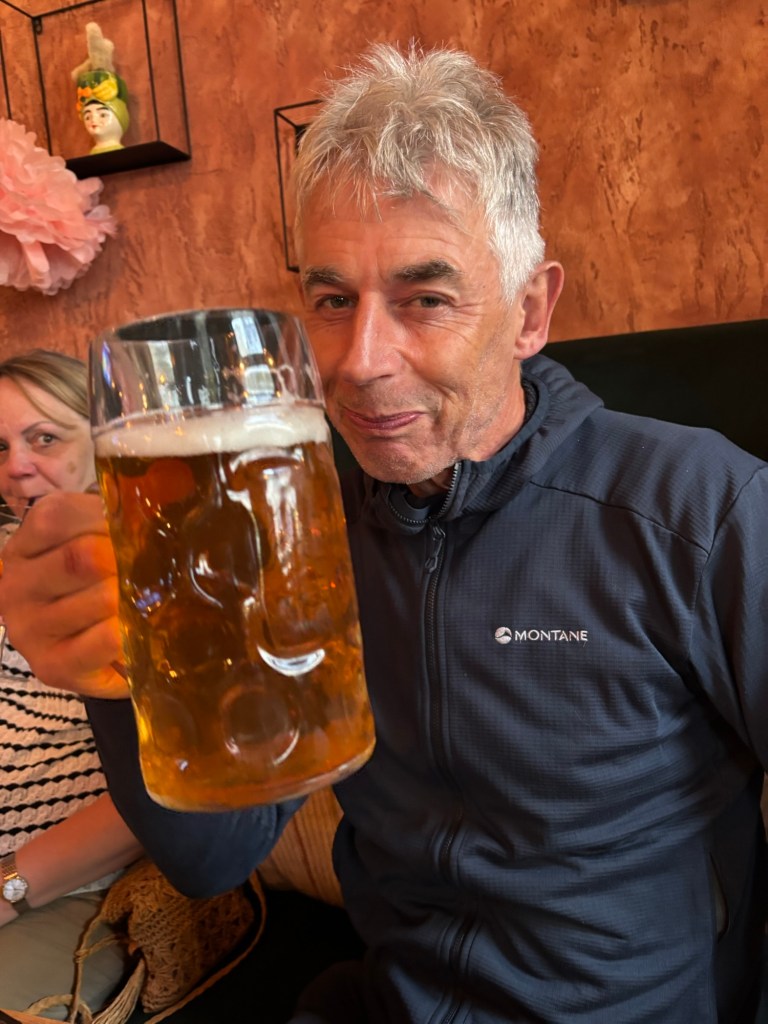
That big beer was so welcome after our bike ride!
It was a massive beer actually!
A ‘Happy Hour’ promotion: it would have been rude not to.
All too soon our time in Gdansk was up!
As I conclude this blog, I attach a few more photographs to hopefully help you to decide decisively, to give Gdansk a try sometime soon.
I assure you:
You will not regret it.
And please remember, I get no payment for unashamedly promoting, this Balkan Beauty.

Cool coffee shops.

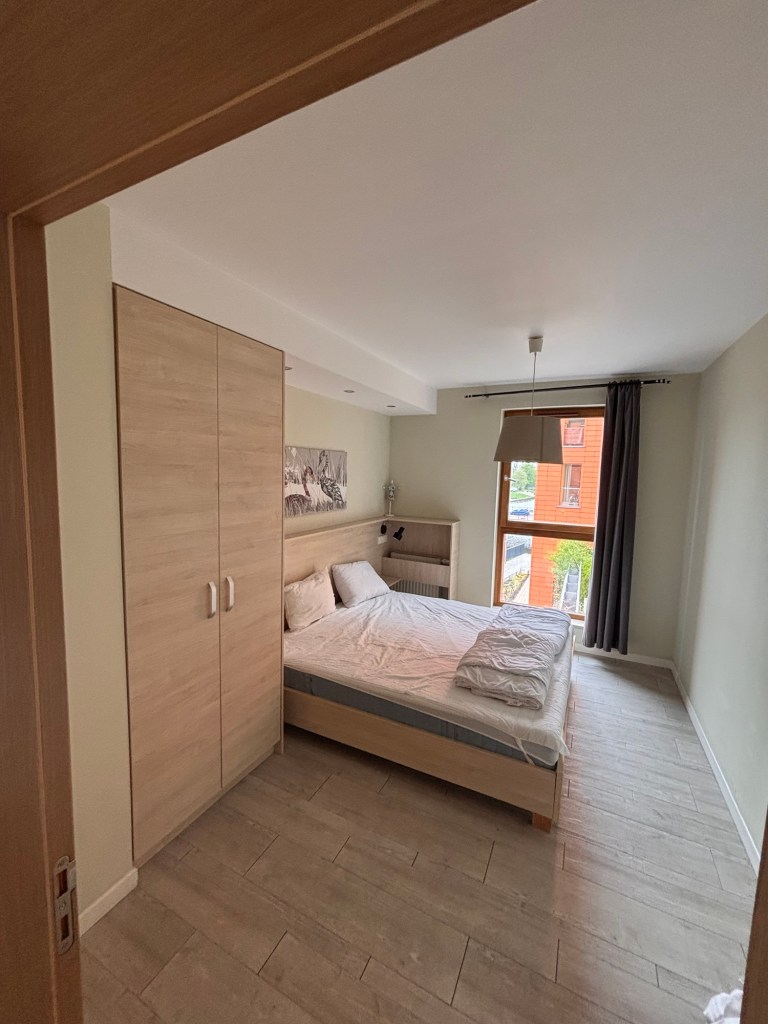
Great value riverside accommodation, mostly in the form of apartments.

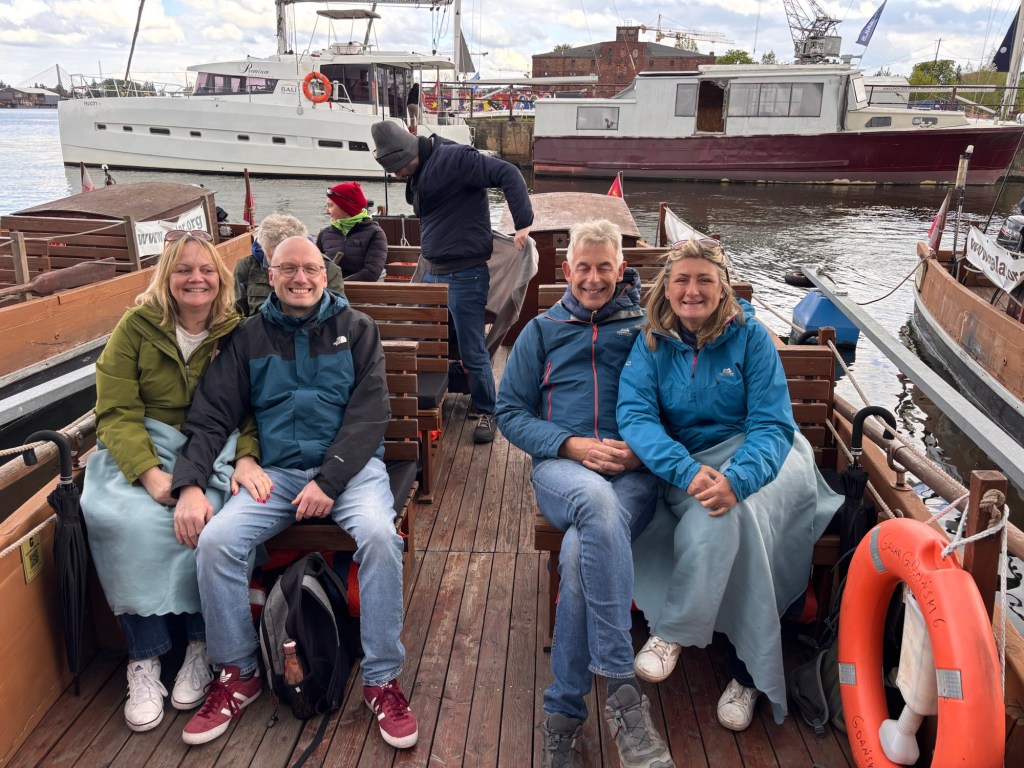
An exceptional 1 hour and 20 minutes long, boat tour of the city, for just £15 each.
Even if it did rain for 5 minutes.
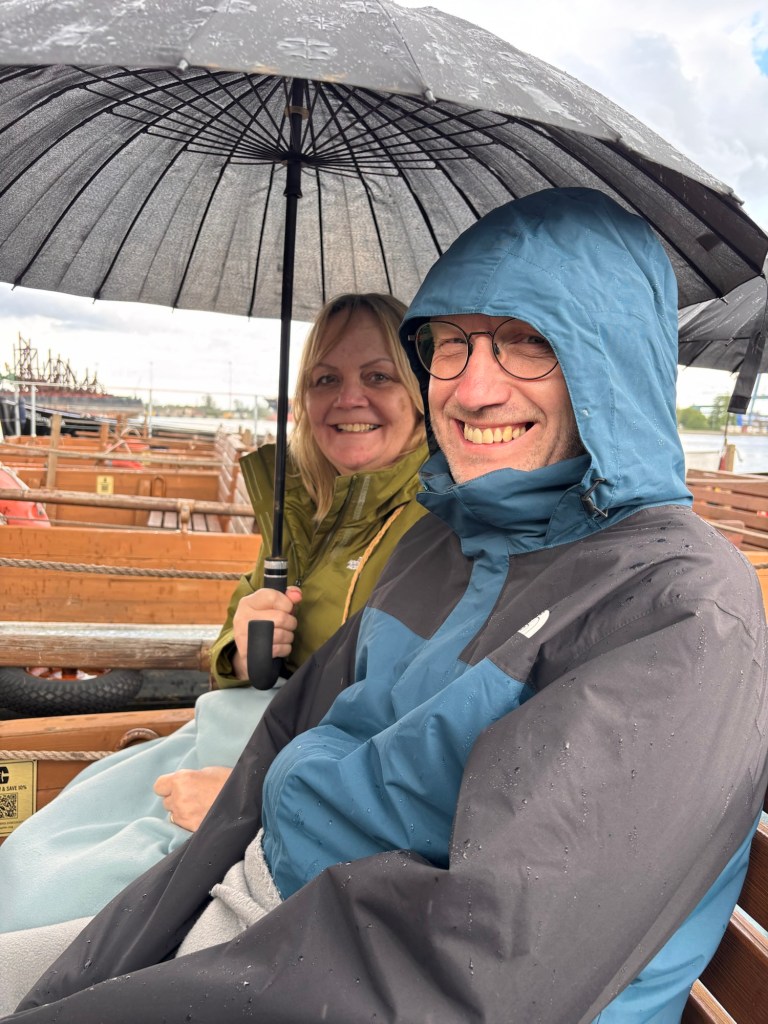
(Albeit, that boat trip was another Baltic experience!🥶)
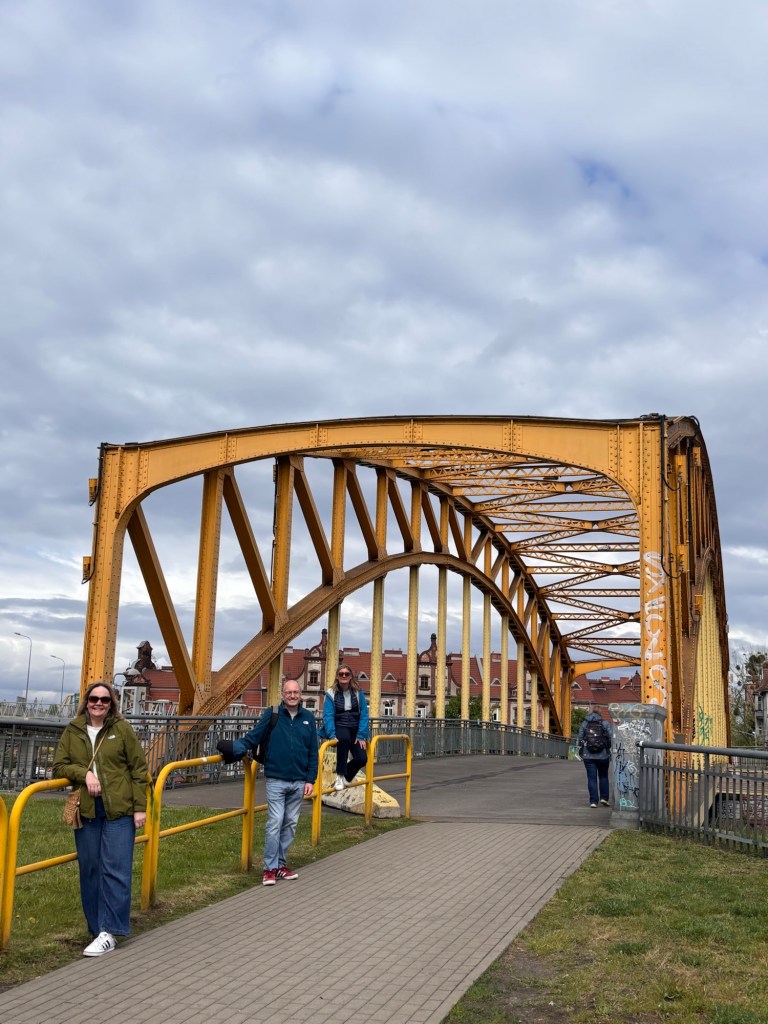
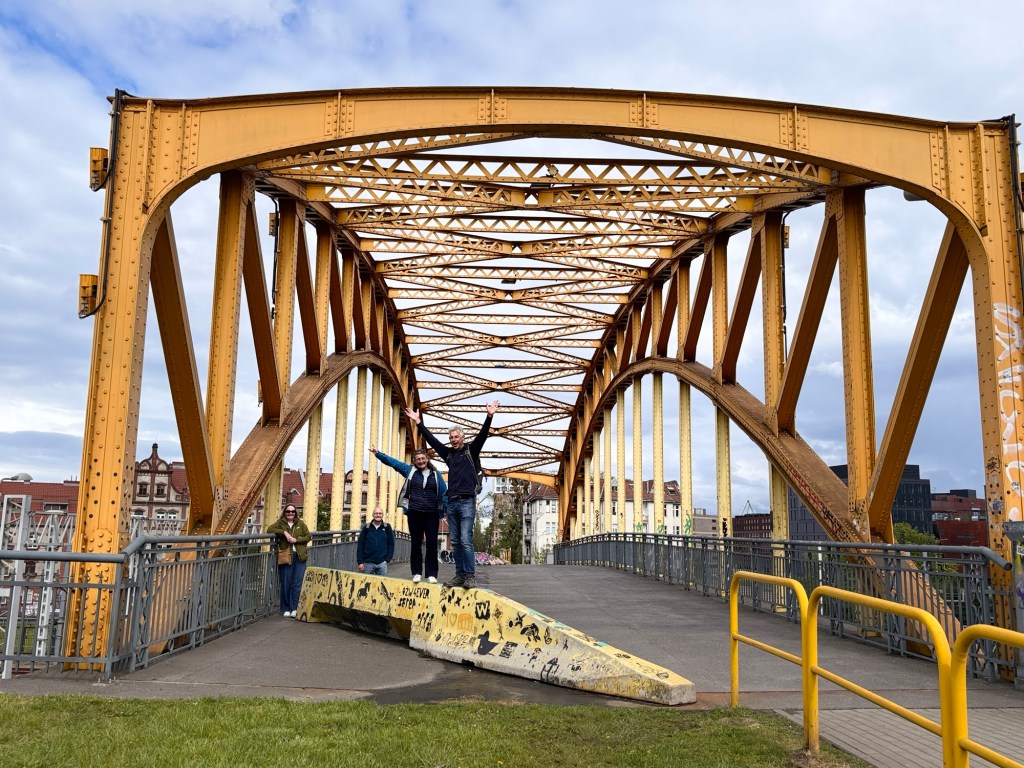
Messing about like 3 teenagers on cool yellow bridges: when their combined age comfortably exceeds 150 years!
Luckily, I was the more mature tourist …….. and just took the pictures.
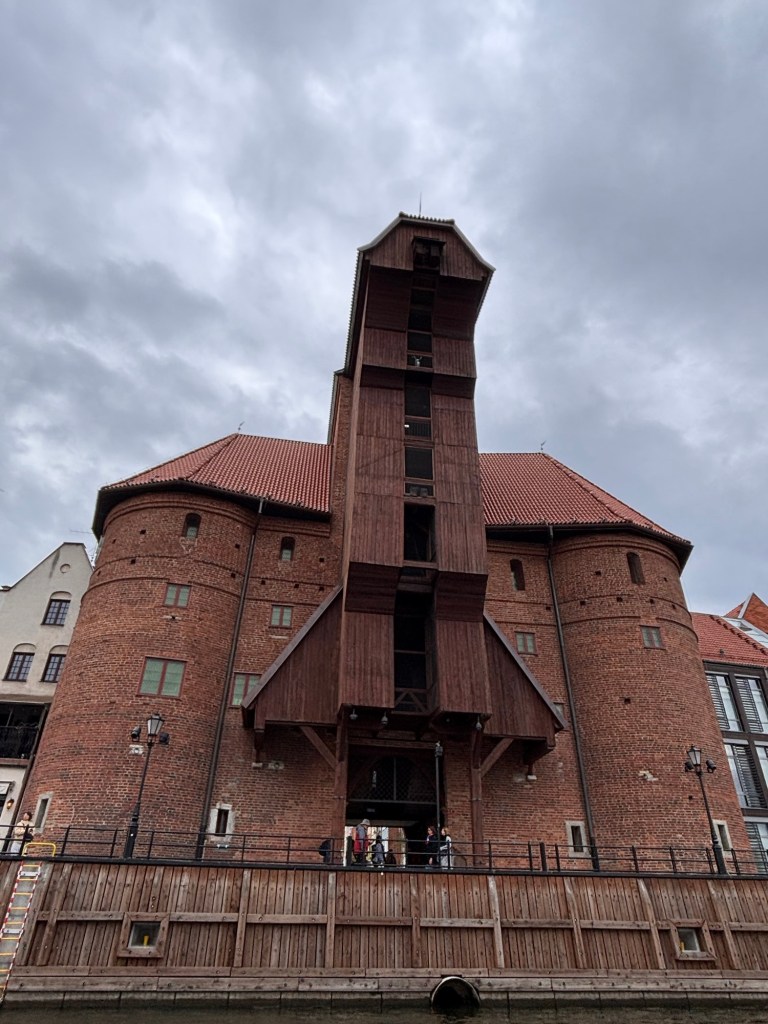
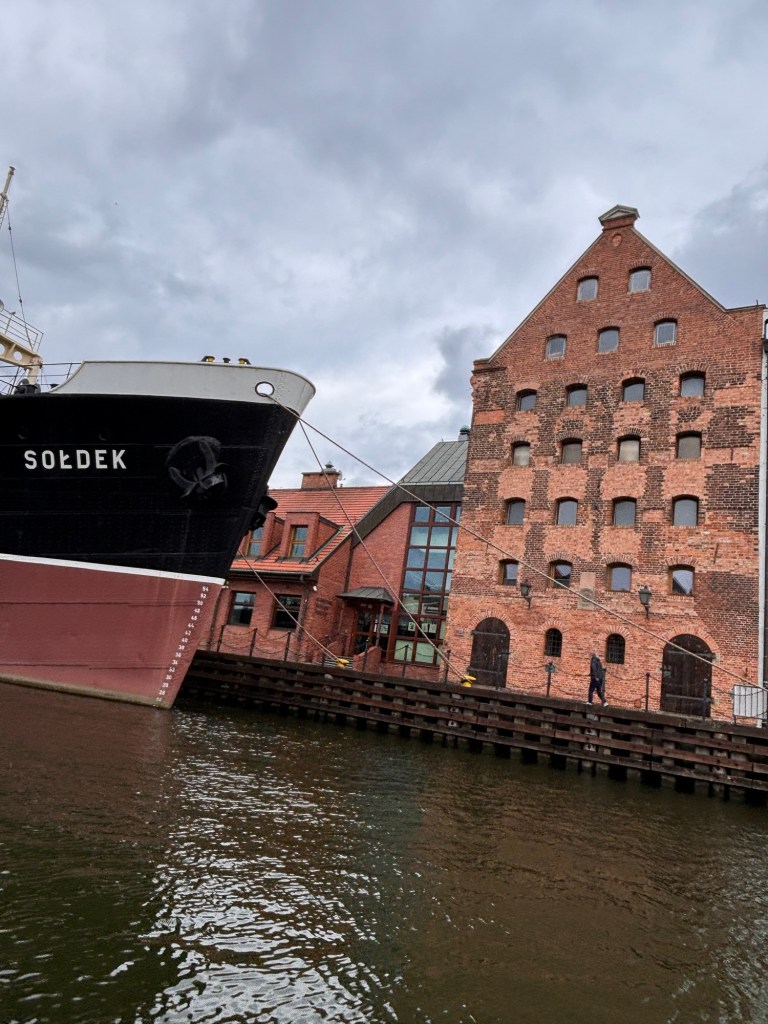
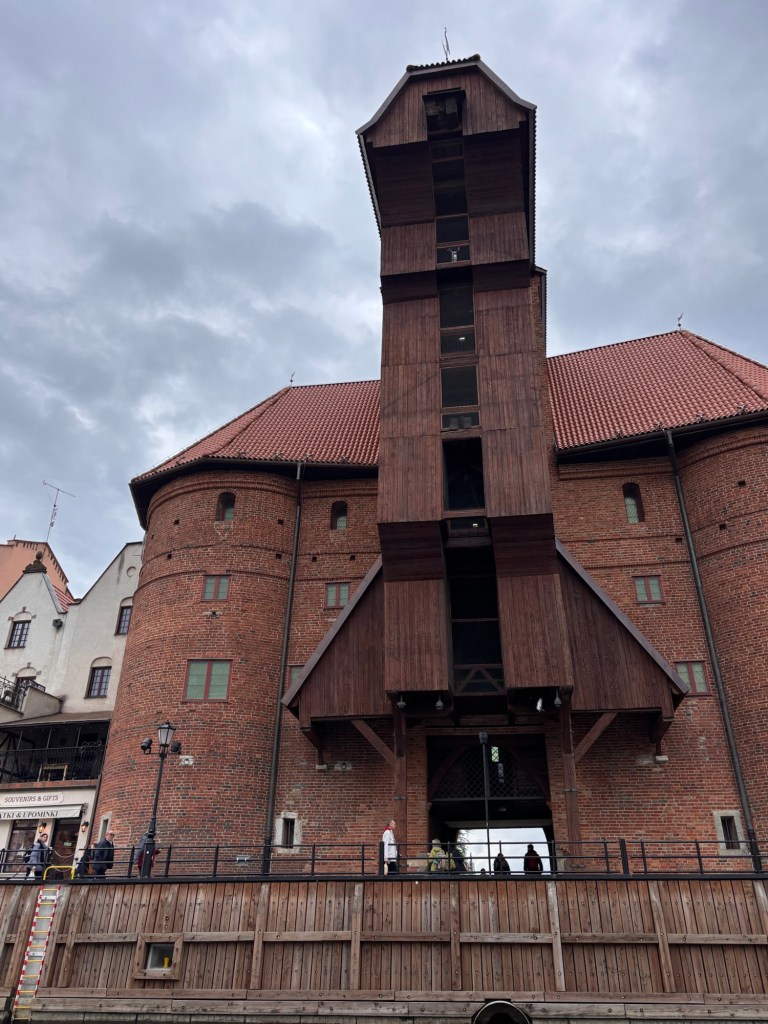
The famous building that contains ‘The Gdansk Crane’.
Working in this structure was one of Gdansk’s most sort after employment opportunities.
Think giant ‘hamster wheels’ where workers were paid to use leg power to unload the grain from the ships. Apparently a human workforce was needed to ensure complete precision when unloading the ship’s cargo.
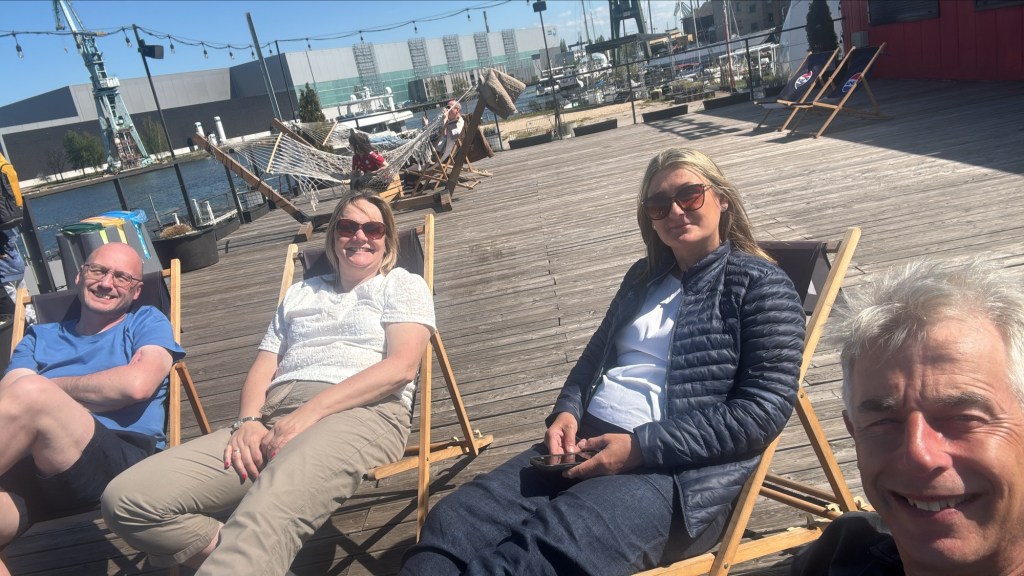
Sun lounging near the shipyard without having to lay your towel down at 06.00 or resort to suing the cafe owner.
Inevitably, some of the city’s stories were more tragic.
Postal workers who actively resisted Hitler’s elite fighting force, the Waffen SS, as they retreated east from Russia in 1945, were brutally executed in front of this brick wall.
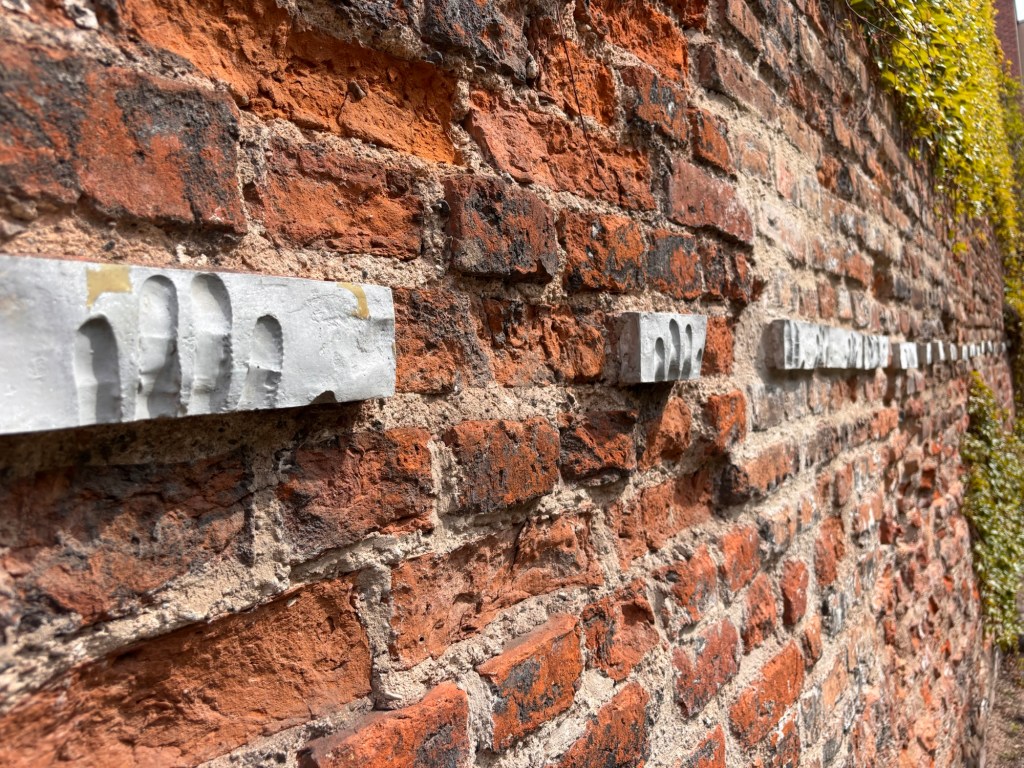
A poignant piece of art work depicts the fingerprints of their ‘hands up’, moment, before their fate was sealed.
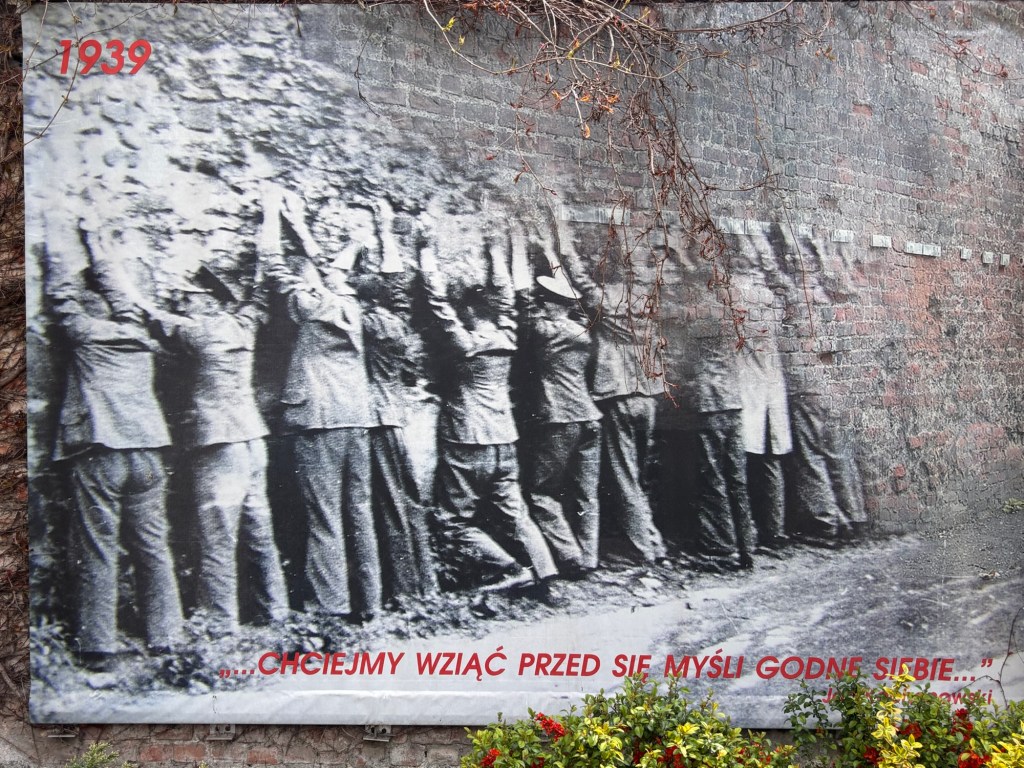
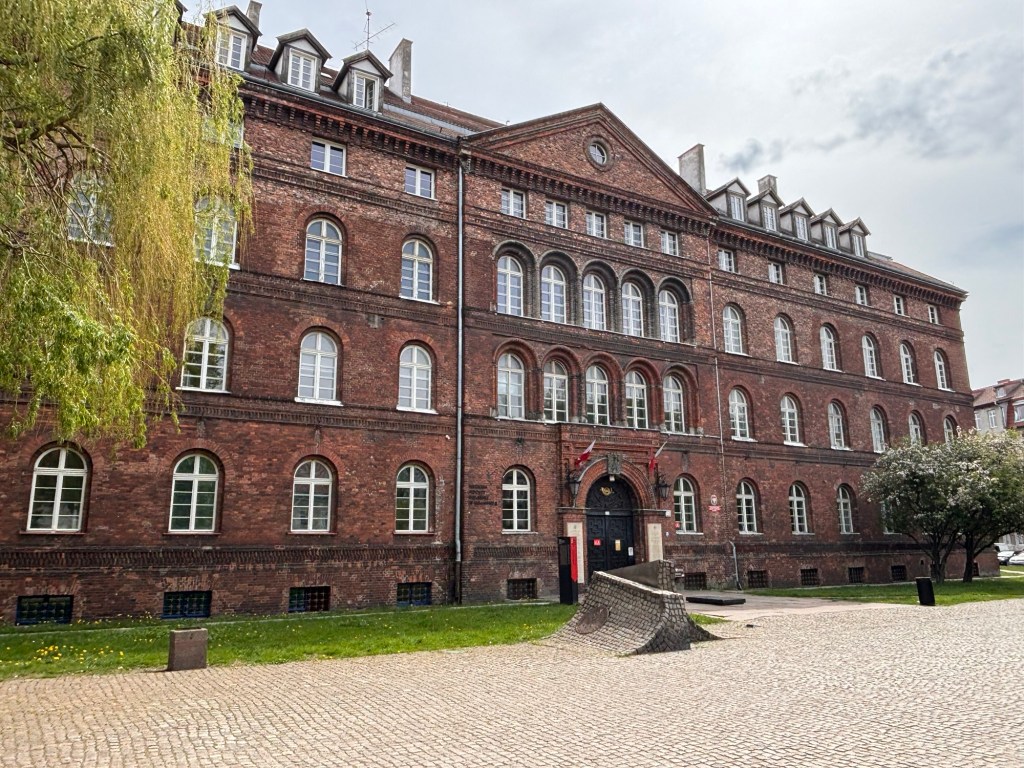
The facade of the impressive post office, with a bitter irony, conceals the tragedy that occurred in its courtyard.
St Mary’s Basilica always gave the tourist a location reference point.
In rain or shine, it always sparkled, like the jewel that Gdansk really is.
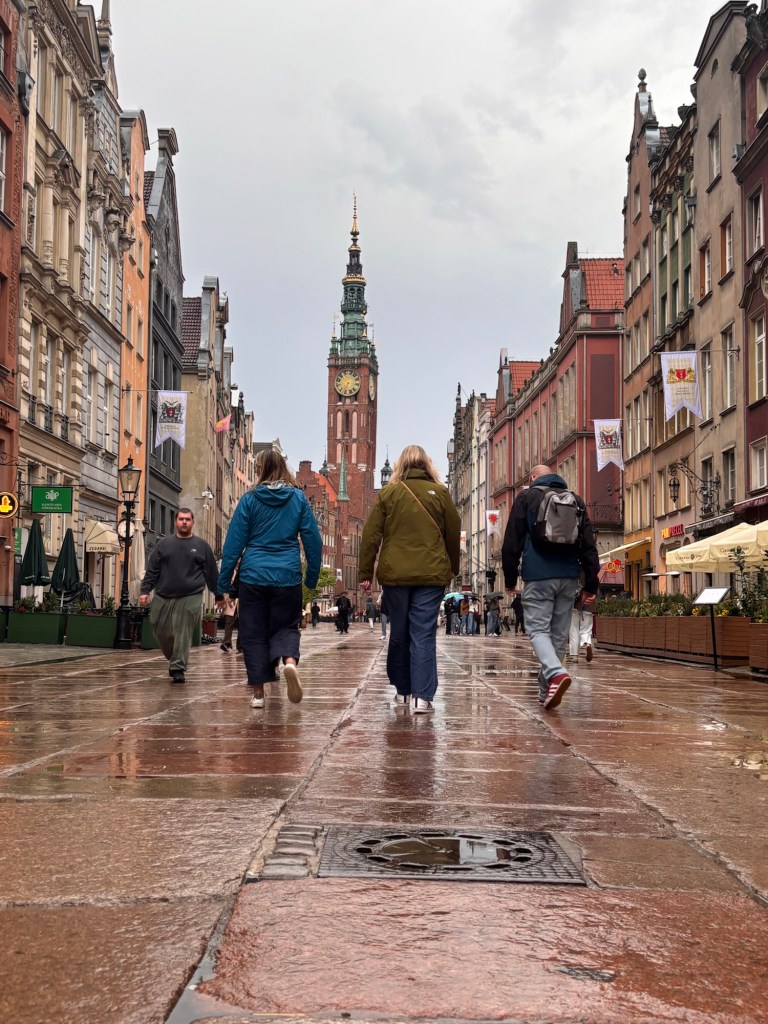
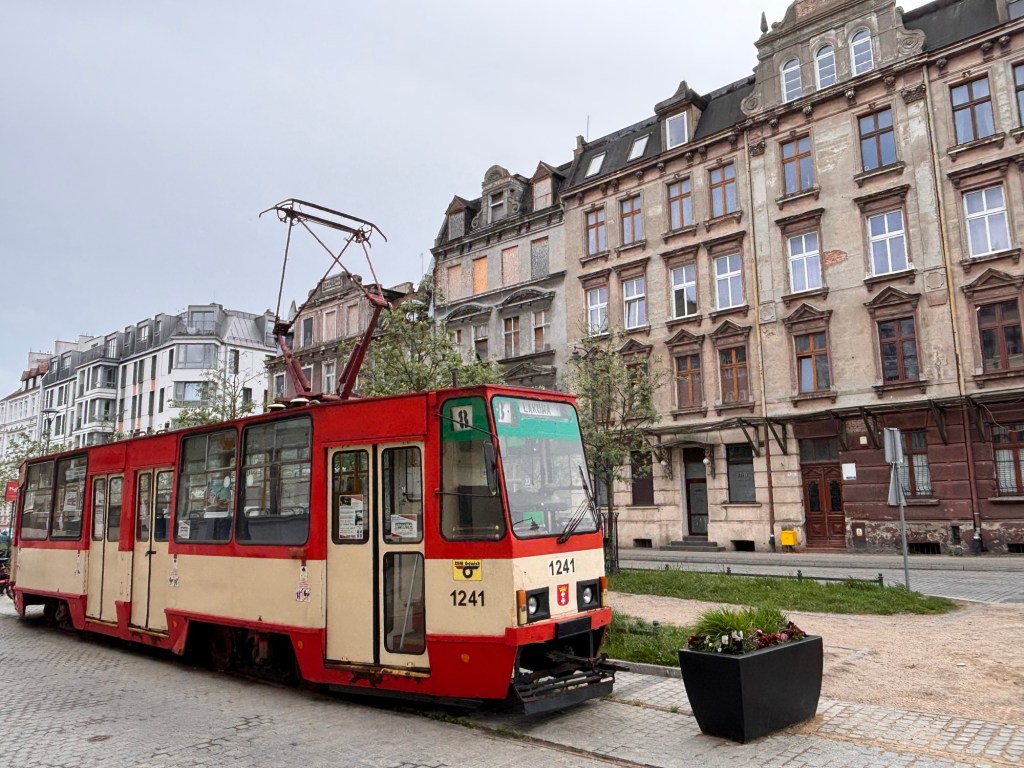
Post communist brutalism still features.
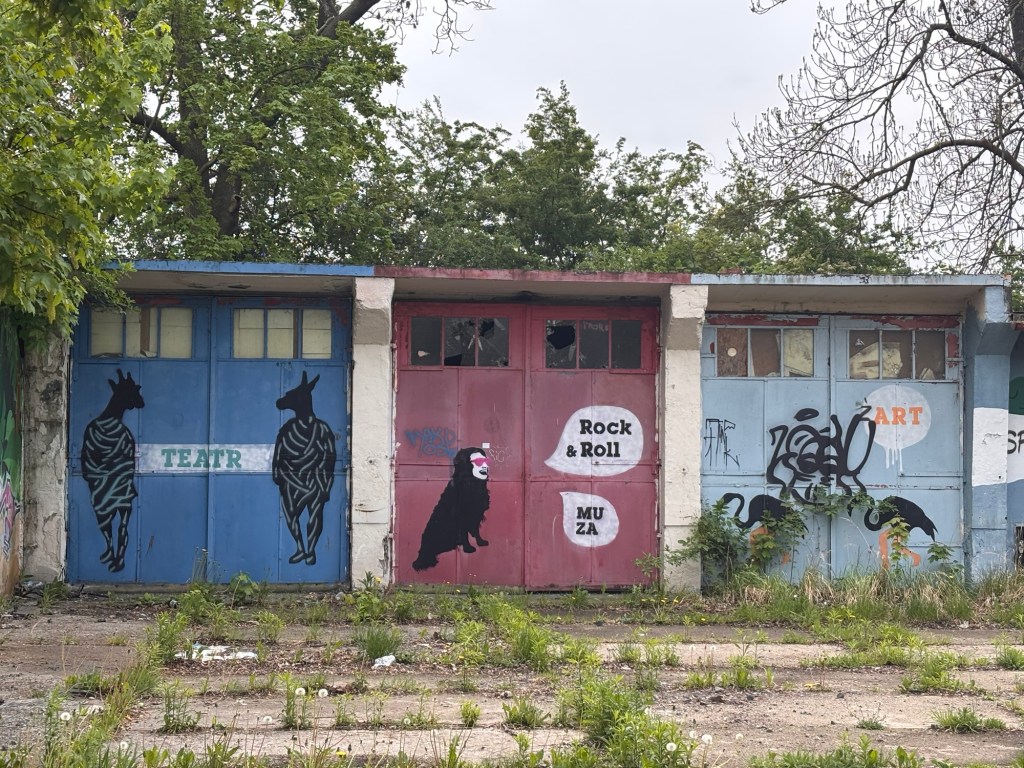
Random garages, brightly coloured.
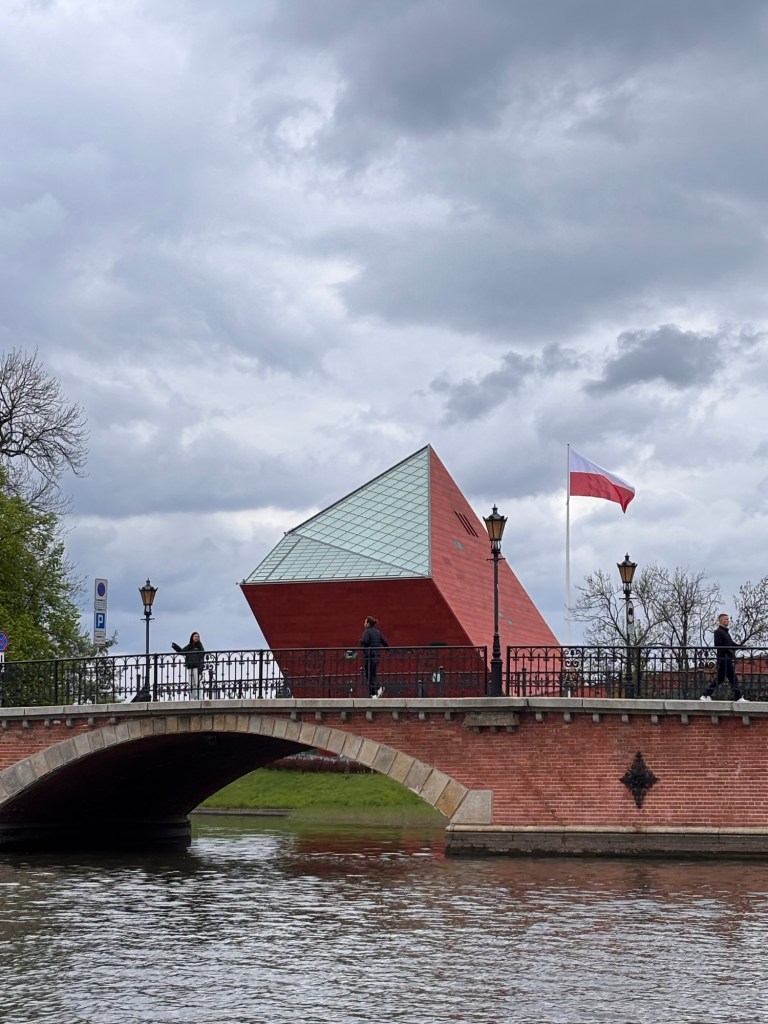
Modern design next to medieval architecture.
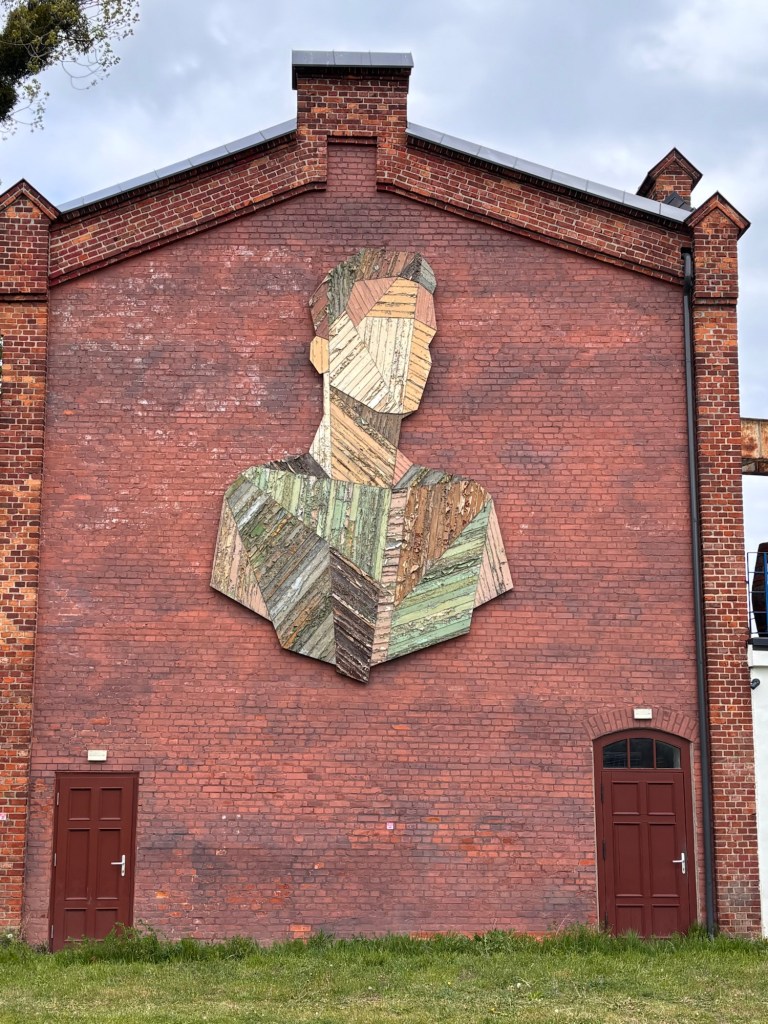
The shipyard fire station.
And all the while those cranes watched us silently, whilst ‘shouting’ the part they played in this great city’s history!
Thanks for the read.
Time to book that bargain break to Gdansk? 🤔
The choice really is yours.
“Do widzenia Gdansk” as we like to say in Poland
Martin x ❤️
Martin and Nicky Moorman, with their friends Jo and Jason Karitons, travelled for a 5 night City break, to Gdansk, from 9-14 May 2026.
They flew from Leeds Bradford airport in the north of England.
Flights cost £170 per couple including a 10 kg suitcase and an ‘under the seat’ bag.
Accommodation in a high quality riverside apartment was approximately £60 per couple, per night.
A decent coffee usually cost around f2.
A beer, away from the tourist hot spots usually cost £2-3.
A main courses meal usually cost £10-12.
All day bike hire was £16 each.
An excellent river cruise was £15 each.
We walked 33 miles and cycled 33km.
The daytime temperatures ranged from 12-22 degrees. On our 2, 12 degree days, it felt very cold.
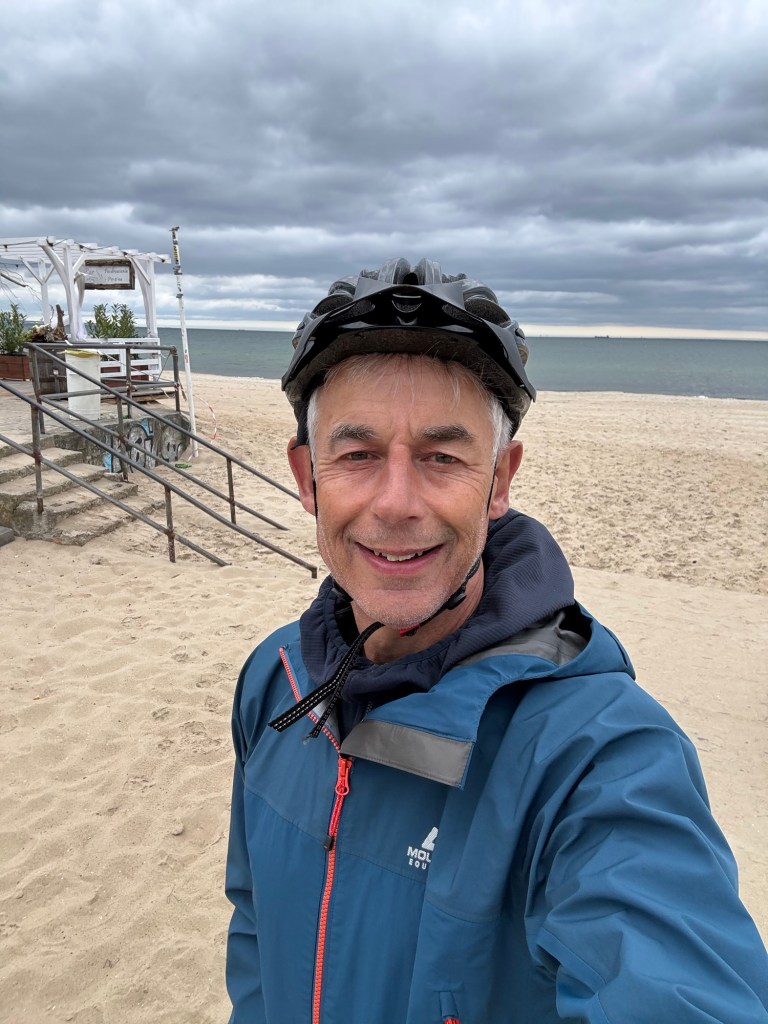
Martin is a 61 year old retired Headteacher who lives with his wife Nicky, daughter Rosie and her growing family in a multi generational home in beautiful North Yorkshire, UK.
Happily married for 36 years, Martin and Nicky have 3 grown up children, all happily married too.
In his spare time Martin loves walking, photography, writing travel blogs, football, renovating, cooking and talking a fair amount of rubbish to anyone who will listen!

